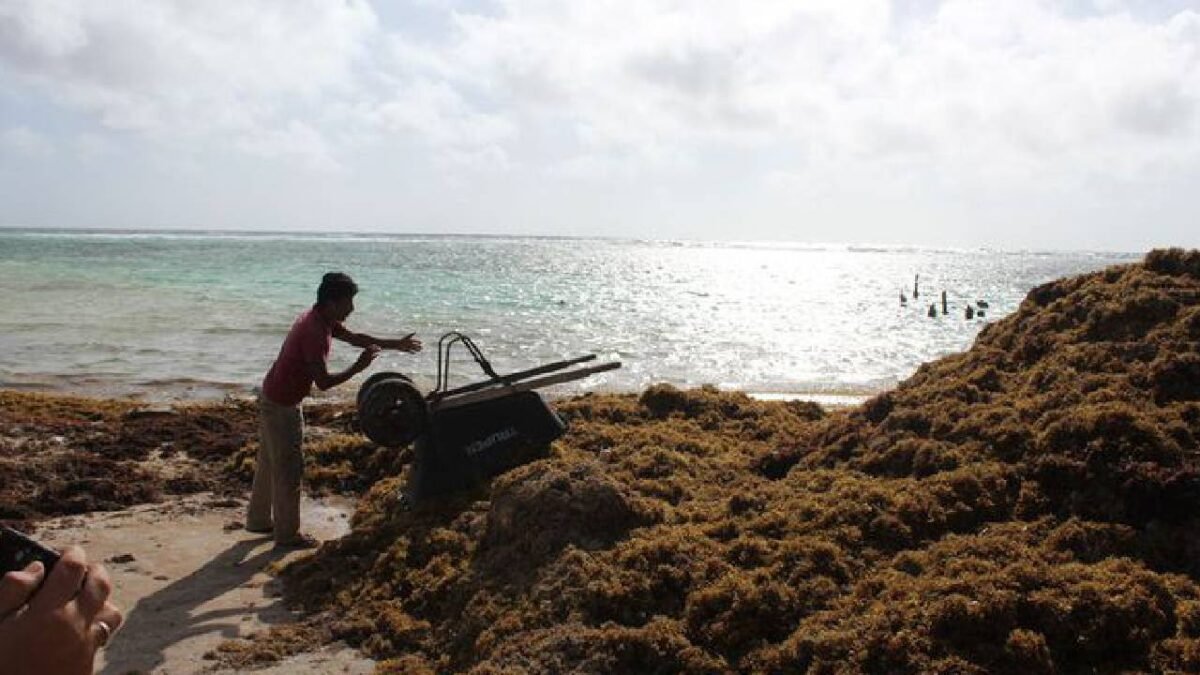
Xcalak, Mexico — Researchers from El Colegio de la Frontera Sur (Ecosur) have demonstrated that collaboration between communities and academia can transform sargassum, one of the main environmental problems in the Caribbean, into a challenge of shared, effective, and socially accepted management.
The study was conducted in Xcalak, in the southern Mexican Caribbean, within the Xcalak Reefs National Park, and evaluated both the technical effectiveness and social perception of different cleaning and coastal monitoring methods in the face of massive sargassum arrivals.
A Participatory Study Facing Historical Increase in Sargassum
The research was led by Juan Carlos Alcérreca Huerta, Óscar Reyes Mendoza, and Laura Carrillo, along with Mariana E. Callejas-Jiménez and Viridiana González-Garduño, who analyzed the impacts of the unprecedented increase in pelagic sargassum since 2011.
Risks of Applying Inadequate Solutions
The study warns that poorly implemented measures can worsen environmental damage, especially in rural communities and protected natural areas with limited resources. In these contexts, replicating models designed for mass tourism destinations can be counterproductive.
Xcalak: Low-Cost Solutions Designed from the Community
Unlike approaches applied in tourist hubs in the northern Caribbean, Xcalak opted for strategies with low environmental impact, low cost, and high social acceptance, built in a participatory manner.
Scientific Monitoring and Local Feedback
Technical monitoring, combined with local knowledge, allowed for:
- Identifying effective cleaning practices
- Discarding socially unviable methods
- Reducing impacts on reefs and coastal ecosystems
This approach strengthened decision-making and avoided interventions that could cause more harm than benefit.
Sargassum as a New Type of Socio-Environmental Disaster
Over the last decade, macroalgae blooms — particularly sargassum — have increased in frequency, scale, and impact globally, transforming coastal socio-ecological systems.
In the Caribbean, massive arrivals have become a persistent challenge, with direct effects on biodiversity, fishing, and community life.
Rural Communities, the Most Vulnerable and Least Attended
Although most sargassum management actions are concentrated in strategic tourist areas for the regional economy, rural communities in the southern Mexican Caribbean face similar or even greater arrivals, but with less institutional support.
Their vulnerabilities are often underestimated due to:
- Low population density
- Limited infrastructure
- Absence of private investment
Management “From Below” with Scientific Backing
The initiative had the support of the Program for the Protection and Restoration of Priority Ecosystems and Species (PROREST) and government backing, which helped strengthen:
- Trust between local actors
- Exchange of scientific and community knowledge
- Long-term social commitment
In 2025, cleaning treatments continue to be applied directly by the community.
Xcalak, a Replicable Model in the Face of Climate Change
The study concludes that sargassum management strategies work best when adapted to local ecological conditions and social priorities, and presents Xcalak as a replicable model of community environmental management.
Facing a phenomenon that will intensify with climate change, the Xcalak case demonstrates that applied science and social participation can offer sustainable and lasting solutions.
Discover more from Riviera Maya News & Events
Subscribe to get the latest posts sent to your email.