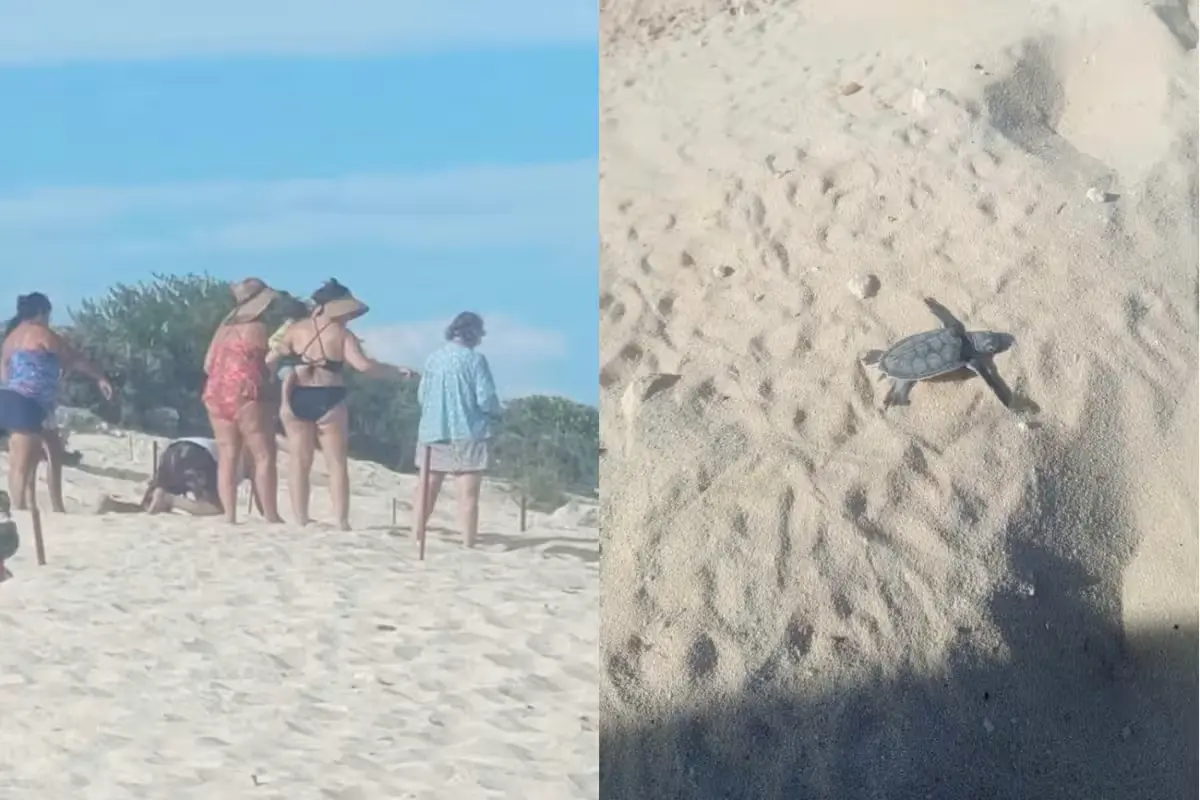
Cozumel, Quintana Roo — A witness has reported the alleged removal of sea turtle eggs and hatchlings from nests at Chen Río, on the east coast of Cozumel, saying several people dug into the sand during the nesting season without any response from environmental or public security personnel.
The witness, who did not provide personal details, said the incident occurred while he was at the site with his family. He stated that he saw a group of foreign visitors manipulating the nests and told them the activity was not permitted during nesting season, but they continued.
According to his account, a taxi then arrived and a man dressed in civilian clothing got out and allegedly began digging into one of the nests, removing eggs and hatchlings.
The witness also said a patrol vehicle passed through the area during the incident. He tried to get the officers’ attention to report what was happening, but according to his version they did not stop to intervene. No personnel from the municipal ecology department or any Cozumel security agency arrived at the scene at the time.
About 20 hatchlings were left exposed on the surface and were later taken by birds in the area, the witness said. He also reported that one hatchling died after a person digging at the nest allegedly fell on top of it.
The witness said he has material documenting the events and is willing to hand it over to the relevant authorities so he can file a formal complaint and provide evidence that could help identify those involved.
The complaint draws renewed attention to beach surveillance during sea turtle nesting season, particularly in areas with protected nests where the presence of visitors can disturb the animals.
Under Mexican law, only authorized personnel participating in protection and monitoring programs may handle sea turtle nests, eggs or hatchlings. Authorities advise anyone who spots such activity to keep their distance, avoid touching the animals and report the situation to environmental officials. Tampering with or trafficking turtle eggs is also punishable under Mexican legislation.
More Environment
- Unicaribe Students Mark One Year Monitoring Sian Ka’an Biosphere Reserve
- Laura Beristain Returns to Politics With Environmental Banner in Playa del Carmen
- Wind Farm Project in Southern Quintana Roo Moves Forward
- PROFEPA Inspectors Denied Access to Jaguar at Cancún’s Pepe Tigre
- Playa del Carmen Announces New Alameda-Style Park With Zipline and Amphitheater
More Cozumel
- Environmentalists Urge Crackdown on Jet Skis in Cozumel Reef Zones
- Young Man Loses Arm at Cozumel Beach Club in Suspected Crocodile Attack
- Cozumel Submarine Power Cable to Be Installed Oct. 5 After 40-Year Wait
- Cozumel Reports Alcohol and Drug Use Starting at Age 11
- Cozumel Lifeguards Keep Watch Over Playa Caleta After Crocodile Sighting