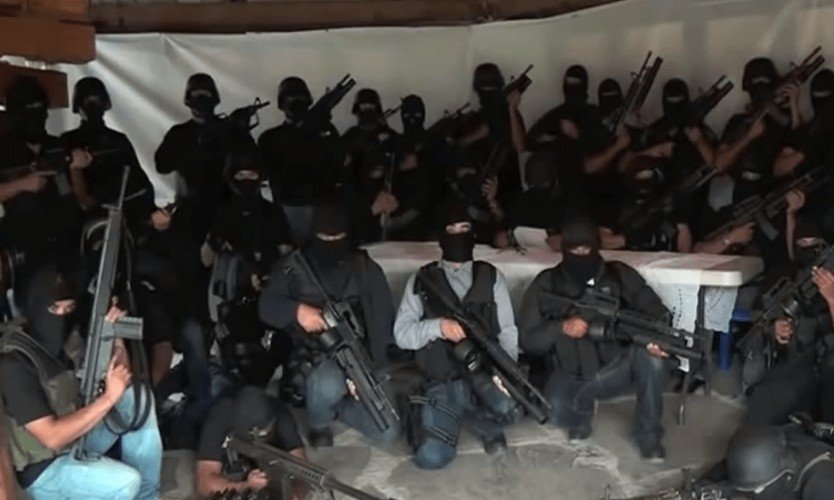
Washington — The administration of President Donald Trump is preparing to harden its strategy against Mexican cartels, with an offensive that would expand intelligence gathering, financial pursuit and coordination among US agencies to strike at criminal organizations operating on both sides of the border, according to a US government report.
Citing the report, the outlet Latinus said the Trump administration is moving toward a more aggressive posture against Mexican criminal groups at a time when Washington has placed drug trafficking and fentanyl smuggling among its top national security priorities.
The shift follows Washington’s designation of several Mexican cartels as terrorist organizations and its expansion of the powers available to various agencies to pursue their financial structures, trafficking networks and operators.
It also brings in agencies that have traditionally played different roles in the fight against organized crime, including the FBI, the DEA, the Bureau of Alcohol, Tobacco, Firearms and Explosives (ATF), and bodies tasked with investigating financial operations.
US pressure has intensified as Trump administration officials question Mexico’s results in the campaign against criminal organizations.
Secretary of State Marco Rubio said recently that the Mexican government has done more than previous administrations to confront the cartels, but he argued that those efforts remain insufficient and said “the head of the snake” of these organizations lies in Mexico.
Washington’s stance poses a fresh challenge for the administration of Claudia Sheinbaum, which has stepped up operations against criminal groups and delivered results in seizures, arrests and the destruction of clandestine labs — while drawing a line at the direct participation of US agents or military forces on Mexican soil.
Pressure on Mexico
The offensive Trump is preparing comes amid growing tension between the two governments over security strategy.
Washington argues that cartel power is not limited to drug trafficking but extends to money laundering networks, arms smuggling, corruption and other criminal activities with the capacity to operate internationally.
The White House is therefore seeking to hit the economic structures of criminal organizations, rather than simply seizing drug shipments or arresting their members.
For Mexico, the new scenario presents a dual challenge: to increase results against the cartels while preventing cooperation with the United States from leading to actions that undermine national sovereignty.
Sheinbaum has insisted that Mexico is willing to work with Washington on security, intelligence and drug enforcement, but on the principle of respect for sovereignty and without allowing foreign intervention.
The hardening US strategy opens a new phase in the bilateral relationship, in which the fight against the cartels is set to move beyond a matter of police cooperation and become an increasingly central component of US national security policy toward Mexico.
More Politics
- Mexico and US Race to Seal Trade Deal Before Midterms
- Trump Plan: H-1B Workers Must Leave After Layoffs
- Playa del Carmen Activists Blast Urban Sprawl in the Jungle
- Sheinbaum to Give Second Government Report in Cancún
- ICSID Orders Mexico to Pay $15.9 Million Over Calica Quarry, Leaves AMLO-Era Claims Pending