The recent death of Nemesio Oseguera Cervantes, alias "El Mencho," the former leader of the Jalisco New Generation Cartel, overshadowed a significant detail: his wife, Rosalinda González Valencia, has been involved in the drug trafficking business longer than he was and, following his death, is likely to remain a key figure in Mexico's criminal landscape.
On International Women's Day, women continue to be a vital part of organized criminal groups in Latin America and have held high-ranking positions in the drug business since trafficking between Latin America and the United States began in the 1940s and 1950s, a topic addressed more fully in the book Narcas: The Rise to Power of the Secret Bosses of Organized Crime.
González Valencia may not inherit the Jalisco New Generation Cartel (CJNG) that El Mencho led, but she will likely remain a central part of its financial structure, as her family is deeply involved in its creation and operation.
In May 2018, she was first arrested in Jalisco on money laundering charges and released three months later due to lack of evidence. In November 2021, she was arrested again, sentenced to five years in prison for financial crimes, and released in early 2025 for good behavior.
Her case exemplifies how nuanced the role of women in organized crime in Latin America truly is. Women's contributions are often reduced to two binary categories: lethal assassins or victims of organized crime. The reality, however, is far more diverse and complex.
Evidence suggests that women are present at all levels of organized crime groups and markets, and their involvement in criminal activities is far more commonplace than gender stereotypes would have us believe. Their presence is not a novelty. Rather, they are a permanent part of the networks around which organized crime expands in Latin America.
According to research by the Washington Office on Latin America (WOLA), the number of women imprisoned for drug-related offenses in the region has increased dramatically over the past two decades. Drug-related crime is the primary driver of female incarceration in most countries of the region. For many women, drug trafficking is a risky opportunity they are willing to take.
It All Stays in the Family
In the case of Rosalinda González Valencia, her family was already established in the criminal enterprise. Her uncle, Armando Valencia Cornelio, alias "El Maradona," founded the now-defunct Milenio Cartel, from which the CJNG emerged, which her husband created and led. Many members of the Milenio Cartel joined the CJNG and El Mencho.
Rosalinda's brothers also founded Los Cuinis, who were allegedly responsible for much of the CJNG's finances and money laundering operations.
Erika González Valencia, possibly a sister of Rosalinda, was also allegedly involved in the Los Cuinis structure and was sanctioned by the U.S. Treasury Department in 2019. A structural breakdown of its ranks also highlights nine other women.
Jessica Oseguera González, alias "La Negra," daughter of González Valencia and El Mencho, was arrested in February 2020 and served a sentence in the United States for managing businesses related to her father's drug trafficking empire.
Narrative Versus Reality
The way society documents and combats organized crime is influenced by the gender composition in law enforcement agencies, as well as by assumptions about masculine and feminine behavior and characteristics.
As a global community, we find it more comfortable to believe that women are co-opted and victimized by organized crime rather than being its protagonists. Narrative prevails over reality, but most people involved in organized crime—both men and women—live in complex ecosystems. They are often disillusioned by a social and political system that impacts their life choices. Many women who enter the drug trade come from marginalized communities and have often been victims of domestic and family violence. Men are also impacted by gender expectations.
But to assume that women lack agency is to ignore the skills they have demonstrated for years in the legitimate economy. The criminal underworld is no different, and women work across the spectrum: as money launderers, assassins, transporters, intermediaries, and logistics geniuses.
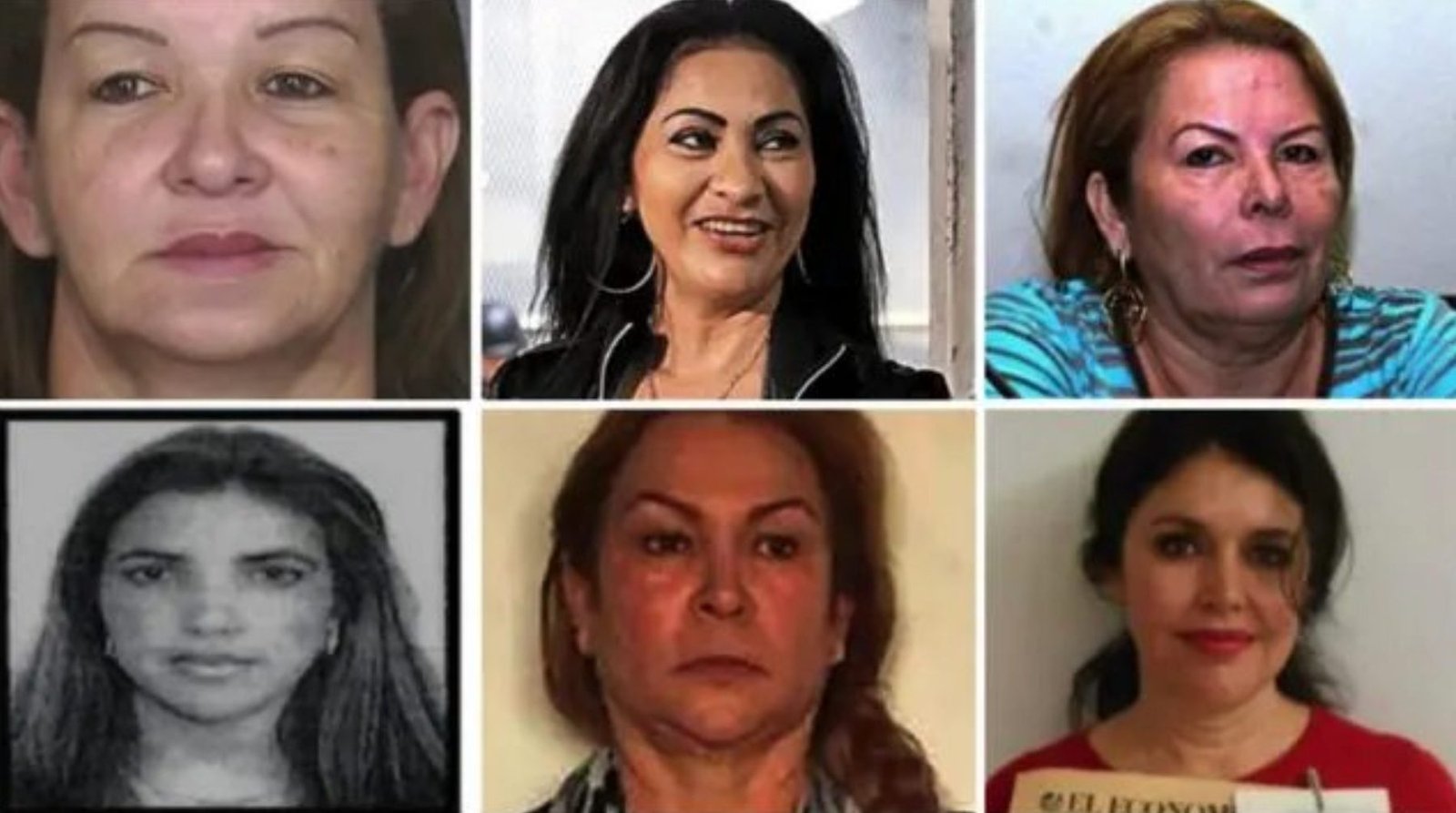
Below are some women who have been key figures in the region's organized crime networks.
Key Figures in the Networks
María del Rosario Navarro Sánchez
Sánchez was one of the first Mexicans to be charged with providing material support to a designated foreign terrorist organization, the CJNG, in April 2025. Prosecutors allege she worked for the group smuggling migrants, weapons, cash, and drugs. Her indictment came months after the first terrorist designations were announced by the administration of U.S. President Donald Trump.
Digna Valle
Valle was the matriarch of the Valle Valle Clan in Honduras. One of 13 siblings from a family originally from El Espíritu, on the border with Guatemala, her clan smuggled cocaine across the border into Mexico and was a key liaison for the Sinaloa Cartel. Her family allegedly sheltered Joaquín Guzmán Loera, alias "El Chapo," when he was a fugitive, and Digna was the first in her family to be arrested during a trip to Miami in 2014. She later helped capture her brothers and her son, who were part of the Valle Valle organization. She was released in 2018 and granted the right to remain in the United States under the Convention Against Torture, though InSight Crime was informed by multiple sources that she had returned to her home in Honduras.
Guadalupe Fernández Valencia
Known as "La Patrona," she is the highest-ranking woman in the Sinaloa Cartel to date. She was the right-hand woman of Jesús Alfredo Guzmán Salazar, alias "Alfredillo," one of El Chapo’s two sons who controls the Chapitos faction of the Sinaloa Cartel and remains a fugitive in Mexico. Fernández Valencia was a key money launderer and logistics operator, and was arrested in Culiacán in February 2016, a month after El Chapo’s last arrest. She pleaded guilty in a Chicago court and, after serving eight years, was released in October 2023.
Antonella Marchant
Marchant headed one of the most feared drug trafficking organizations in Santiago, Chile, founded by her father. She was arrested for the second time in 2021 and imprisoned, at which point she began making video blogs about her life and her relationship with another prominent criminal, Sabrina Durán. The two women met in prison and amassed a huge online following until Durán was murdered after her release in 2023. Her funeral was deemed a public safety risk by the Chilean government.
Hernández Zepeda
Also known as "La Alemana" or "Güera," she was a regional leader of the La Mayiza faction of the Sinaloa Cartel in Manzanillo, Colima, until her capture in November 2024. Mexican authorities indicated that she was one of the biggest generators of violence in this important port city, frequently clashing with the CJNG.
María Dolores Estévez Zuleta
Known as Lola "La Chata" for her flat nose, she was considered Mexico's public enemy number one. She became notorious for trafficking marijuana, morphine, and opium along the U.S.-Mexico border, and eventually ventured into the illegal trade of alcohol, prostitution, and animals. She was arrested and escaped seven times before returning to prison until her death in 1959.
Discover more from Riviera Maya News & Events
Subscribe to get the latest posts sent to your email.