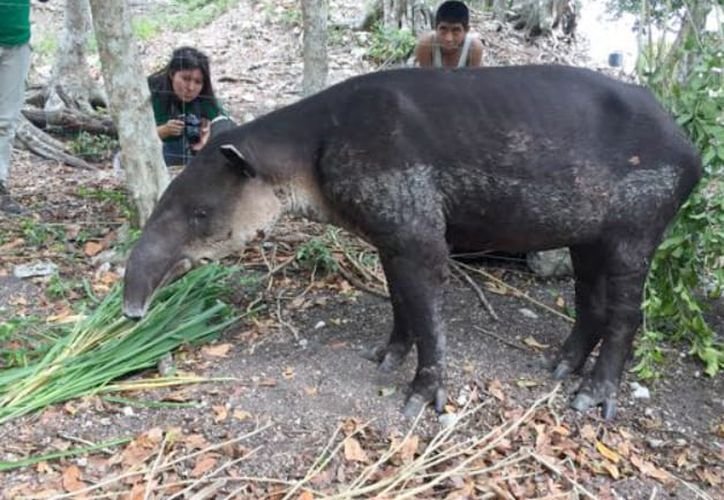
Cancún, Quintana Roo — The tapir and the jaguar are among the species most threatened by illegal hunting in Quintana Roo, despite both being protected under Mexican environmental law, according to the Center for Innovation and Environmental Management Mexico.
Specialists warn that the decline of these mammal populations could have irreversible consequences for the region’s ecosystems. Both species play crucial roles in seed dispersal and population control of other animals, making any legal hunting completely out of the question.
Eduardo Naranjo, a senior researcher at El Colegio de la Frontera Sur, noted that the Sian Ka’an Biosphere Reserve, along with the Calakmul Biosphere Reserve in Campeche and Montes Azules in Chiapas, are the only habitats with sufficient territory and conditions to support viable populations of both species.
Experts emphasized the need to strengthen conservation efforts in the Sian Ka’an Biosphere Reserve, considered one of the last refuges for biodiversity in the Yucatan Peninsula and a strategic site for ensuring the survival of the tapir and jaguar in Quintana Roo.
“For animals like the tapir, which are threatened and require large spaces to live, we need vast areas with very few people to allow for controlled, sustainable hunting, especially in the long term. Such extensive habitats now only exist within protected areas in Mexico,” Naranjo said.
Although environmental laws prohibit jaguar hunting and establish protective measures for the tapir, illegal capture continues in some areas, driven by clandestine trade, traditional beliefs, and conflicts arising from human activities near the jungle.
Specialists indicated that the problem requires a comprehensive approach, including strengthening environmental surveillance, increasing inspection and sanction actions, and implementing ongoing education and awareness programs for communities near natural areas.
More Environment
- Hurricane Simon Threatens Puerto Vallarta as Category 4
- Mexico’s Environment Agency Rejects Four Major Tourism Projects in Quintana Roo
- Sargassum Closes In on 53 Quintana Roo Beaches as Tulum and Puerto Morelos Take the Worst Hit
- Semarnat Denies Environmental Permit for GL Dreams Subdivision in Puerto Morelos
- Caribbean Sargassum Becomes Fertilizer for Global Beer Brands
More Quintana Roo
- Morena Launches 11 Municipal Races in Quintana Roo: Who’s In?
- Rafael Marín Confirms Morena Bid for Cancún Mayor in 2027
- Quintana Roo Tops Mexico’s Human Trafficking Cases, Sheinbaum Warns
- Buen Fin 2026 Set for November 13-17 With Five Days of Deals in Cancún
- IMSS Launches Winter Vaccination Drive in Quintana Roo With 263,000 Doses