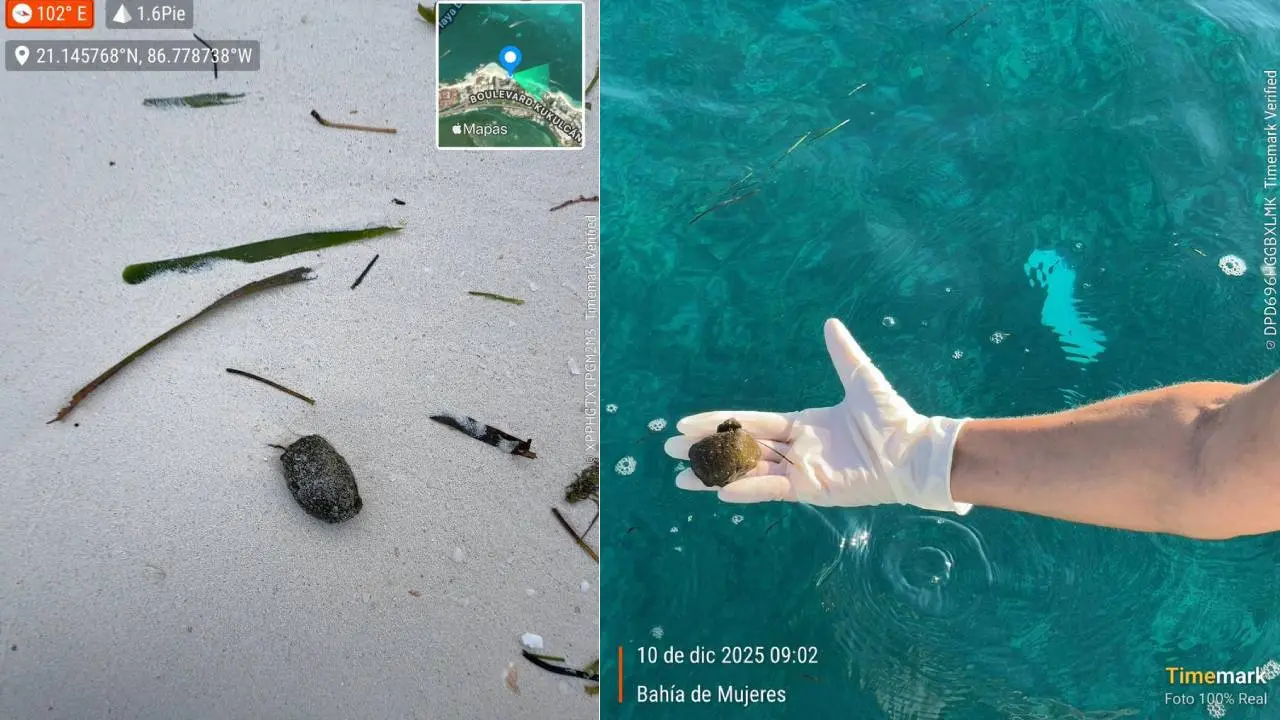
Cancún, Quintana Roo. – The Quintana Roo Nautical Association has categorically denied rumors about the presence of human fecal matter on various beaches in Cancún. Laboratory studies conducted confirm that the residue found is of natural origin, coming from local marine fauna, and does not represent any health risk.
The samples were collected on December 3 at key points such as Playa Las Perlas, Playa Langosta, Playa Tortugas, the marine zone in front of Puerto Cancún, and Playa del Niño. Subsequently, they were subjected to specialized analyses, including PCR tests designed to detect bacteria from the human digestive tract and enteropathogenic agents. The results were conclusive: no contamination from wastewater or presence of human bacteria was detected.
The physical and microscopic analysis of the residue revealed the presence of seagrasses and algae, components of the diet of species such as the Atlantic green turtle (Chelonia mydas), a protected species that feeds in the region’s seagrass meadows. The recovery of these species, which have gone from being endangered to being of “least concern” according to the IUCN, is a positive indicator of the health of the marine ecosystem.
The Quintana Roo Nautical Association emphasized that this phenomenon is natural and recurrent, linked to the presence and recovery of marine fauna, particularly near protected natural areas. It was highlighted that there is constant coordination with federal, state, and municipal authorities to protect and preserve the natural wealth of the Mexican Caribbean.
Finally, it was reiterated that the situation does not represent any risk to the health of residents, tourists, or tourism service providers, guaranteeing the normality of recreational and nautical activities in the area.
Discover more from Riviera Maya News & Events
Subscribe to get the latest posts sent to your email.