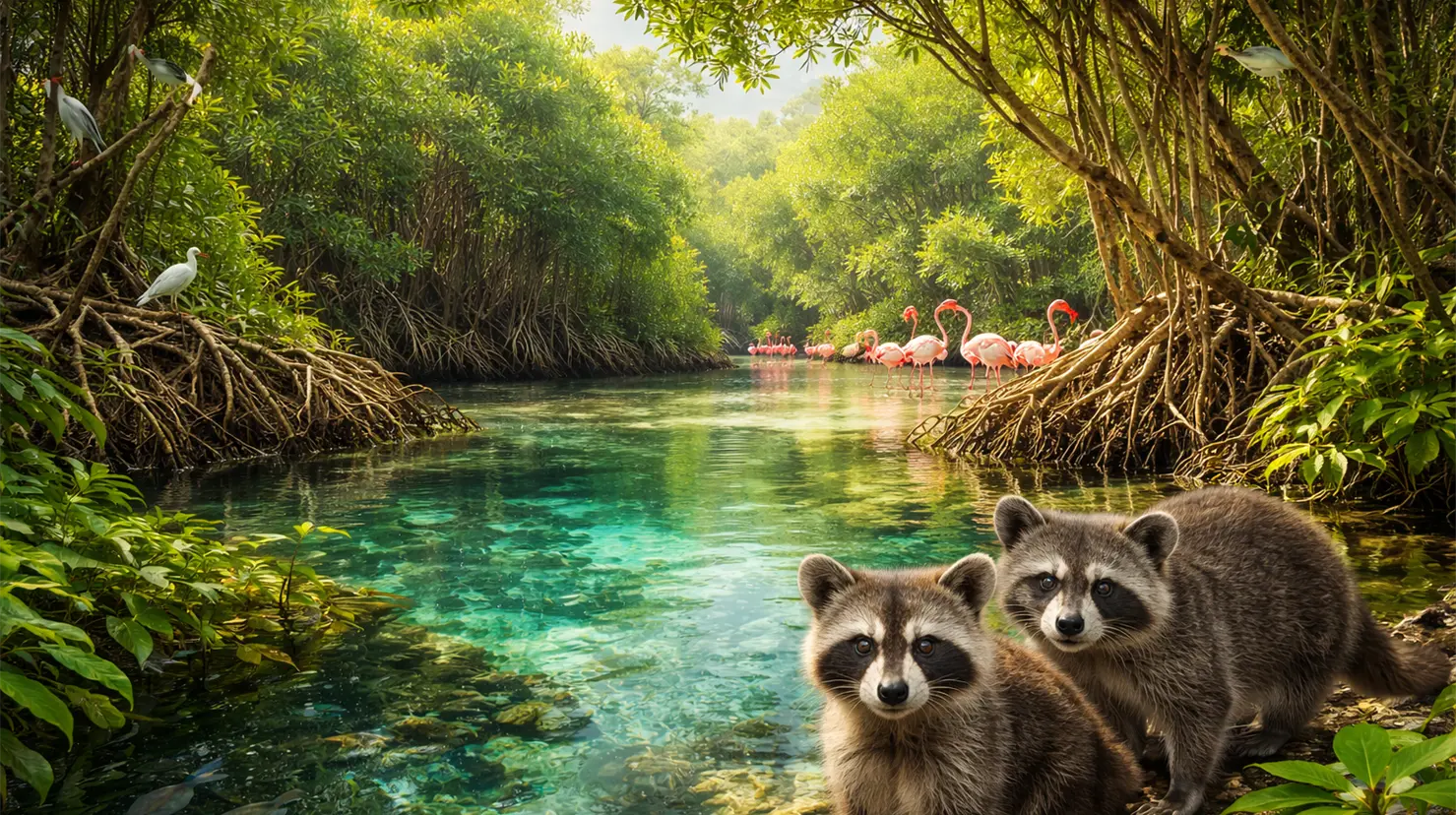
Sisal, Yucatán — Beyond its white sand beaches, Sisal harbors unique ecosystems where mangroves, freshwater, and biodiversity coexist in balance.
When I think of a beautiful place with breeze, white sand, and much history, I immediately think of the Yucatán coast, especially the Magic Town of Sisal.
This precious fishing port, with Mayan roots, is known for its tranquil waters and serene landscape, but also for offering profound experiences of connection with nature.
Sisal is a true paradise for ecotourism lovers. Here, unique ecosystems abound that can be explored in silence, among friends, navigating the swamps by kayak and discovering hidden petenes that function as true oases of life.
What Are Petenes and Why Are They So Important?
Petenes are unique ecosystems of the Yucatán Peninsula. They appear as islands of dense and lush vegetation, surrounded by water or floodable zones, and are directly associated with coastal springs or freshwater eyes.
These natural islands fulfill a vital function:
- They are a refuge for numerous species of flora and fauna
- They help regulate the water cycle
- They maintain the ecological balance of coastal zones
The vegetation of the petenes is dominated by mangroves and low jungle, and access is usually achieved by crossing the swamp in kayak, which turns the journey into an intimate and silent experience.
What Role Do Swamps Play in These Ecosystems?
Swamps are low, marshy wetlands, generally of brackish water, with vegetation adapted to permanent or periodic flooding. They function as the gateway to coastal springs.
In Sisal, navigating the swamp is entering a natural labyrinth that connects directly with the petenes, allowing one to understand how freshwater and saltwater coexist and shape one of the most complex ecosystems of the region.
Why Is Petén Culú One of the Most Special in Sisal?
One of the most beautiful and representative petenes of Sisal is Petén Culú, whose name comes from the Mayan word ‘k’ulu’, which means ‘raccoon’, an animal that inhabits the area abundantly.
In the center of the petén is a ‘sayab’, a freshwater spring often described as a cenote or water eye. To reach it, one traverses channels surrounded by mangrove until arriving at the heart of the island, where the landscape changes completely.
Its crystalline waters and internal rivers explain the high biodiversity of the place. It is an ideal space for:
- Bird observation
- Nature photography
- Hiking
- Aquatic exploration
- Swimming in freshwater
For those who love nature, Petén Culú is an authentic sanctuary.
How Is Responsible Tourism Practiced in Sisal’s Mangroves?
The Sisal community understands that tourism can be a conservation tool. Therefore, many families have organized into cooperatives that offer tours designed to minimize environmental impact.
The outings are conducted in:
- Kayak
- Paddleboard
- Motorless vessels
This reduces stress on fauna, especially birds like flamingos and cormorants, and allows for a more silent and respectful experience.
What Makes Sisal a Different Destination on the Yucatán Coast?
Sisal combines natural beauty with environmental consciousness. Unlike other tourist destinations, here the experience goes beyond rest: it is about understanding and valuing the ecosystems that sustain coastal life.
The town has bet on responsible tourism, driven by local cooperatives that promote educational and low-impact tours, allowing visitors to know the natural wealth without altering its balance.
So, if you are an ecotourism lover, this 2026 is the ideal moment to explore new places that perhaps you did not know existed and that may be exactly everything you were looking for.
Discover more from Riviera Maya News & Events
Subscribe to get the latest posts sent to your email.