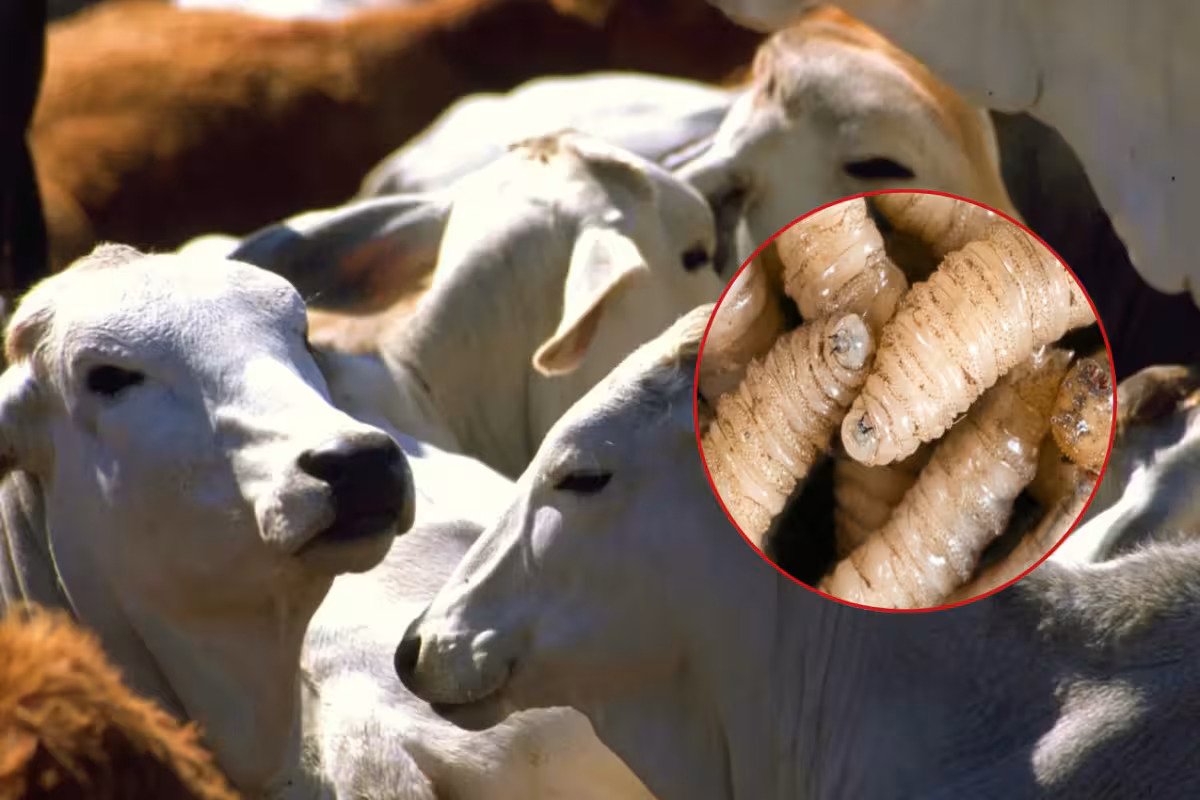
San Felipe Segundo, Quintana Roo — Farmers in the San Felipe Segundo ejido have begun constructing homemade traps to capture the screwworm fly, a pest responsible for a parasitic infestation affecting livestock across the Yucatan Peninsula. The initiative emerged after a neighbor lost an entire litter of piglets to larvae infestation, alerting the community to the growing health risk.
With support from technicians from the Sembrando Vida program, producers built rustic traps using transparent plastic bottles and beef liver as bait. Armando Canul Ruiz explained that they started making the traps earlier this month to attract and capture the flies before they could spread further.
“Although the method is simple, we didn’t know how to do it,” Canul Ruiz said. “With technical guidance, we integrated it into a community project called ‘biofactory of biological inputs,’ focused on producing alternatives for pest control.”
The traps involve cutting a hole in the middle of a bottle to allow the insect to enter and placing a piece of offal at the bottom as bait. Farmers then distribute them in fields and breeding areas.
José Ake Vera noted that liver is the most effective bait due to its strong odor, though obtaining it requires traveling to the municipal seat on slaughter days.
Carlos Palomo Chan recounted that after the piglet incident, they inspected their pens and found other animals affected. This prompted them to reinforce preventive measures and join the trap-making effort.
Farmers believe the strategy could be replicated in other ejidos with technical support, aiming to reduce the presence of the fly that transmits larvae. Domingo Flota Castillo, president of the local livestock association, said he was unfamiliar with these traps but considered it positive to spread awareness of their fabrication. He added that the municipality has reported over 100 cases and that larvicide is being distributed to treat wounds on affected cattle.
Health authorities have maintained permanent surveillance and trained producers to protect herds and ensure they remain marketable.
Discover more from Riviera Maya News & Events
Subscribe to get the latest posts sent to your email.