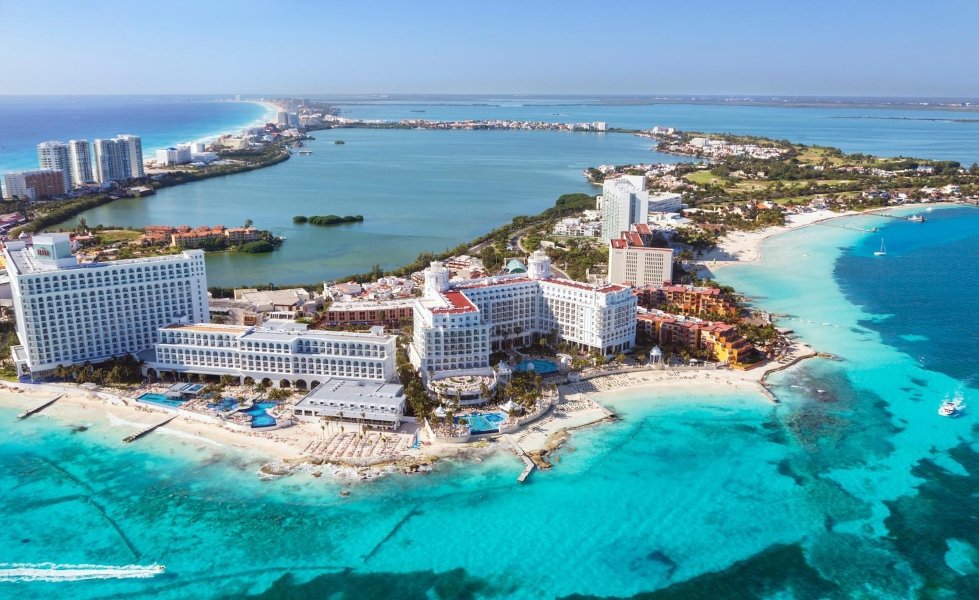
Cancún, Quintana Roo — Quintana Roo will lead Mexico’s economic growth in 2027 with an estimated expansion of 2.8 percent, outpacing the country’s other 31 states, according to projections in BBVA Research’s Regional and Sectoral Situation study.
The analysis places Coahuila second with forecast growth of 2.7 percent, followed by Mexico City at 2.3 percent and Querétaro at 2.2 percent. Nuevo León and the State of Mexico would each grow 2 percent.
BBVA Research expects state economies to recover in 2027 after a 2026 marked by moderate national GDP growth of 1.4 percent.
For Quintana Roo, the forecast makes it the most dynamic state economy expected next year, in contrast with the uneven performance anticipated across the rest of the Yucatan Peninsula. Yucatán would grow 1.5 percent, Campeche just 0.9 percent, and Tabasco would face a 0.3 percent contraction.
The weaker performance in Campeche and Tabasco is tied to restrictions on oil production and the completion of major infrastructure projects, factors that have limited economic activity in the region.
Northern states would also see a significant recovery, driven mainly by manufacturing exports. Chihuahua and Baja California would reach growth rates of 1.8 percent in 2027, boosted by U.S. demand for computers, electronics and technology for data centers.
The study notes that in the first half of 2026, Mexican exports reached $353.4 billion, up 25.1 percent year on year.
However, export growth was concentrated mainly in Chihuahua and Jalisco, which accounted for 84.4 percent of the net increase in Mexican sales abroad. The concentration reflected rising U.S. demand for technology products, particularly those tied to digital infrastructure and data centers.
Despite that performance, BBVA Research warns that the export boom has not translated into a proportional number of formal jobs, because technology industries require large capital investments but not necessarily an equivalent expansion of their workforces.
By sector, primary activities — agriculture, livestock and fishing — would slow from 3.8 percent growth in 2025 to 1.4 percent in 2026. Secondary activities, mainly industry and construction, would recover 1.1 percent after contracting in the previous period.
The tertiary sector, made up of commerce and services, would grow 1.5 percent nationally, with the most momentum in Querétaro, Guanajuato and the main cities of central and northern Mexico.
Although the 2027 outlook is more favorable, the financial group believes the recovery will still be insufficient to narrow economic gaps between Mexico’s regions. It identifies weak investment, trade uncertainty, insecurity and constraints in energy, water and logistics infrastructure as the main obstacles.
The study says the key challenge will be turning export growth into more productive investment, formal job creation and economic diversification so that the recovery benefits a broader share of the population.
For Quintana Roo, the 2.8 percent forecast is the highest projected state growth for 2027, though it remains an estimate subject to the performance of the national economy and the risks identified by BBVA Research.
More Economy
- Tulum Airport Offers Up to 100% Incentives to Airlines Launching New Routes
- Mundo Maya Hotels Aim for 90% Occupancy in High Season
- Quintana Roo Tourism Ministry Backs Playa del Carmen Tax on Vacation Rentals
- Quintana Roo’s Government Transition 30% Complete Across 86 Agencies
- Quintana Roo Gastronomy Expands to More Municipalities
More Quintana Roo
- Abortion Access in Quintana Roo Still Limited Despite Decriminalization
- Quintana Roo Governor Honors 300+ Athletes After Record 83 Gold Medals
- Quintana Roo Reviews More Than 40 Real Estate Developments for Possible Irregularities
- Quintana Roo Has Arrested 11 Former Mayors Since the 1990s
- Sargassum Covers 96.4% of Quintana Roo Beaches, Only Five Remain Clean