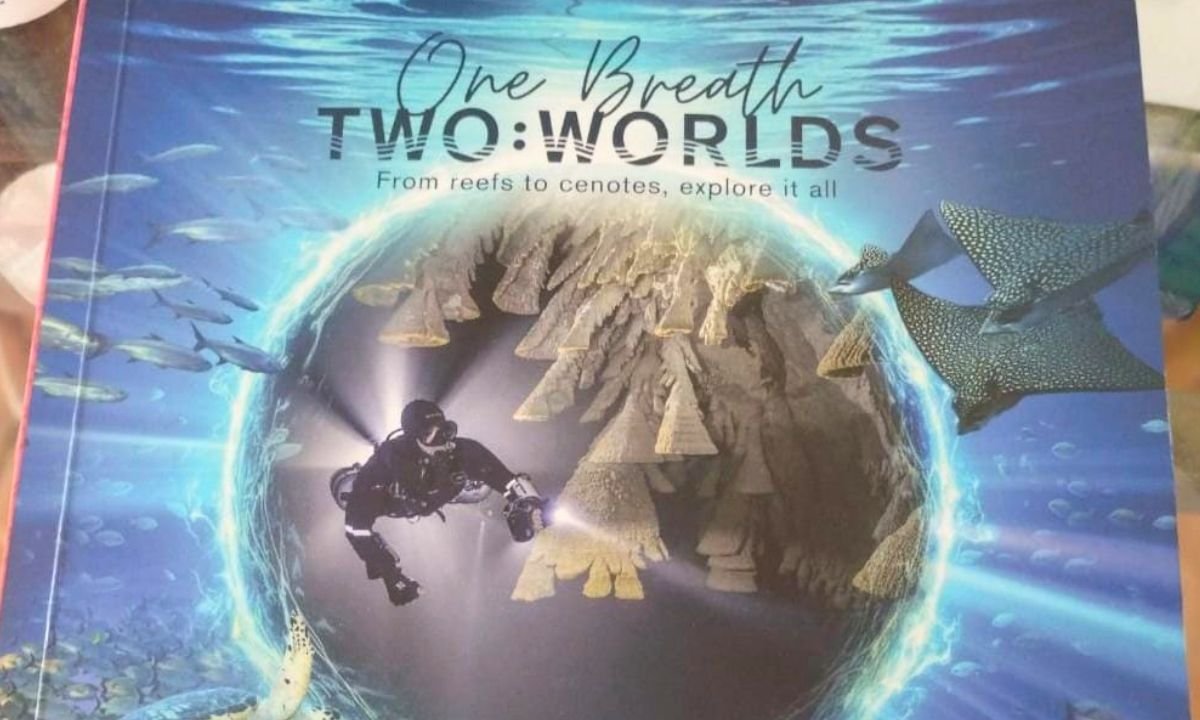
Playa del Carmen, Quintana Roo — The Quintana Roo Tourism Department has launched an international diving guide titled “One Breath Two: Worlds From Reefs To Cenotes, Explore It All” to promote the state as a premier diving destination. The guide highlights the region’s unique underwater attractions, including the Yucatan Peninsula’s distinctive cave diving and bull shark sightings in Playa del Carmen.
Economic Impact and Target Markets
State Tourism Secretary Bernardo Cueto said the diving sector’s most important markets are the United States, Canada, and the United Kingdom. He noted that more than 500,000 British tourists visit Quintana Roo annually specifically for diving.
“A tourist who comes for diving stays longer, spends more, generates more employment, and creates greater economic impact,” Cueto said.
He revealed that the initial print run of 1,000 copies has already sold out. The guide will be distributed at tourism fairs and is also available digitally.
“The strategy is to integrate diving into Quintana Roo’s tourism promotion through the Tourism Promotion Council, but specifically at niche fairs like the DEMA Show,” Cueto explained. “It wouldn’t work at broader events like FITUR where it might get lost.”
Guide Content and Collaboration
Miguel Cámara Ruiz, director of Tourism Planning for the Quintana Roo Tourism Department, said the guide showcases diving schools throughout the state, providing visitors with safety guarantees and access to professional services.
“The goal of the diving guide is to show divers from around the world where they can go to explore, whether in the sea or cenotes,” Cámara said.
He noted that 100% of the underwater photography in the guide was donated, and anyone can request a copy since it’s available digitally for download.
“The idea is that more schools will join the diving guide, and we hope this launch sparks interest in promoting the destination,” Cámara added.
He emphasized that hotels are showcasing the natural marine beauty that divers can experience in the Mexican Caribbean, and the guide will serve as a practical tool for selling enhanced experiences.
“All problems that occur in the sea eventually connect to the cenotes and vice versa,” Cámara highlighted. “That’s why we’re giving recognition to each location and working together to put Quintana Roo diving at the highest level.”
Historical Context and Recognition
Alberto Friscione Carrascosa, a diving pioneer who collaborated on the guide, discussed the historical significance of underwater exploration in the region. He mentioned Ramón Bravo, who received posthumous recognition at the event for his work promoting the area through underwater coverage for the newspaper Universal in the 1950s and for writing 20 novels about the sea, including the famous “Tintorera.”
“I met Ramón Bravo when he was in Isla Mujeres, and I witnessed how he collaborated on making the movie ‘Tintorera’ on set, where he presented real fish without killing them,” Friscione recalled.
“The legend of Ramón grew until the Hollywood film ‘Licence to Kill’ from the James Bond series was filmed in Isla Mujeres and became very successful.”
Friscione explained that the creation of underwater sculptures and the submarine museum aimed to foster new marine life through artificial reef formation while providing divers with additional sites to explore, reducing pressure on natural reefs.
Friscione also received recognition from state authorities and the Quintana Roo diving community for his pioneering work in diving, underwater photography, and cultural heritage promotion.
Discover more from Riviera Maya News & Events
Subscribe to get the latest posts sent to your email.