
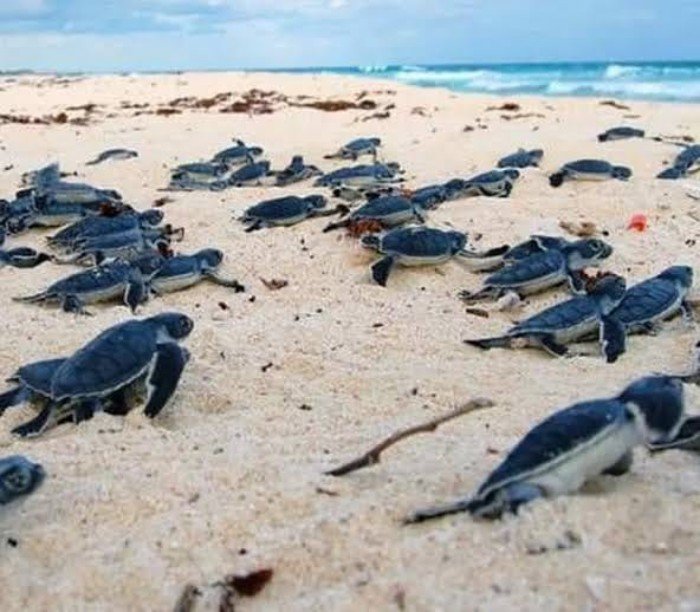
Isla Mujeres, Quintana Roo — Mexico’s federal environmental enforcement agency has ruled out signs of recurring negligence in the deaths of 45 sea turtle hatchlings at a turtle camp in Isla Mujeres, officials said.
The Federal Attorney for Environmental Protection (PROFEPA) said the most likely explanation is an atypical daytime hatching that left the hatchlings exposed to high temperatures.
José Luis Funes Izaguirre, head of PROFEPA’s office in Quintana Roo, said inspectors conducted a review on July 24 that lasted about 15 hours and included inspection of the camp’s three enclosures.
Based on information gathered during the review, the hatchlings likely emerged from their nests during the day rather than at night, as usually happens, leaving them exposed to higher temperatures. That would have caused probable heat stroke and the deaths of the 45 animals, the agency said.
Funes Izaguirre said the evidence gathered so far does not establish that the deaths resulted from recurring omissions, negligence by any authority, or repeated oversights in camp management.
The agency’s position came after the case raised questions about how the sea turtles were handled. The mayor of Isla Mujeres had confirmed that an investigation would be opened to determine the circumstances of the deaths.
The federal official defended the municipality’s work protecting sea turtles, but the administrative process is ongoing. PROFEPA will formally require the Isla Mujeres city council to hand over requested documents and present information related to what happened at the camp.
The agency has not suggested the deaths were deliberately caused. Funes Izaguirre said the case should be analyzed in light of the particular conditions involved in sea turtle management and protection in Quintana Roo.
Although the inspection so far does not point to recurring negligence, the city council must still provide the required documentation and formally explain the circumstances in which the 45 hatchlings died.
More Environment
- Cave Divers Find Ancient Animal Bones in Yucatán Cave
- Pre-Hispanic Bee House Unearthed in Tulum Sheds Light on Ancient Maya Homesteads
- Cozumel Crocodile Sightings Rise With Rains and Habitat Changes, Biologist Says
- Quintana Roo Whale Shark Season Closes With Up to 400 Sightings
- Mara Lezama Unveils Quintana Roo Sustainable Tourism Master Plan Through 2050
