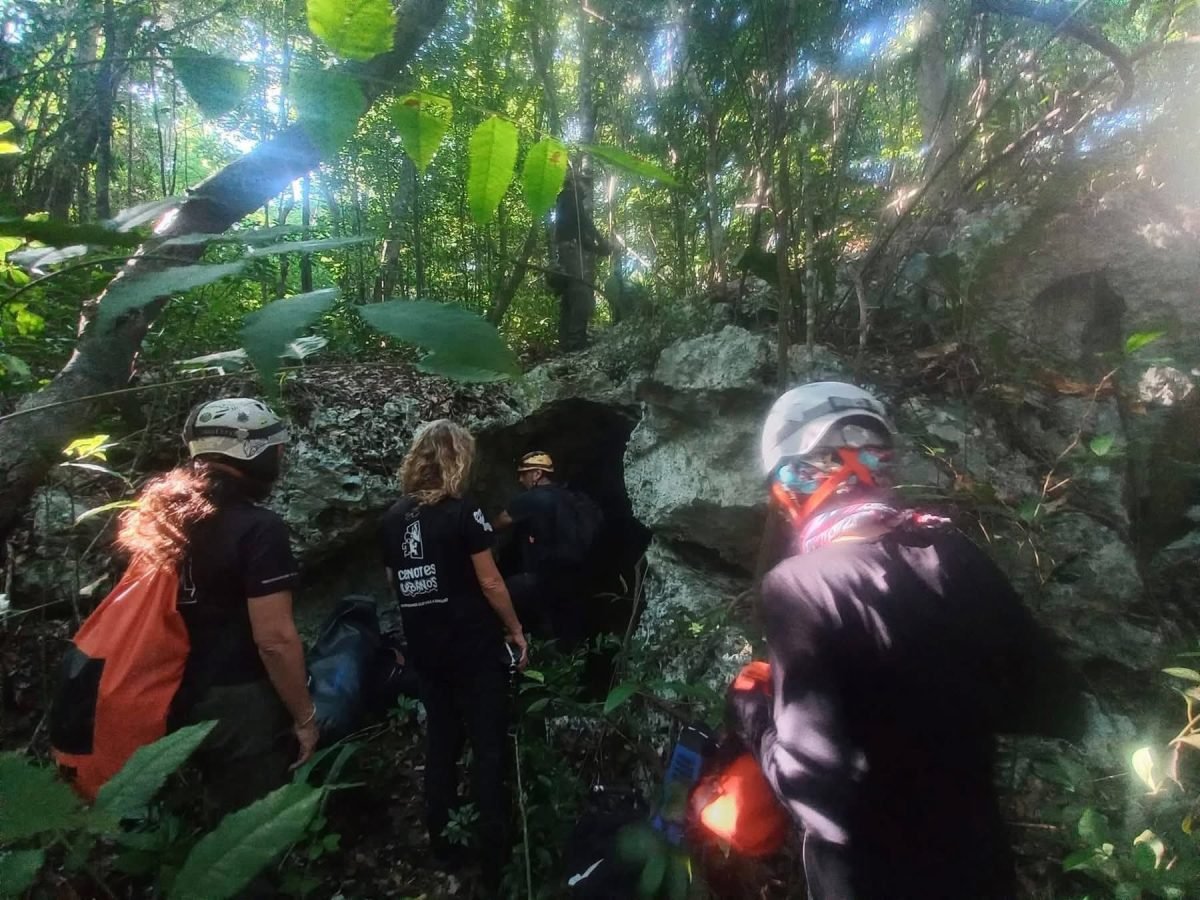
Playa del Carmen, Quintana Roo — Explorations of caves, cenotes, and caverns beneath this popular tourist destination have identified pre-Hispanic artifacts in at least 30 underground systems, confirming the archaeological significance of the area’s subterranean landscape.
The discoveries include evidence of ancient human occupation and structures such as tepezcuintle traps, according to researchers involved in a citizen science project monitoring these spaces.
Juan Carlos García, a volunteer with the project, said approximately 30 percent of the inspected caverns show some type of archaeological evidence. This proportion demonstrates the high potential for new discoveries in the region, he explained.
Whenever artifacts are detected, the site remains intact, undergoes careful documentation, and authorities notify the National Institute of Anthropology and History (INAH), the agency responsible for protecting cultural heritage. For security reasons and to prevent looting, the exact locations of the caves remain confidential.
In recent years, INAH has collaborated at least 10 times with this citizen project to preserve and recover materials located during explorations. Participants emphasize that systematic recording helps quantify the historical wealth that remains beneath the city.
Researchers warned that Playa del Carmen’s urban and tourism growth increases the need to protect these underground spaces. They reiterated that the project’s goal is not only to document findings but also to actively contribute to conserving the archaeological and natural heritage beneath the city.
Discover more from Riviera Maya News & Events
Subscribe to get the latest posts sent to your email.