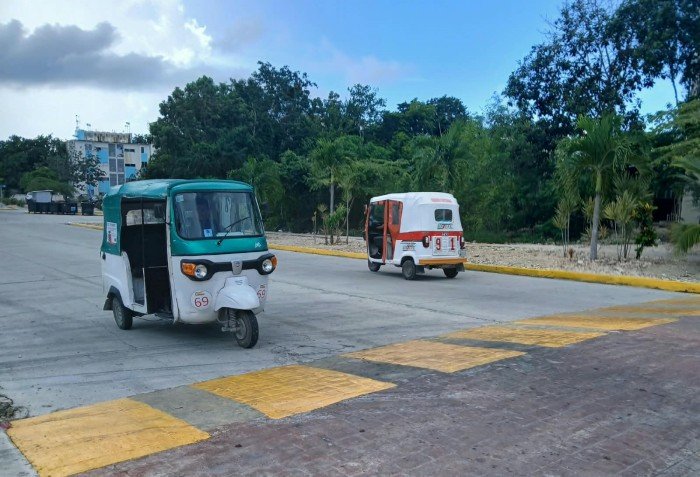
Playa del Carmen, Quintana Roo — Fewer than half of the mototaxis operating in Playa del Carmen have been plated since the city launched its regularization drive, according to state tax officials.
Roughly 1,130 of the vehicles have received plates so far, about 45% of the fleet, said Abraham Martín Álvarez, director of revenue collection at the Quintana Roo Tax Administration Service (SATQ) in Playa del Carmen.
The official acknowledged the figure fell short of expectations but said the municipality’s economy has had a difficult year.
Playa del Carmen served as the pilot for the program before it was expanded to other municipalities, Martín Álvarez said.
The Mobility Institute has authorized 2,600 mototaxis across the municipality. Of those, 450 of the 600 registered in Puerto Aventuras now carry plates, along with 680 of the 2,000 in Playa del Carmen itself.
Officials aim to regularize 60% of the registered fleet by the end of the year, a target Martín Álvarez described as an act of “social justice” for the sector.
More Government
- Cancún Paving Work on Huayacán, 135 and Kabah Avenues to Slow Traffic Through Nov. 21
- Playa del Carmen Builds First Site of Experimental Sargassum Treatment Center
- Quintana Roo, INAH Set Early 2027 Payment for Sabidos Ejido Lands
- Cancún Waives Fines on Irregular Construction Until December 31
- Playa del Carmen Still Lacks City Museum and Historical Archive, Chronicler Warns
More Playa del Carmen
- Environmental Group Urges Fresh Studies Before Playa del Carmen Beach Nourishment Project
- Hotel B&B Workers in Playa del Carmen Protest Unpaid Severance and Pressure to Sign Resignations
- Playa del Carmen Tourism Rebounds, but Providers Say Service and Security Must Improve
- Quintana Roo Logs More Than 353 Monarch Butterfly Sightings
- Playa del Carmen to Host Quintana Roo International Film and Series Festival 2026