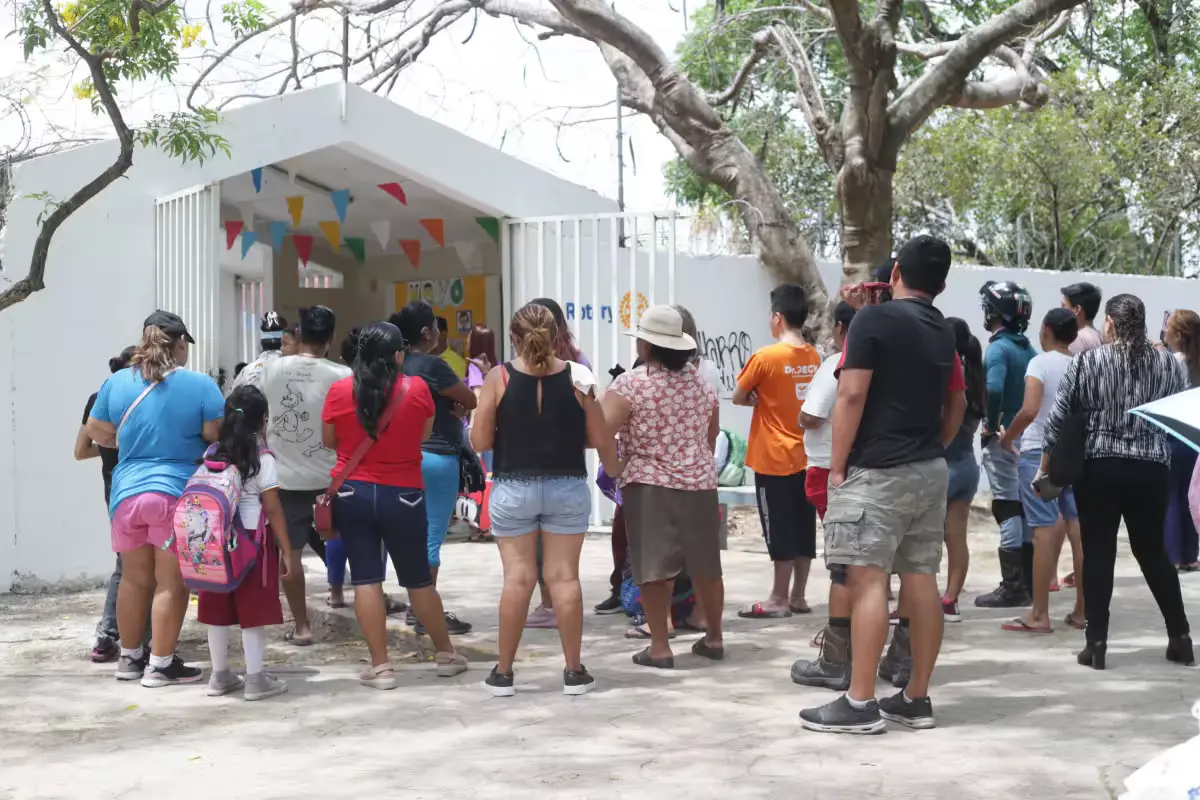
Cancún, Quintana Roo — With three weeks to go before the 2026–2027 school year begins, the charging of school fees at public campuses in Quintana Roo is once again dividing parents, who say they want to support their children’s schools but also defend their right to free public education.
The Servicios Educativos de Quintana Roo (SEQ), the state education authority led by Elda Xix Euán, has a budget of 9.189 billion pesos this year. Parents argue the fees are an added burden during a season of heavy spending on uniforms, supplies, shoes, backpacks and transportation, and insist public schooling should be free as guaranteed by the Constitution.
Wilma Canul, a mother, said the CBTis 111 technical school is asking for up to 2,500 pesos in school fees plus another 2,500 pesos for enrollment. Another parent, Brayan González, said that when he tried to enroll his child in fifth grade, he was asked to pay 450 pesos. He said school staff would otherwise delay handing over report cards or processing other paperwork.
The group Padres Aliados de la Educación (Allied Parents for Education) said it has received at least 100 complaints through its social media channels from across the state, particularly about fees charged to enter upper secondary education.
Education authorities have repeated that school fees are strictly voluntary and that no institution may condition a student’s enrollment, access to classes, or delivery of official documents on payment. Any practice that forces financial contributions or limits the right to education can be reported to the proper authorities, they said.
Héctor Santín Gómez, president of Padres Aliados de la Educación, said the fees violate the current legal framework. “Education is already established as free up to the upper secondary and higher education levels,” he said. “There should be no fee at all, and all the guardians who have come to us have been filing their complaints.”
Santín Gómez explained that voluntary contributions must be set at school assemblies and approved by a majority of attending parents. Even then, he said, no parent can be forced to pay. “Even if it has been approved, it is not obligatory; it is voluntary,” he emphasized.
He recommended that any parent whose child is denied report cards or other official documents, or who is publicly singled out for not paying, file a complaint with the state education department and the National Human Rights Commission.
Despite state obligations to fund educational infrastructure, various campuses condition enrollment or request contributions, arguing they need resources to maintain facilities and cover basic services such as restrooms.
More Community
- Pre-Hispanic Bee House Unearthed in Tulum Sheds Light on Ancient Maya Homesteads
- Isla Mujeres Approves Updated Development Plan With 185 Action Items
- TUCSA Cuts Playa del Carmen Public Transit Fleet to 56 Buses
- Cozumel Launches 2026 Workshops to Strengthen Civil Organizations
- Tulum’s Feria de la Cancha Maya to Gather Five Ceremonial Centers
More Cancun
- Deported Mexicans Flock to Quintana Roo as Support Services Strain
- Where to Buy the MOBI Card in Cancún and How Much It Costs
- Iván Mondragón Released From Prison in Cancún Child Abduction Case
- Parque Cancún to Host First Olympic Cross Country Mountain Bike Race
- Quintana Roo Aims to Recover 500,000 Airline Seats, Targets 20 Million Tourists in 2026