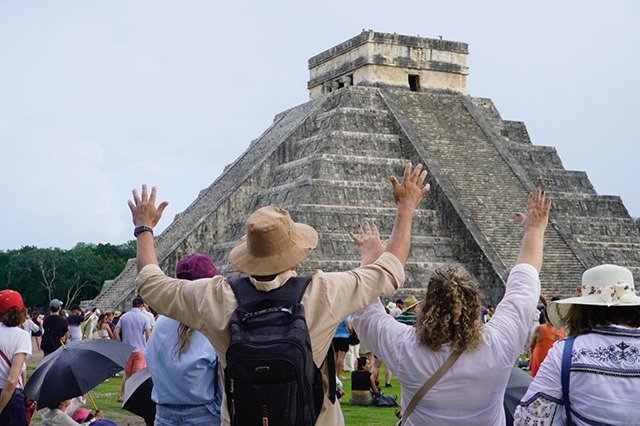
Chichen Itza, Yucatan — The Kukulcan pyramid at Chichen Itza is shining brightly this March after NASA selected it as the Astronomical Image of the Day, inviting the world to witness the magical descent of the Feathered Serpent during the spring equinox on Friday, March 20, 2026.
Between 3 and 5 p.m. on the equinox, sunlight projects seven triangles of light and shadow on the pyramid’s northern staircase. These merge with the serpent’s head sculpture at the base, creating the illusion of Kukulcan descending to fertilize the earth, a phenomenon celebrated by the Maya for centuries.
This marks the fourth time in 14 years that NASA has recognized El Castillo, a global symbol of Mexico and a modern wonder since 2007. Visitors can also admire the Milky Way above the pyramid, as captured in a 2019 image that combined Jupiter and Saturn with the galaxy.
The National Institute of Anthropology and History (INAH) notes that Chichen Itza offers more than just El Castillo. The Temple of the Warriors provides another archaeoastronomical spectacle where a red jaguar illuminates during equinoxes. Among cenotes and ancient constructions, the Maya city continues to tell its story through the rhythm of the sun and stars.
Visitors to Chichen Itza during this period encounter not just a visual spectacle but centuries of living history. Each stone of El Castillo, each shadow playing with sunlight, recalls the Maya’s astronomical precision, mathematical mastery, and connection to nature. It’s a journey through time where past and present meet as Kukulcan descends silently to announce a new cycle of life and fertility.
Discover more from Riviera Maya News & Events
Subscribe to get the latest posts sent to your email.