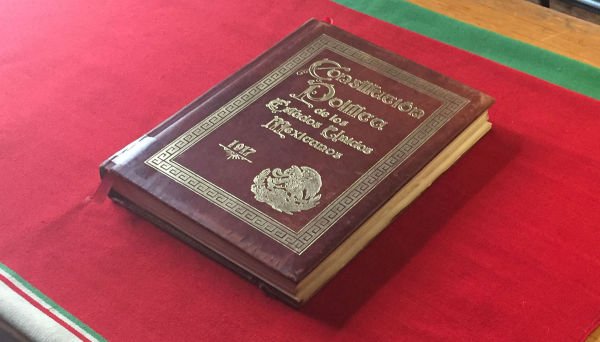
Mexico City, Mexico — Mexico has had several constitutions throughout its history, each reflecting the country’s political, social, and economic changes.
The Federal Constitution of 1824 was the first major independent constitution, establishing a federal representative republic with separation of powers. States were sovereign, and Catholicism was the official religion. Although it didn’t highlight specific articles like later constitutions, it laid the foundations for independent Mexico after the fall of Agustín de Iturbide’s empire.
In 1836, the Seven Laws emerged, a set of constitutional laws that replaced the 1824 Constitution and established a centralist regime. These laws granted broad powers to the president, transformed free states into centrally controlled departments, and limited voting rights to literate citizens with minimum income. The concentration of power in the president and the creation of the Supreme Conservative Power generated regional tensions and political conflicts.
The 1857 Constitution sought to strengthen individual rights and establish a secular state. Among its most notable articles were Article 7 (freedom of expression), Article 10 (right to bear arms), Article 13 (abolition of special privileges), and Article 22 (prohibition of torture) along with the abolition of noble titles. This constitution promoted the separation of church and state and consolidated fundamental civil liberties.
Finally, the 1917 Constitution, currently in effect, emerged after the Mexican Revolution and was pioneering in including social and labor rights alongside civil and political rights. Among its most important articles are:
- Article 3: Secular, free, and compulsory education.
- Article 27: Land and resource ownership, the basis of agrarian reform.
- Article 123: Labor rights, minimum wage, maximum workday, and social security.
- Article 28: Prohibition of monopolies.
- Article 130: Regulation of state-church relations.
Currently, these articles remain the foundation of Mexican law, though they face significant challenges. For example, in education, inequalities persist between urban and rural areas; in land ownership, conflicts exist between communities and companies; and in the labor sphere, the minimum wage remains low, working conditions are precarious, and there’s debate about the 40-hour workweek. Additionally, corruption and lack of infrastructure limit the full implementation of some rights.
Overall, Mexico’s constitutional evolution reflects the search for a balance between individual, social, and labor rights, state organization, and defense of national heritage, adapting to the political and social challenges of each era.
Discover more from Riviera Maya News & Events
Subscribe to get the latest posts sent to your email.