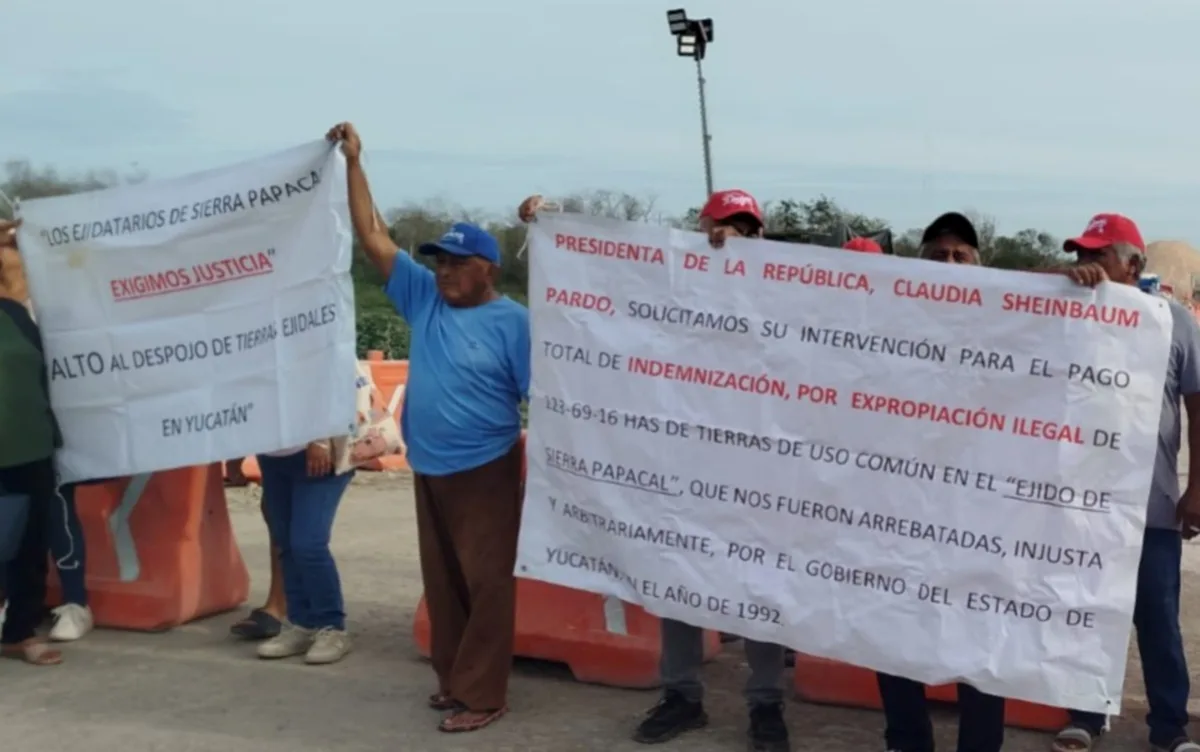
Sierra Papacal, Yucatan — Farmers from the Sierra Papacal community near Mérida blocked construction on the Maya Train project on Tuesday, demanding payment for land they say was illegally expropriated by the Yucatan state government in 1992.
The protesters said they would maintain a permanent blockade of the rail line connecting Poxilá in Umán with the port of Progreso until they receive full compensation for 223.69 hectares of communal land. They also threatened to cut water supply to the coastal communities of Chuburná and Chelem in Progreso, as well as the Yucalpetén industrial zone, repeating a tactic used during protests in February.
“Our lands were taken unjustly and arbitrarily,” community members stated, calling on President Claudia Sheinbaum to intervene. They claim the 1992 expropriation was illegal and that they have never been properly compensated.
In February, farmers blocked construction on the Chuburná Puerto highway and shut down 10 water wells supplying coastal areas, expressing fears of losing their land to the train project and complaining about lack of government engagement on compensation.
Government Response
The Yucatan state government responded with a statement asserting the protests lack legal and documentary basis, claiming compensation for the expropriated land was fully paid in 1993.
According to state officials, the dispute dates to 1990 when the government requested expropriation of 231 hectares of communal land. A 1992 presidential resolution authorized taking 223.69 hectares for a water catchment system serving Chuburná and Chelem ports.
The National Property Appraisal Commission set a commercial value of $1.6 million per hectare, resulting in total compensation of $357.9 million. Records from the Fund for the Promotion of Agrarian Infrastructure show this amount was paid in 1993 to corresponding farmers, with documentation showing at least 128 farmers received payment and remain on the community registry.
The state government reported holding 13 dialogue sessions with community representatives, including nine meetings at the governor’s palace and four in the community territory. These discussions involved state, federal, and municipal officials addressing infrastructure and land issues.
“We will not allow actions that jeopardize water supply or essential services for the population,” the statement warned, adding that authorities will act to protect collective interests and prevent disruptions from the protests.
Discover more from Riviera Maya News & Events
Subscribe to get the latest posts sent to your email.