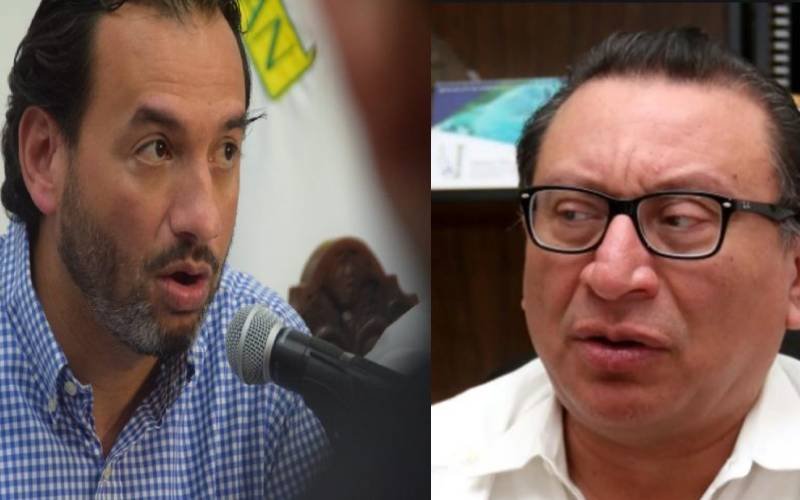
Mérida – A mafia between specialists and major pharmaceutical companies is once again operating at the Yucatán Psychiatric Hospital, where the development of research without protocol represents a multi-million dollar business that resurfaced two years ago when Arsenio Rosado Franco took charge of the hospital.
The experimentation of unpatented drugs among patients is a long-standing problem and involves recognized specialists, one of whom was murdered, specifically Felipe Triay Peniche, as well as recognized politicians who work there.
This time, the studies were authorized by Yucatán Health Secretary Mauricio Sauri Vivas, with the endorsement of Governor Mauricio Vila Dosal, who has consistently defended the “early morning deal” committed in 2019 when the hospital once again returned to state government control.
Given the situation prevailing at the Yucatán Psychiatric Hospital, the secrecy that dominates the department is even greater, especially at the hospital, and worst of all, the Yucatán State Human Rights Commission (Codhey) ignores the serious problem that has returned and puts the lives of users or patients at risk.
Historical Context of Drug Trials
According to the investigation file from the Yucatán Psychiatric Hospital, which consists of 178 pages, all signed and stamped, from October 2005 to April 2009, there were four drug experimentation studies on users housed in this hospital.
On two occasions, people with schizophrenia were treated, and work was also done with users suffering from bipolarity 1 and patients with acute bipolar depression.
The projects were developed at the end of the government administration of Patricio Patrón Laviada, from the National Action Party (PAN), as well as at the beginning of the administration of Ivonne Ortega Pacheco, from the Institutional Revolutionary Party (PRI).
Now, they return in the administration of Mauricio Sauri Vivas, only this time they are more “cautious,” both with paperwork and security, as the hospital is “shielded” and media access is prevented at all times.
Key Figures and Authorization
In the studies carried out during that four-year period, the protagonist was Arsenio Rosado Franco, in his capacity as President of the hospital’s Ethics Committee, and now, he does so in his role as Deputy Director of Mental Health of the SSY, a position granted to him by Vila Dosal.
In the document signed by Rosado Franco, dated June 17, 2009, addressed to Felipe Triay, it reads: “Therefore, in my capacity as President of the Ethics Committee, I authorize you, who is the principal investigator, to take responsibility for conducting the study at the Yucatán Psychiatric Hospital, in accordance with internal ethical guidelines, as well as those of International Good Clinical Practice and current Health Legislation in Mexico.”
In the human experimentation phase, the four projects were authorized by Rosado Franco, with Felipe Triay Peniche as principal investigator of the studies, who was allegedly murdered by his then co-investigator, Luis Enrique Lara González.
For four years, the Psychiatric Hospital served as a laboratory for the development of four research projects to test the effectiveness of medications in people with mental health problems, who, due to their condition, are in most cases abandoned by their families.
Specific Drug Trials Conducted
Paliperidone ER
The first was the “Open, prospective study to explore the tolerability, safety and efficacy of Paliperidone ER in flexible doses in subjects with schizophrenia,” with protocol number RO76477SCH3017, from October 2015 to the same month, but in 2016.
To “secure” the development of this project, Rosado Franco sent a letter to Juan J. Morales Virgen, Clinical Research Manager of Janssen-Cilag, SA de CV, dated July 29, 2008, in which he states that: “Additionally, the Yucatán Psychiatric Hospital has an emergency service that operates 24 hours a day, 365 days a year and has trained personnel, as well as the necessary resources to attend to any eventuality arising from the protocol.”
Palpable Sequelae
Likewise, “A randomized multicenter study was conducted to compare the efficacy and safety of Quetiapine Fumarate extended release (Seroquel XR) tablets as monotherapy or in combination with lithium in the treatment of patients with acute bipolar depression,” with code D1443L00055.
The document was signed by Luis Alberto Patrón Vázquez, principal investigator of the Psychiatric Hospital, and dated July 8, 2009.
According to another document, it warns that “there are new risks that are suicide attempts, suicide, nightmares, mania, difficulty evacuating, excessive thirst, decreased sexual desire and function, and rash.”
The responsible pharmaceutical company warns that “Once they have approved the informed consent (of the users), as well as the amendment, they have to re-consent the patients.”
Paliperidone Palmitate
In 2007, “A randomized, double-blind, placebo-controlled, parallel-group study evaluating Paliperidone Palmitate in the prevention of recurrence in subjects with schizophrenia” was conducted; the clinical study number is RO92670PSY3001, whose 100 mg injectable suspension was applied in the buttocks.
On November 15, 2007, Triay Peniche notified psychiatrist Miguel Ángel Viveros Erosa that he ceased to serve as principal investigator of the corresponding protocol (study) and from that moment on he took that position.
Although the Federal Commission for the Protection against Sanitary Risks (Cofepris) of the Federal Ministry of Health warned of the adverse effects that testing the new drug could cause in people with bipolar disorder, specialists applied the product to 585 users from various hospitals, including that of Yucatán, over a period of three years.
Health Impacts and Secrecy
During the treatment of one of the medications, no deaths were recorded, however, just over 300 people presented psychiatric disorders, nervous system disorders and a good many others, other health and behavioral problems.
Despite the sewer that prevails in the Yucatán Psychiatric Hospital being uncovered, Sauri Vivas refuses to touch the subject.
The hospital has been under the charge of Tarin Paris Hernández Sánchez for two years, who is a puppet of Rosado Franco, by tolerating all the irregularities that prevail in the building and the most affected are the users.
The most ironic thing of all is that all the documentation corresponding to these studies has “disappeared,” to erase all traces of illegal human experimentation, but above all of the mafia that prevails between mental health specialists and large pharmaceutical companies.
Public Response and Investigation Details
Given this problem, a petition was made on Change.org to prevent human experimentation carried out at the Yucatán Psychiatric Hospital, with the title “Governor Mauricio Vila Dosal: let’s defend human rights in psychiatric hospitals. No to research without protocol,” in which, so far, 2,462 signatures have been collected.
Numerous are the comments in which the experimentation of drugs to be patented among patients is disapproved, which is a flagrant violation of human rights.
Despite the problem, Vila Dosal has refrained from commenting on the research without protocol, covering up the baseness of Sauri Vivas and Rosado Franco.
Investigation Details
Sol Yucatán obtained the document of the results of the research without protocol called the “randomized, double-blind, placebo-controlled and active treatment, parallel group study, to evaluate the efficacy and safety of long-acting injectable risperidone in the prevention of mood episodes in the treatment of subjects with bipolar I disorder,” with protocol number RIS-BMN-3001.
The study was conducted from November 14, 2006 to April 13, 2009, for which 585 users were recruited, which in the case of the Yucatán Psychiatric Hospital, its development was authorized by the President of the Hospital’s Bioethics Committee, Arsenio Rosado Franco.
On November 24, 2009, the head of Cofepris, Gustavo Olaiz Fernández, authorized the amendment to the corresponding research protocol for various hospital centers, that is, human experimentation.
Such is the case of the State Psychiatric Hospital, in Monterrey, Nuevo León; the private office, in Monterrey, Nuevo León; the “Ángel Leaño” Hospital, in Zapopan Jalisco, and the Yucatán Psychiatric Hospital.
The project was sponsored by Janssen Cilag EMEA Medical Affairs, a division of Janssen Pharmaceuticals N.V.
Study Methodology and Results
In phase III of development, whose main objective was “to evaluate the efficacy of long-acting injectable risperidone monotherapy compared to placebo in the prevention of an emotional state episode (recurrence event) in subjects with bipolar I disorder after a 12-week (three-month) open stabilization period receiving the drug, by measuring the time to a recurrence of any emotional state episode.”
Regarding the evaluation criteria, “subjects who presented a recurrence of an emotional state episode during period III were considered as meeting the staging assessment criterion.”
The primary efficacy criterion was the time to recurrence of an emotional state episode in the double-blind period.
For the efficacy and/or safety study, 667 people were selected, of which 585 subjects were recruited, of which 280 were male and 305 female, between 18 and 65 years of age.
In the case of Yucatán, the consent signature was made by the specialists themselves, instead of the relatives.
Supposedly, each of the signatories was warned about adverse events, which “were reported by the subjects from the signing of the informed consent until the last procedure related to the state occurred. Serious adverse events were reported up to 45 days after the last injection of the study medication or until the last study-related procedure occurred (whichever occurred later).”
Of the 585 adults, to whom the antipsychotic or emotional state stabilizer was applied, 385 presented at least one adverse event during treatment, of which, in 34 it was severe.
Among the results of incidence of adverse events, 172 had nervous system disorders, 29.4 percent, and 169 presented psychiatric disorders, 28.9 percent.
Likewise, 88 people had insomnia, 58 with gastrointestinal disorders, 45 with infections and infestations, 40 with reproductive system and breast disorders.
Similarly, 33 with general disorders and administration site conditions, 32 with weight gain, 20 with manias, 18 with drowsiness and 17 with metabolism and nutrition disorders.
According to the document, “no deaths were reported in the study during any treatment period. Most adverse events arose during treatment in period II and in any of the treatment groups in period III were of mild or moderate severity.”
In the conclusion of the study it is established that, “after 12 weeks of stabilization treatment, continuous treatment with risperidone LAI significantly delayed the time to recurrence of any emotional state episode compared to placebo in subjects with bipolar I disorder. Greater efficacy was demonstrated in the prevention of manic episodes.”
Despite this, according to the report, “long-term treatment with risperidone LAI was generally safe and well tolerated.”
It even states that “the findings of this study and two previous studies support the efficacy and safety and general tolerance of risperidone LAI in the maintenance treatment of bipolar I disorder.”
Discover more from Riviera Maya News & Events
Subscribe to get the latest posts sent to your email.