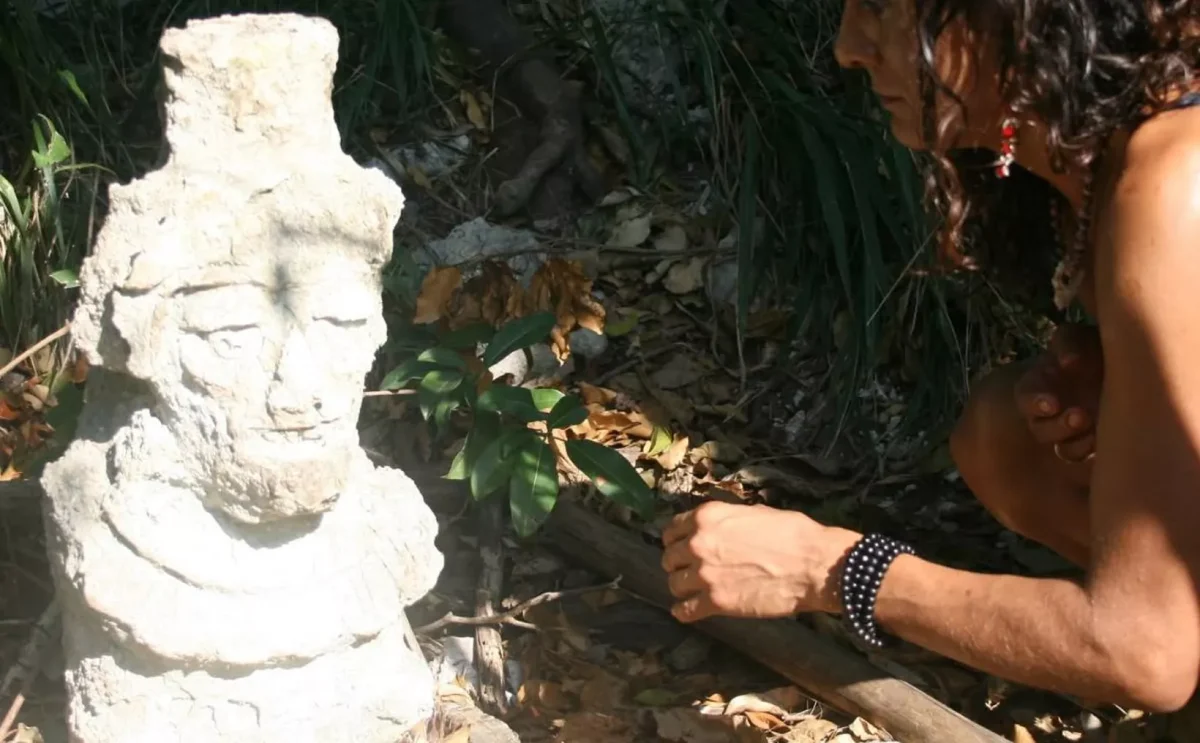
Playa del Carmen, Mexico — One of the most relevant archaeological pieces discovered in Playa del Carmen remains missing, generating concern among cultural sectors and historical heritage specialists. It is a pre-Hispanic monolith associated with one of the main deities of the Maya worldview, found in the city in the late 1990s.
The object, considered the most important archaeological find recorded in the Municipality, consists of an effigy approximately 40 centimeters tall made of marine sediment stone, with humanoid features that link it to Itzamná, the supreme deity of the Maya world. Its historical and symbolic value makes it a key piece for understanding the presence and relevance of ancient settlements in the area.
After its discovery, the monolith was removed with the intention of being safeguarded and eventually exhibited in a museum space. However, over the years, no public information has been provided about its current location, leaving its fate uncertain and fueling questions about its safeguarding and conservation.
The discovery occurred in one of the most emblematic areas of Playa del Carmen, near what is now one of its busiest and most representative avenues. Specialists agree that the piece could be related to highly important Maya ceremonial centers, which increases its relevance within the cultural heritage of the Mexican Caribbean.
Although there are no indications of looting, the lack of clear information about its location has raised alarms about the need to follow up on this type of historical asset. The absence of the monolith represents not only a symbolic loss for the city but also a pending opportunity to strengthen the historical and cultural memory of the region through its proper exhibition and dissemination.
Discover more from Riviera Maya News & Events
Subscribe to get the latest posts sent to your email.