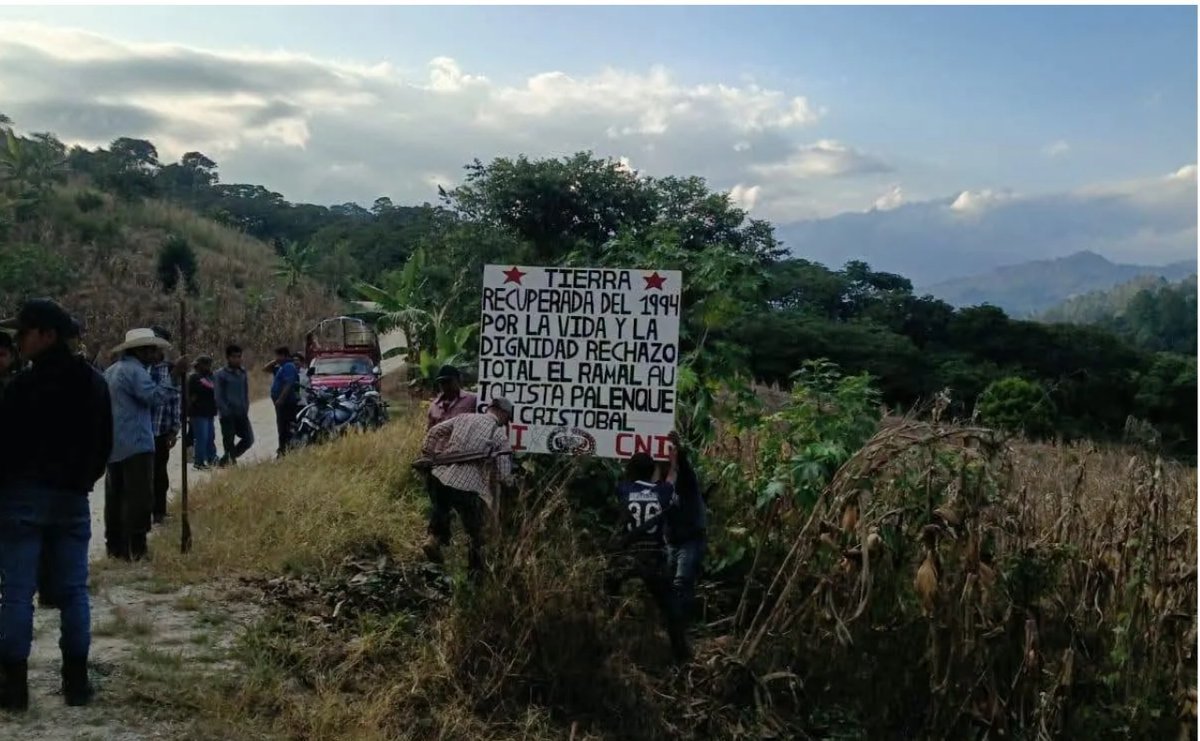
San Cristóbal de Las Casas, Chiapas — The National Indigenous Congress (CNI) has rejected the construction of the San Cristóbal de Las Casas-Palenque highway and demanded its cancellation, calling it a neoliberal megaproject forced on Chiapas’ Indigenous peoples to strip them of their land and culture.
In a statement, the group denounced what it called the “serious damage” the road is causing to forests, farmland and water sources, and said the project violates the human rights of Zapatista support bases and CNI members who never consented to it.
The CNI said the highway is being imposed with the National Guard, state security forces and municipal police because it serves the interests of transnational capital.
Construction Began in June 2025
The organization said the Chiapas state government, working with the federal government, has been building the highway since June 2025. The project, which the government calls the Maya Cultures Route, covers the Palenque-Ocosingo stretch.
According to the CNI, many of the Indigenous communities along the route never authorized the work, and the Indigenous consultations required by the federal Constitution and international treaties have not taken place. It also said environmental, forestry and land-use permits are missing or irregular.
The group said governments have tried to push the megaproject on its communities since 2009, but residents have resisted. It accused the current administration of the Fourth Transformation, or 4T, of advancing the first stretch while destroying jungle, woodland, cornfields and even homes in the municipalities of Palenque, Salto de Agua, Chilón and Ocosingo.
Fears of Land Dispossession
The CNI warned that the highway is meant to connect with the Maya Train and the Pijijiapan-Palenque transversal road corridor, opening the way for large-scale dispossession of Indigenous territories and cultures.
It said the project would benefit transnational companies through mass tourism, real estate speculation, extractive and energy industries, greater privatization of water and the appropriation of biological diversity.
The organization called on Indigenous peoples, communities in resistance, human rights groups, the national and international Sixth Declaration network and supporters around the world to reject the highway and press the government to cancel it. It also expressed solidarity with communities resisting the project and defending their land.
More Development
- Playa del Carmen Underpasses Remain Without Rescue Plan Due to Lack of Municipal Authority
- SSA Mexico Renews Bid to Expand Cozumel Cruise Pier Despite Environmental Opposition
- Puerto Morelos Unveils Security and Civil Protection Plan for 2024-2027
- New Huayacán Avenue Extension to Link Cancún Airport with Highway and Tren Maya Freight Station
- Tourist Accused of Abusing Coatis at Riviera Maya Hotel