
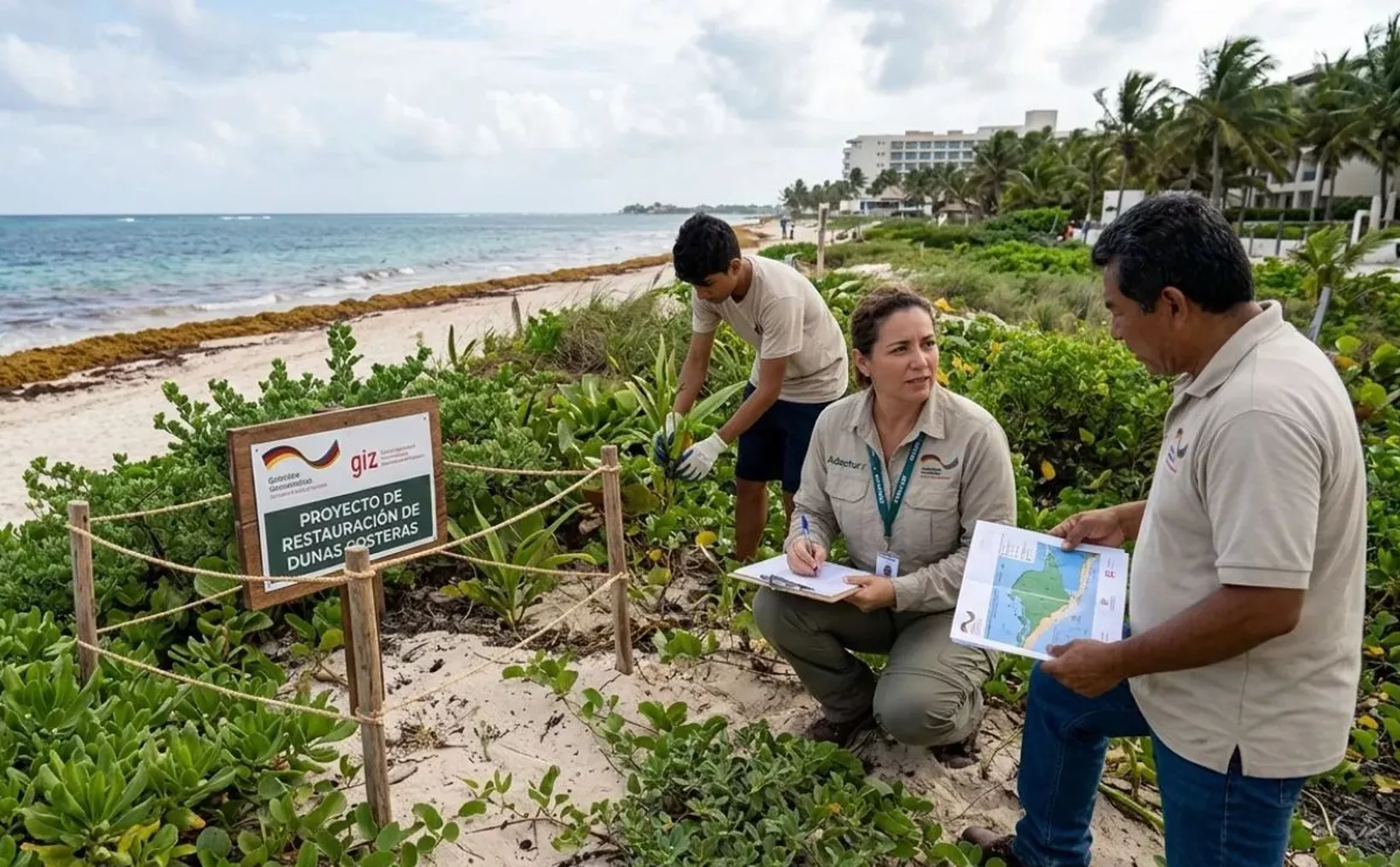
Quintana Roo, Mexico — German technical cooperation agency GIZ is funding more than 15 million euros in climate resilience projects across Mexico, with a strong focus on the Mexican Caribbean, where at least three initiatives are underway targeting coastal dunes, sargassum, and plastic reduction.
Lorena Gudiño Valdez, coordinator of GIZ’s Mexican-German Climate Change Alliance, said the financing includes more than 10 million euros for projects led by the alliance and over 5 million euros specifically for addressing sargassum, with strong results in regional initiatives such as Adaptur, Caribe Circular, and Caribe Mexicano.
Gudiño Valdez said the joint strategy between the two countries has helped integrate environmental criteria into public and private policies in Quintana Roo, highlighting the recent update of the state’s Tourism Master Plan.
Current resources and technical support in the state focus on continuing the achievements of Adaptur, a project on ecosystem-based climate adaptation in the tourism sector that ran in six Mexican tourist destinations between 2017 and 2023, with Quintana Roo as a priority destination.
The coastal dune restoration initiative in the region has become the main natural barrier against erosion and extreme weather events, and is now being considered for export to other vulnerable areas of Mexico, such as Guerrero state, Gudiño Valdez said.
She also pointed to a project focused on the comprehensive use and management of sargassum, launched a few months ago, as well as Caribe Circular’s work to reduce plastics and Caribe Mexicano’s efforts to conserve biodiversity.
Gudiño Valdez stressed that the success of these investments lies in participatory governance and the openness of local stakeholders, which has facilitated the implementation of nature-based solutions.
“We have had a very important dialogue with the tourism and environmental sectors, working together with advice from civil society and academia, and this work has been very important, implementing many ecosystem-based adaptation measures and plastic management in the tourism sector,” she said.
In parallel, German cooperation is promoting a governance model in Cozumel with the local hotel association to create financial mechanisms that sustain environmental projects.
More Environment
- SSA Mexico Renews Bid to Expand Cozumel Cruise Pier Despite Environmental Opposition
- 25 Sunken Boats Removed From Nichupté Lagoon as Second Phase Ends
- Tourist Accused of Abusing Coatis at Riviera Maya Hotel
- Semarnat Denies Environmental Permits for UX Arena Tulum as Clearing Already Visible
- Luxury Resort Project Overlaps 32,000 Square Meters of Xcacel-Xcacelito Turtle Sanctuary in Tulum