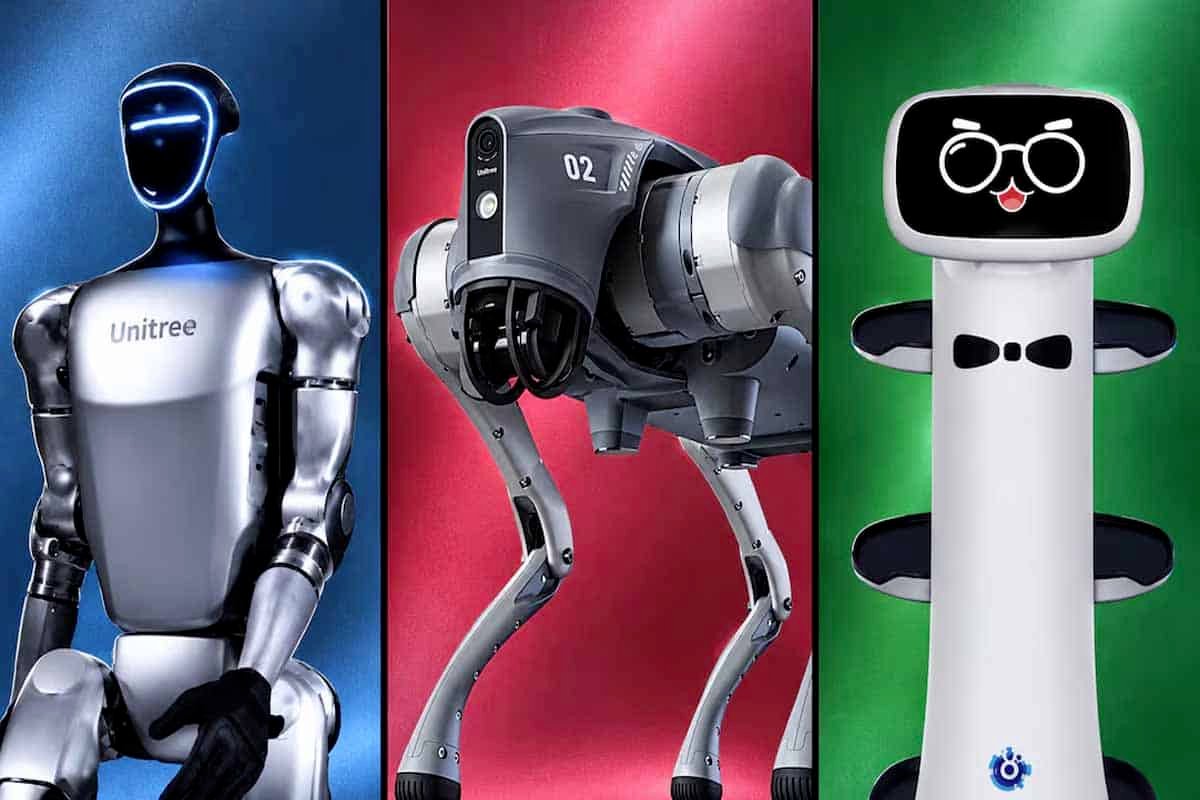
Mexico City — Humanoid robots have moved beyond technology demonstrations and into a commercial market that includes human-shaped models, autonomous quadrupeds and machines built for service work. In Mexico, the prices on offer show a technology with options for research, entertainment and professional tasks — but also a substantial investment.
What Humanoid Robots Cost
One of the best-known models is the Unitree G1, designed for research, development and demonstrations. At one Mexican retailer, it is listed at 819,570.96 pesos, taxes included. The figure can vary depending on availability, configuration and sales terms.
The manufacturer says the G1 stands about 1.32 meters tall and weighs roughly 35 kilograms with its battery. It includes a depth camera, 3D LiDAR, four microphones, a speaker, WiFi 6 and Bluetooth 5.2. Its advertised battery life is around two hours, and the base configuration offers 23 degrees of freedom.
The Mexican market also carries the G1EDUU5, aimed at development and technology integration, priced at 1,980,332.87 pesos. That gap helps explain why there is no single price for a humanoid robot: configuration, level of development and intended use all feed directly into the cost.
Beyond Humanoids: Quadruped Options
The catalog available in Mexico also includes machines that resemble dogs. One option is the Unitree Go2 Air, listed at 74,162.26 pesos, taxes included. It is intended for tasks such as inspection, agriculture and reconnaissance, and includes a camera and artificial intelligence functions.
Another option is the Go2W, priced at 570,136.32 pesos. It is aimed at more professional use, including inspection and operations in varied spaces. In this segment, the quadruped design allows the machine to reach places where a wheeled device could struggle.
Humanoid and quadruped robots should not be compared on appearance alone. Before choosing one, buyers should review battery life, sensors, payload capacity, software, programming options, maintenance and warranty terms. It is also important to determine whether the product is intended for educational, industrial or commercial use.
Robots Built for Business
Restaurants, cafeterias, hospitals and event halls can choose machines designed to transport food, goods and other objects. One example is the Keenon T8LS, available in Mexico for 150,435.81 pesos, taxes included.
The model uses LiDAR sensors to navigate and detect obstacles. According to its commercial specifications, it can carry up to 40 kilograms, be controlled through a mobile app and move through spaces at least 55 centimeters wide.
Also available are the Keenon T5LS, listed at 209,235.87 pesos, and the T10LS, at 281,727.51 pesos. Both target service environments and can be integrated into operations that require moving products from one point to another.
What to Check Before Buying
Buying a robot requires more than comparing prices. Prospective buyers should consider:
- Configuration: check which sensors, batteries, cameras, robotic hands or accessories the price includes.
- Use: determine whether the equipment is meant for research, demonstrations, inspection, customer service or development.
- Battery life: review how long it can operate and how long it takes to recharge.
- Support: confirm warranty terms, spare parts, software updates and technical assistance.
- Importing: if buying from outside Mexico, factor in shipping, taxes and possible additional costs.
It is also advisable to verify the manufacturer’s or distributor’s specifications before paying. Listed prices can change without notice, and some equipment requires specific configurations that alter the final cost.
Is It Worth It?
Interest in humanoid robots is growing because they combine mobility, sensors, artificial intelligence and interactive capabilities. Still, they represent a considerable investment, especially in models meant for research or professional applications.
For an individual buyer, an entry-level quadruped can be a far cheaper way in than an advanced humanoid. For a company, the decision may hinge on the task being automated and the operational savings it can generate.
Either way, humanoid and service robots show how robotics is moving from laboratories into commercial and educational settings. Current prices make one reality clear: these remain specialized machines, but the range of options for different budgets and needs keeps widening.
More Business
- Playa del Carmen Presses Federal Officials to Halt Wildlife Exploitation Permits
- 22 Hotels in Mexico’s Caribbean Join Dune Restoration Push
- Mexico Proposes 35% Increase in Migration Fee for Visitors With Paid Work
- BBVA México to Open Branches 30 Minutes Later Starting October 5
- Cancún Street Markets See Customers Return in Sign of Economic Recovery