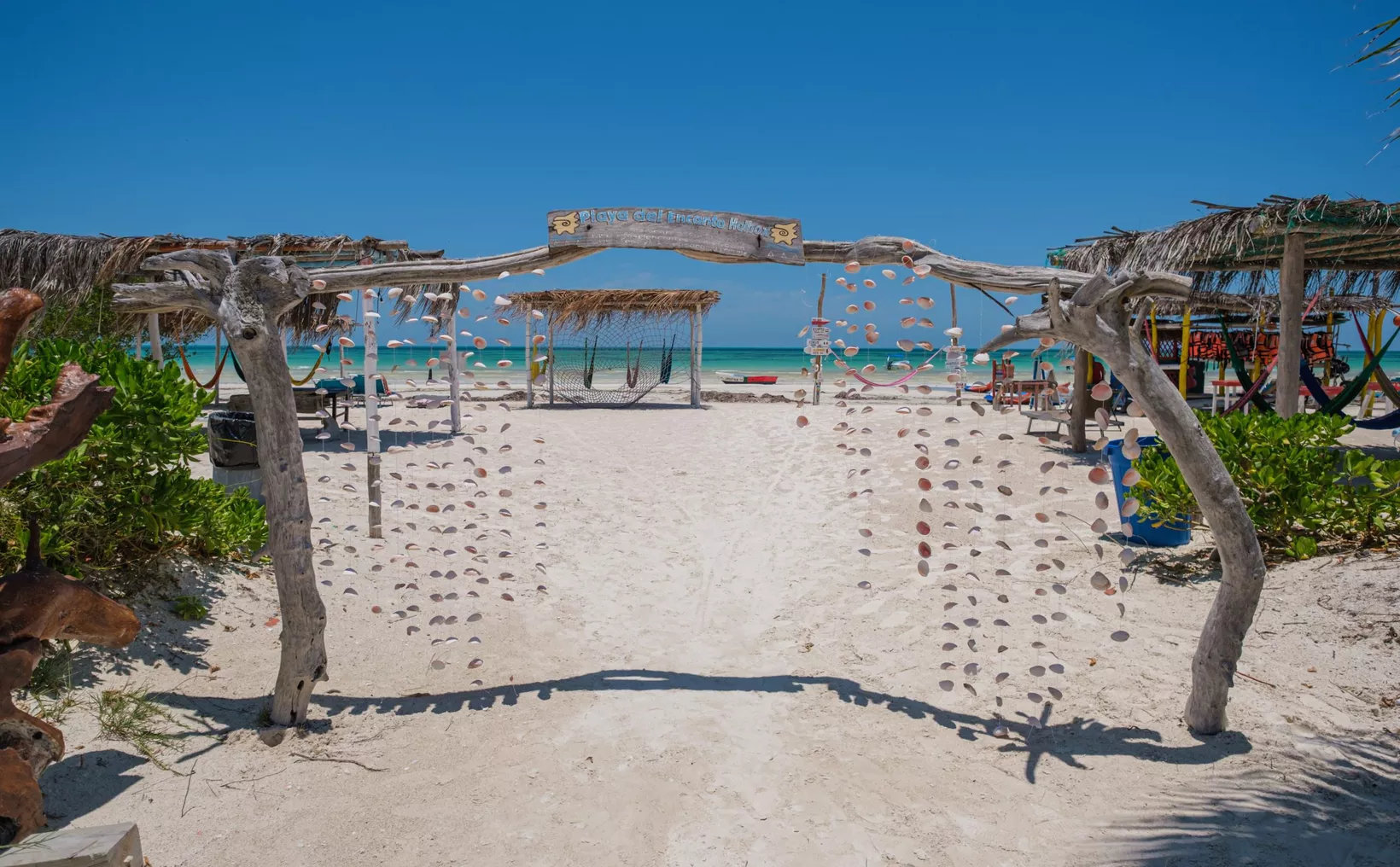
Holbox Island, Quintana Roo — Businesses on the tourist island of Holbox are facing a dual crisis of alleged official extortion through excessive municipal taxes and systematic extortion by organized crime groups demanding protection payments, according to local merchants, artisans, and tourism cooperatives.
Residents and business owners accuse Lázaro Cárdenas municipality Mayor Nivardo Mena and his family of imposing disproportionate taxes, while criminal groups have turned the daily collection of “protection fees” into a routine operation. Complaints circulate on social media and WhatsApp groups, with messages stating, “It wasn’t a fairy tale… many are being affected by the collection of protection fees; organized crime continues to take over Holbox.”
According to testimonies, the municipal government raised property taxes by about 300% and created a sanitation fee above the official Unit of Measurement (UMA) without providing receipts. The municipality also charges hotels up to 500,000 pesos for construction permits. Trucks supplying goods to the island pay extra fees to cross through the port.
Local organizations estimate these contributions total nearly 400 million pesos annually, managed by the mayor and his inner circle without transparency. Residents say these tax burdens even reach small vendors selling snacks and family-run shops.
The municipality of Lázaro Cárdenas has an approximate total budget of 468.8 million pesos, but Holbox mainly sustains itself with the 48 to 55 million pesos it generates annually from its own sanitation tax, plus federal allocations.
Criminal Extortion Spreads
Alongside municipal levies, organized crime extortion has spread across the island. Residents describe armed men patrolling on motorcycles or Can-Am all-terrain vehicles, selling drugs “like candy on street corners” and threatening anyone who confronts them. In recent months, according to victims’ testimonies, these groups began evicting families from their homes to seize strategic land and then moved on to demanding protection fees from restaurants, bars, tour operators, taxi drivers, boat cooperatives, and artisans. The demands include threats against business owners’ families, with no sector exempt.
The State Prosecutor’s Office (FGE) has publicly acknowledged that extortion is one of the crimes most affecting northern Quintana Roo. Just yesterday, the FGE reported that, with support from the Mexican Army (SEDENA) and Mexican Navy (SEMAR), it arrested five men in the continental zone of Isla Mujeres for allegedly demanding protection fees.
Among them was José Alfredo “N,” identified as responsible for collecting fees at Costa Mujeres beach, supported by hotel guards and lifeguards. The arrest followed a victim’s complaint that in November 2025, José Alfredo appeared at his aquatic services establishment to demand $350 weekly on behalf of a criminal group. FGE investigations indicate the victim had been paying extortion fees since August 2023 but stopped in April 2025 after previous arrests; in November, he was “visited” by the new collector.
Authorities seized $450 in cash, two cell phones, and bags of marijuana from the detainees. The prosecutor’s office noted the men and evidence were turned over to the Public Ministry to determine their legal status. While this case involves the continental zone of Isla Mujeres, it illustrates how authorities are operating against protection fee schemes and serves as a precedent for Holbox.
The FGE has urged victims to report any extortion attempts; investigations suggest many affected individuals prefer to remain silent for fear of retaliation.
Scale of Criminal Extortion
To understand the scale of the siege facing businesses under Mayor Nivardo Mena’s administration, it’s necessary to follow the money trail. Calculations of the “black payroll” extracted by organized crime in Holbox in 2026 are based on cross-referencing the island’s commercial census with fee rates reported anonymously by victims.
The investigation reveals the island generates approximately 16.5 million pesos ($970,000 USD) in illicit monthly revenue, operating under a hierarchical collection structure that leaves no link in the tourism chain untouched. This extortion architecture divides into four main categories:
- The 110 lodging centers (from luxury hotels to hostels), forcibly paying an average of $500 weekly
- The 250 restaurants and bars with a fee of $350
- The mobility sector (including over 400 units among boat operators, tour cooperatives, and taxi drivers) with a rate of $150
- Subsistence and street vendors (snack sellers and artisans), who face a “protection fee” of $50
The result of this criminal arithmetic is a weekly injection of $242,500 into criminal coffers, representing an annual drain of 198 million pesos from the local economy.
This cash flow explains the logistical sophistication that complainants attribute to criminal groups. While the municipality claims lack of resources for basic services, criminal organizations have immediate liquidity to pay for impunity and maintain fleets of Can-Am vehicles, motorcycles, and surveillance technology.
Most alarmingly, adding these 200 million pesos of criminal extortion to the 400 million denounced as excessive and opaque municipal collection means the island faces total decapitalization of 600 million pesos annually, with no visible benefits except for a few, including organized crime.
This “double taxation” has turned Holbox into an experiment in economic survival where business owners must not only cover property taxes inflated by 300% but also finance, under threat of death, the structure that has brought this paradise to the brink of collapse, prompting business sales or transfers and affecting many hotels.
Communities Demand Federal Support
The complaints aren’t limited to Holbox. Communities in Kantunilkín, Chiquilá, Solferino, San Ángel, and Kilómetro 80—all within Lázaro Cárdenas municipality—have joined the outcry. They claim extortion and illegal fees are paralyzing the regional economy and are calling for intervention from Security and Citizen Protection Secretary Omar García Harfuch, Governor Mara Lezama, and President Claudia Sheinbaum. They request implementation of “Operation Swarm,” an interagency deployment aimed at dismantling criminal groups and purging police forces.
Complainants warn that failure to act risks “killing the goose that lays the golden eggs,” because Holbox, an icon of international tourism, could become another risk zone like Cancún, Playa del Carmen, Puerto Morelos, and Bacalar. The island already faces deficiencies in water, electricity, and mobility services; protection fee collections and lack of security could scare away visitors and leave hundreds of tourism-dependent families without livelihoods.
While many social media users tag federal and state authorities, complainants insist primary responsibility lies with Mayor Nivardo Mena and municipal security forces. They assert that protection fee collections thrive due to omission or complicity by local police and officials.
They demand investigations begin with the municipal administration and that state and federal oversight reinforce surveillance. They also call for transparency in municipal tax collection and review of rates and fees they claim exceed legal limits.
The public outcry has reached the National Palace, with communities demanding a response combining intelligence operations, federal presence, and financial audits. They propose implementing Operation Swarm in Lázaro Cárdenas and establishing a coordinated command to dismantle criminal groups, protect complainants, and review municipal finances.
Meanwhile, Holbox residents continue to speak out, wanting their island to again symbolize peace and beauty rather than illegal fees and fear. The survival of their economy and the future of thousands of families depend on authorities taking action and restoring security to this jewel of the Mexican Caribbean.
Discover more from Riviera Maya News & Events
Subscribe to get the latest posts sent to your email.