
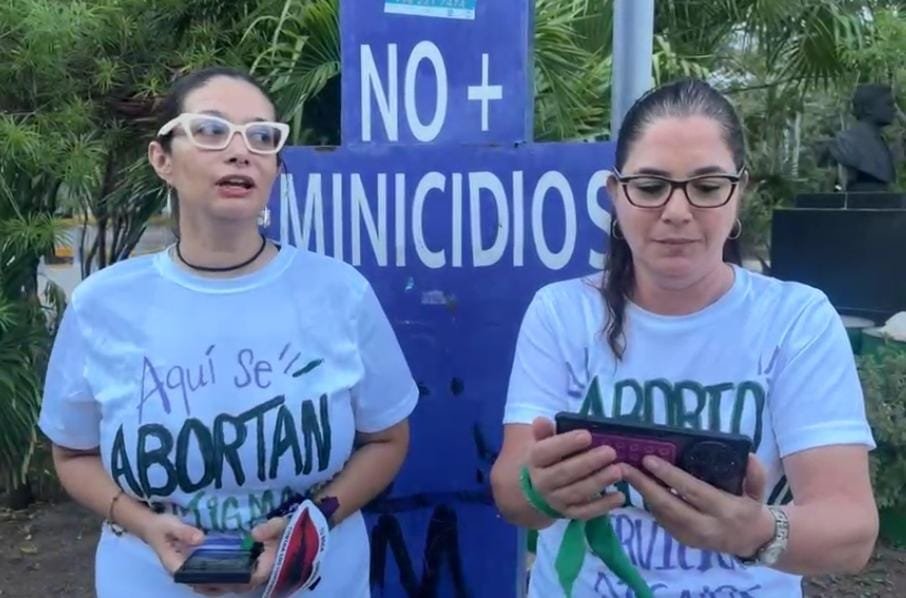
Cancún, Quintana Roo — Four years after Quintana Roo decriminalized abortion, feminist collectives say the right exists on paper but remains out of reach for many women, and they are pressing the state government to turn the legal change into real services.
Speaking at a press conference marking the Global Day of Action for Abortion Decriminalization, observed each September 28, the groups said guaranteed access to reproductive health care is still an unfinished task.
“Decriminalizing abortion in Quintana Roo was an achievement of the feminist movement in 2022. Making that right a reality is the pending task, and it is the state’s responsibility. The state’s responsibility does not end with changing the law — decriminalization is the legal floor, guaranteeing effective access is what remains. Decriminalizing is not enough,” said Vanessa González, general coordinator of Rights to Autonomies and Sexualities (DAS) Cancún.
González said public information about the services available is limited and depends on scant budgets. That lack of outreach leaves women unsure where to turn, she said, compounding shortages of medication, supplies and trained staff — problems that are worse in the rural and Indigenous communities of the Maya zone.
Natalia Tavizón, coordinator of DDSER Quintana Roo, said criminalization and social stigma persist despite rulings by the Supreme Court of Justice of the Nation. Data from the Executive Secretariat of the National Public Security System records eight open investigations for the crime of abortion in Quintana Roo between January and August 2026, which she said underscores the need to scrutinize how prosecutors handle such cases and to remove the stigma around the procedure.
The activists stressed that health and administrative staff must be trained to provide dignified, culturally sensitive care, shedding the biases and prejudices that obstruct access to hospital services.
“This is very important, because while conscientious objection is a right, it is also very important to make clear that institutions cannot be conscientious objectors. The health sector must guarantee that on every shift, at every clinic providing these services, there is at least one non-objector who can provide abortion care,” Tavizón said.
The collectives called on the state government to earmark specific budget resources for reproductive health, reiterating that legal decriminalization must be accompanied by accessible, safe and non-discriminatory services across Quintana Roo.
More Community
- Tulum Residents Identify Five Sites Where Homeless People Gather
- Playa del Carmen Launches Survey Work to Legalize San Judas Tadeo Neighborhood
- Cancun’s Night Bike Ride Returns to Avenida Bonampak on October 3
- Isla Mujeres to Get Its First Social Assistance Center for Children
- Quintana Roo Ranks Third Nationally in Corruption of Minors With 182 Cases
More Cancun
- Fake Priests Target Hotel Weddings in Cancún, Diocese Warns
- Cancún and Tulum Lose Air Traffic as Mexican Beach Destinations Cool Off
- Cancún to Host National Climate Change Colloquium in October
- Gasoline in Cancún Hits 25.39 Pesos a Liter, Topping Profeco’s Priciest Fuel List
- Cancún Airport Travelers Forced to Sit on Floor at Terminal 2