A former DEA agent, who rose to supervise the agency’s financial operations, has been accused of agreeing to launder millions of dollars from drug trafficking for a Mexican cartel, according to a formal indictment filed Friday in the Federal District Court of Manhattan.
The former agent, Paul Campo, worked for the DEA for approximately 25 years, according to the indictment, first as a DEA Special Agent in New York and later rose to a senior official: the Deputy Chief of the Office of Financial Operations. He retired in January 2016 and now runs a private consulting firm, according to the indictment.
Campo laundered approximately $750,000 for the cartel by converting cash into cryptocurrencies, and agreed to launder much more: $12 million in total, according to the indictment.
He also paid for about 220 kilograms of cocaine under the assumption that the drug had been imported into the United States, according to the indictment.
Paul Campo has been charged with narcoterrorism conspiracy, conspiracy to distribute narcotics, conspiracy to provide material support to a terrorist organization, and conspiracy to commit money laundering.
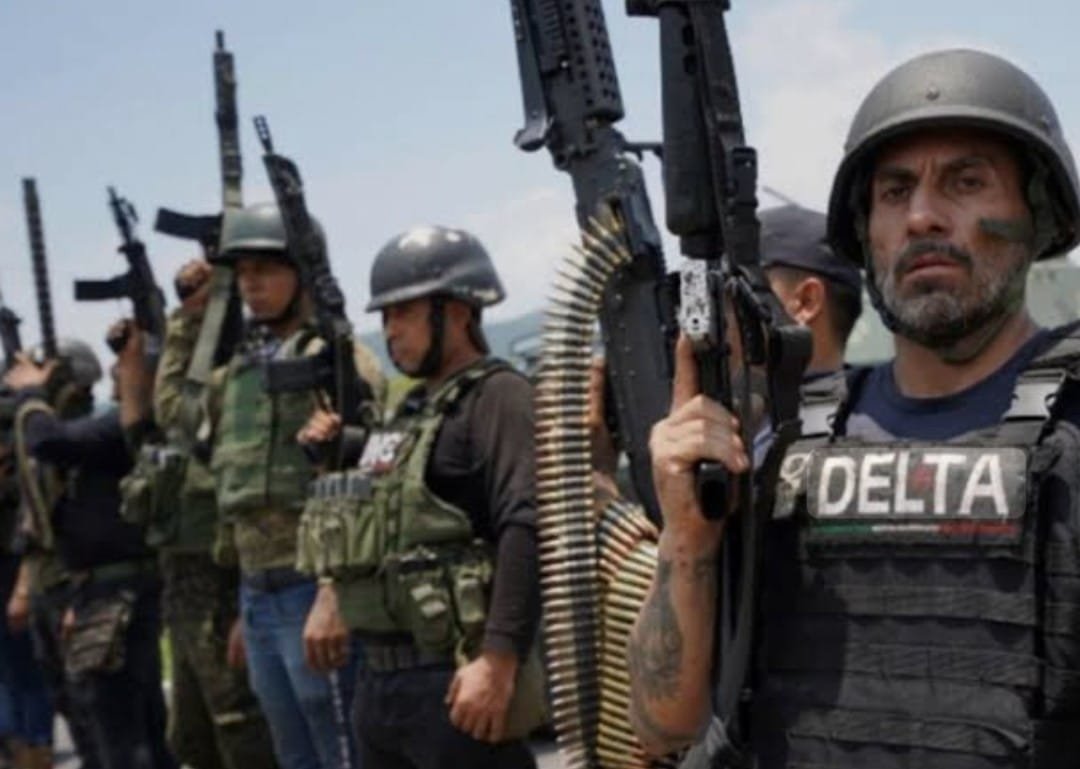
According to the formal indictment, in late 2024, Robert Sensi began meeting with a confidential source working under the direction of law enforcement (“CS-1”), who posed as a member of the CJNG.
Sensi told CS-1 that he had a friend who had been in charge of the DEA’s financial operations and could help the CJNG by laundering drug trafficking proceeds and providing CS-1 with confidential DEA information about sources and investigations.
Following these initial meetings, Campo and Sensi met with CS-1 on several occasions. During these conversations, they agreed to launder money for CS-1, among other things, by converting cash into cryptocurrencies and investing in real estate. Additionally, they advised CS-1 on fentanyl production and explored acquiring commercial drones, weapons, and military equipment for the CJNG, including AR-15 semi-automatic rifles, M4 carbines, M16 rifles, grenade launchers, and rocket-propelled grenades. In these conversations, Campo and Sensi often boasted and relied on Campo’s previous experience in federal law enforcement and his expertise in financial investigations and drug cartels.
Regarding the drones, in one meeting, CS-1 explained to Campo, “what we do with the drones, we put explosives and just send them there, boom”; in another conversation, CS-1 asked Sensi how much C-4 explosive the drones could carry, to which Sensi responded, in summary, approximately six kilograms, which is enough to “blow up the whole town . . . I don’t want to say.”
As part of the scheme, Campo and Sensi agreed to launder approximately $12,000,000 of CJNG drug proceeds; they laundered approximately $750,000 by converting cash into cryptocurrencies; and provided a payment for approximately 220 kilograms of cocaine with the understanding that the payment would trigger the distribution and sale of the drugs for approximately $5,000,000, for which Campo and Sensi (i) would directly receive a portion of the drug proceeds as profit; and (ii) receive an additional commission for laundering the balance of the drug trafficking proceeds.
“As part of that support, the defendants laundered hundreds of thousands of dollars they believed came from CJNG drug trafficking, agreed to launder millions more, and even used their financial expertise to facilitate cocaine trafficking right here, in New York City,” stated federal prosecutor Jay Clayton.
“By participating in this plan, Campo betrayed the mission entrusted to him during his 25-year career at the DEA. The CJNG is a violent and corrupting criminal organization that New Yorkers want dismantled. I praise the extraordinary efforts of the DEA in the aggressive pursuit of the CJNG and those who support its lethal and corrupt activities, no matter who they are.”
“The formal indictment against former Special Agent Paul Campo sends a strong message: those who betray public trust, whether in the past or present, will be held accountable with the full force of the law,” stated DEA Administrator Terrance C. Cole.
“The alleged conduct occurred after he left the DEA and was unrelated to his official duties here, but any former agent who chooses to engage in criminal activity dishonors the men and women who serve with integrity and undermines public trust in law enforcement. We will not turn a blind eye just because someone has worn this badge. There is no tolerance or excuse for this kind of betrayal.”
Before founding GFC, Paul Campo worked for 25 years as a DEA special agent. He was appointed Deputy Director of the Office of Financial Operations in February 2013.
In this position, Mr. Campo oversaw more than $17 million in agency funds and was responsible for global anti-money laundering operations. He used cutting-edge technologies to enhance existing programs, in addition to creating, developing, and implementing new bilateral law enforcement compliance programs with the Government of Mexico and other Latin American countries. He represented the DEA before Congress, banks, money services businesses (MSB), the Financial Crimes Enforcement Network (FinCEN), the Office of Foreign Assets Control (OFAC), the Department of Justice (DOJ), the U.S. Treasury, the National Security Council, as well as before foreign, federal, state, and local police officials. He has presented and/or moderated at several conferences for the International Criminal Police Organization (INTERPOL), the Financial Action Task Force (FATF), Immigration and Customs Enforcement (ICE), FinCEN, the Federal Reserve, the Association of Certified Anti-Money Laundering Specialists (ACAMS), the Canadian Anti-Money Laundering Institute, the Bank Secrecy Act Advisory Group, and various components of the Department of Defense (DOD) regarding threat financing and drug trafficking money laundering. He provided reports to the Attorney General, members of Congress, and staff on several of the DEA’s compliance programs.
He participated in numerous executive-level briefings for high-ranking foreign officials, U.S. ambassadors, and visiting Ministry officials from around the world at DEA headquarters. He co-chaired the Strategic Alliance Agency/Asset Forfeiture Working Group that monitors current international money laundering crime threats and criminally complicit international MSBs. Before his assignment in the Office of Financial Operations, Mr. Campo held several key positions within the DEA. He was Acting Chief of the Office of Congressional Affairs from 2004 to 2005. In that role, Mr. Campo was the principal advisor to then-Administrator Karen Tandy on all congressional matters. Mr. Campo was promoted and became a member of the DEA Executive Team as Executive Assistant to the Office of the Chief Legal Advisor from 2005 to 2008. During his time on the Executive Team, Mr. Campo participated in implementing agency policies and procedures that impacted the DEA’s mission. From 1998 to 2003, Mr. Campo held various positions, including Acting Regional Director for the Europe and Africa regions, while assigned to DEA offices in Rome and Milan, Italy. During his assignment to the Embassy in Rome and later the Consulate in Milan, Mr. Campo was responsible for all law enforcement actions in the region, in addition to serving as personal advisor to the Consul General on all matters related to drug trafficking. At the beginning of his career, Mr. Campo spent many years as a field agent assigned to the multi-agency Southeast Asian Heroin Task Force of the New York Division, where he excelled in dismantling violent heroin trafficking activities. In 1996, he was assigned as backup supervisor in the New York Drug Enforcement Task Force, the agency’s oldest and most successful state and local cooperation initiative.
Discover more from Riviera Maya News & Events
Subscribe to get the latest posts sent to your email.