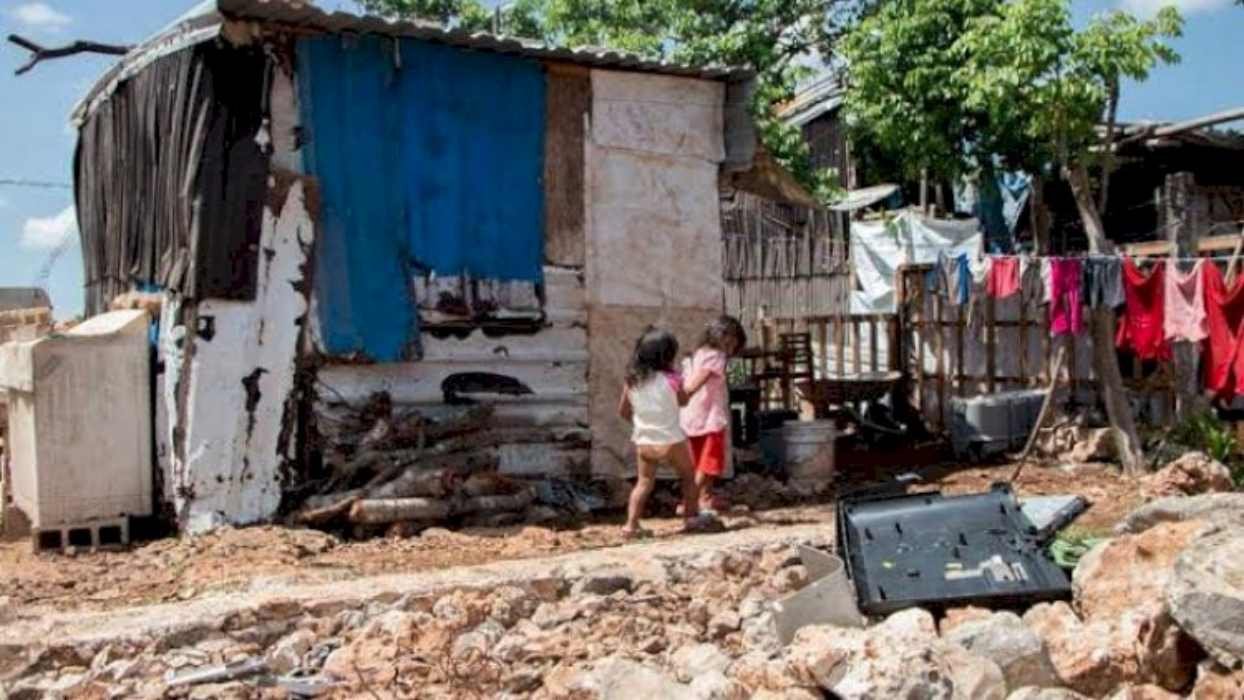
Felipe Carrillo Puerto, Mexico — Poverty in the municipality of Felipe Carrillo Puerto increased in 2025, with nearly a third of its residents now living in extreme poverty, according to a new government report.
The municipality, governed by María Candelaria Hernández Solis, saw its rate of multidimensional poverty rise from 80.1% in 2024 to 81.1% in 2025, according to the Annual Report from Mexico’s Secretariat of Welfare (Sebien).
Of that total, 49.4% of the population, or 52,892 people, are in moderate poverty. The extreme poverty rate is 31.7%, affecting 33,879 residents—one of the highest rates in the state of Quintana Roo.
The report identifies major deficiencies in social security, which affects 84% of inhabitants—the highest rate in Quintana Roo. Additionally, 27.1% of the population lacks access to adequate food, and the municipality reports the state’s lowest health score (0.638) in well-being sub-indices. Only 4.3% of residents are considered “not poor and not vulnerable.”
The State Institute of Social and Solidarity Economy notes that, according to the 2030 Agenda’s Sustainable Development Goals, poverty has many dimensions. Causes include unemployment, social exclusion, and the high vulnerability of certain populations, such as the Maya, to disasters, illness, and other phenomena that hinder productivity.
“In the state, the isolation of marginalized groups from areas served by government agencies excludes them from the training and technical support they need to properly cultivate their milpas and backyard plots,” the Institute detailed.
The report also highlights a “digital poverty” gap: only 28.1% of households have internet access, 19.3% of homes have a computer, and 73% have a cell phone.
In education, the main academic levels attained by the population are secondary school (16,900 people, or 32.5%), primary school (14,800 people, or 28.4%), and high school or general baccalaureate (12,900 people, or 24.7%). The illiteracy rate is 9.9%, with 41.2% of illiterate residents being men and 58.8% women.
Current government programs aimed at addressing these issues include Community and Indigenous Development, Attention for the Development of the Maya People (INMAYA), direct support for indigenous communities, and the “Caravans of Well-being” which aim to bring health services and administrative procedures to remote areas. Federal welfare programs such as pensions for the elderly and the Women’s Well-being program, along with scholarships for students, are also in place.
Discover more from Riviera Maya News & Events
Subscribe to get the latest posts sent to your email.