Riviera Maya, Quintana Roo — Environmental activism in the Riviera Maya faces an uncomfortable but necessary moment of public scrutiny. Recent revelations about the professional links of Antonella Vázquez Cavedón, founder of the organization Defending the Right to a Healthy Environment (DMAS), to the tourism real estate sector have opened a discussion that goes beyond one person or group, focusing on transparency as a pillar of legitimacy.
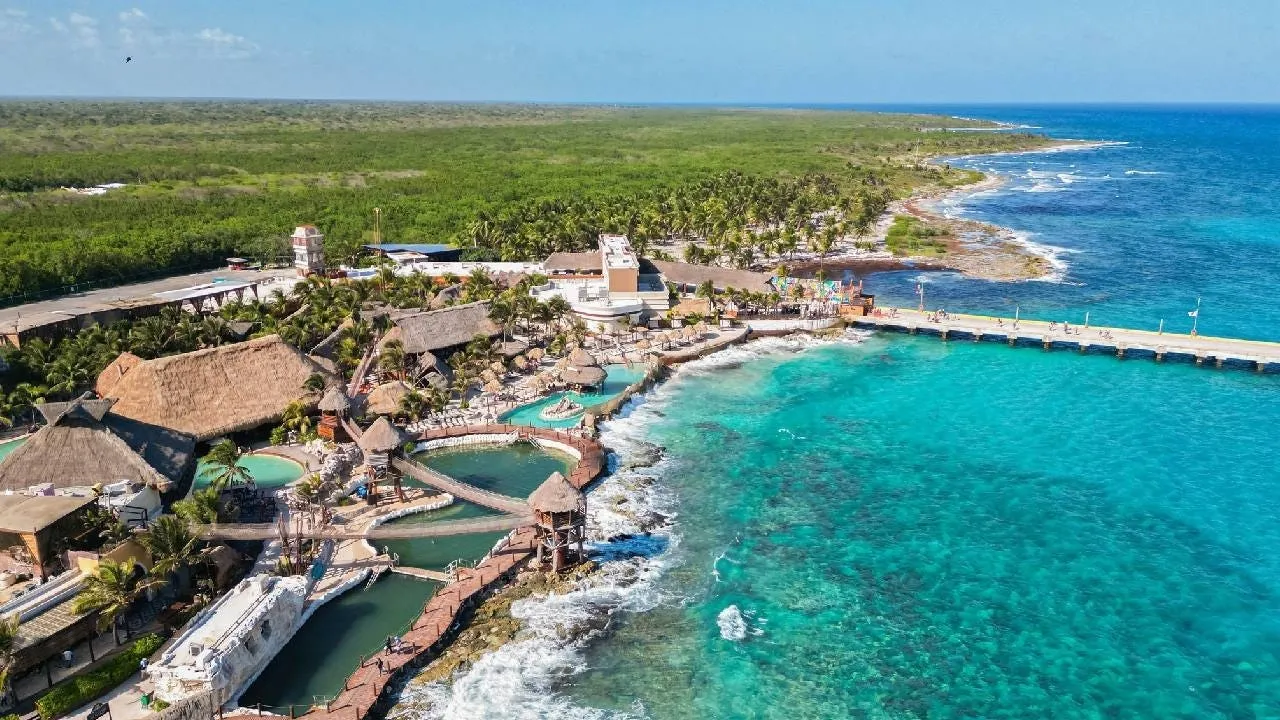
According to information from the Quintana Roo Public Registry of Commerce, as well as a review of federal court rulings and notarial documents, Vázquez Cavedón, on one hand, pursues legal procedures to halt the construction of various tourism developments—such as the Perfect Day project in Mahahual on the Quintana Roo coast. On the other hand, the same documents and testimonies gathered in the area indicate she approaches property owners and neighbors to offer her legal services to avoid such conflicts, showing a pattern of action that has been described as a form of pressure. This pattern, according to the reviewed information, has reportedly occurred in areas like Bahía Solimán and Tankah IV in the municipality of Tulum.
The central issue is not illegality—which has not been established in any of the consulted documents—but consistency. In a state like Quintana Roo, where real estate development has historically been criticized for its environmental impact, the fact that a key figure in environmental litigation has also participated in legal structures linked to that same sector creates, at minimum, an apparent potential conflict of interest.
These types of structures, such as trusts in restricted zones, are backed by legislation derived from Article 27 of the Constitution, which limits direct foreign ownership in coastal areas. However, specialists in urban and environmental law have warned that these schemes can complicate the traceability of responsibilities in tourism projects.
DMAS, created in 2018, has positioned itself as a relevant actor in strategic environmental litigation. Various federal court rulings have confirmed that projects challenged by the organization lacked environmental authorizations, strengthening its public image as a defender of the territory.
Nevertheless, the review of judicial files and notarial records also shows that part of Vázquez Cavedón’s professional activity has developed in the same territorial context where significant environmental conflicts are concentrated, particularly in coastal areas of high ecological fragility.
The territorial context adds complexity to the case. According to environmental studies and technical reports on the Tulum coastal corridor, areas like Bahía Solimán and Tankah IV face issues such as construction on dunes, impacts on the karst system, pollution from drainage, and alterations in sea turtle nesting zones.
The coincidence between environmental lawsuits, professional links to real estate actors, and the geographic concentration of conflicts has begun to generate questions in the local public debate.
In this context, the core of the debate is not legal, but ethical. The credibility of any environmental organization depends not only on its results in court, but on the clarity with which it handles its potential conflicts of interest. In a territory like the Riviera Maya, where development and conservation are in constant tension, public trust is a fundamental asset.
Discover more from Riviera Maya News & Events
Subscribe to get the latest posts sent to your email.