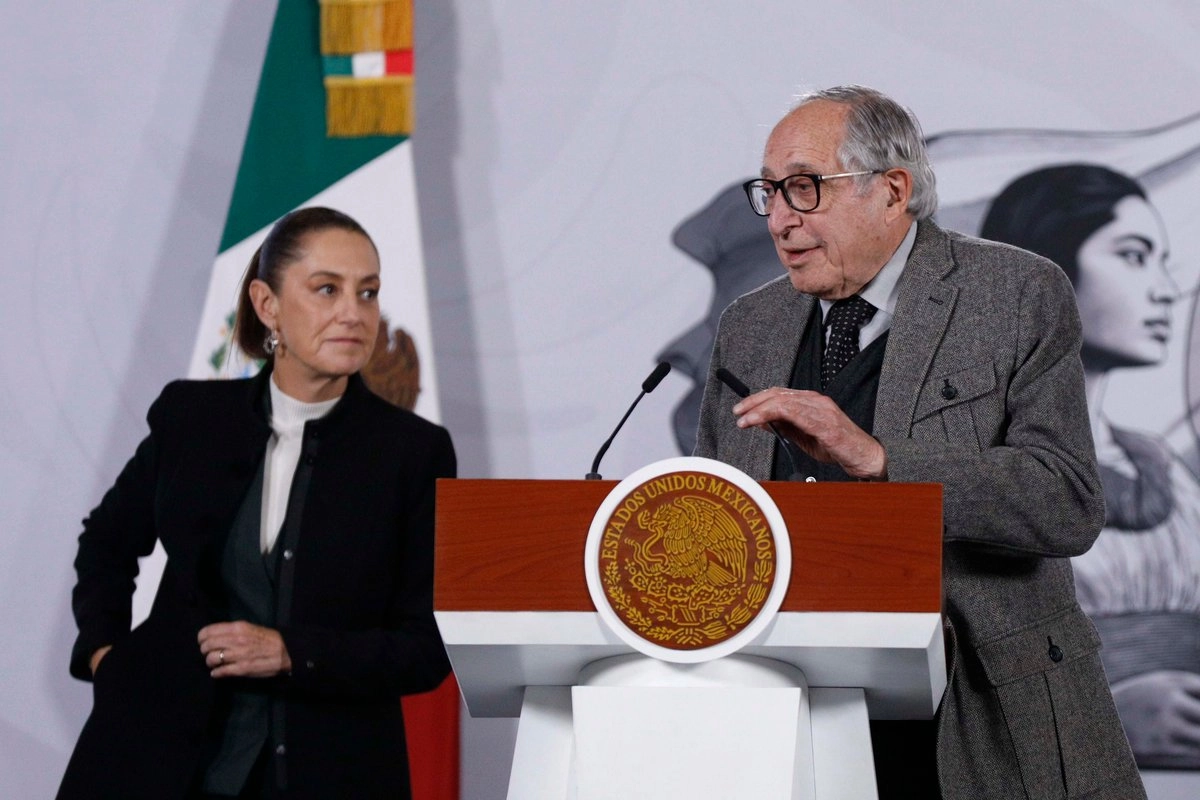
Mexico City — The consumption of illegal drugs among adults in Mexico increased by 40 percent over the past decade, rising from 10.6 percent in 2016 to 14.6 percent currently, while among minors there was a reduction from 6.2 to 4.1 percent, according to the 2025 National Survey on Drug, Alcohol and Tobacco Consumption (Encodat). The survey also revealed that vaping more than doubled, from 1.1 to 2.6 percent.
The study presented yesterday at the National Palace shows that the group of young people aged 12 to 17 has the highest incidence of “psychological distress, suicidal behavior and violence, as well as participation in gambling and use of video games.”
Additionally, regarding fentanyl consumption, measured for the first time in the country, a usage rate of 0.2 percent is reported among surveyed individuals.
President Claudia Sheinbaum highlighted that the decrease in consumption among adolescents could be related to the effects of the anti-drug campaign from the previous administration, with messages disseminated in media and schools.
However, she clarified that “we cannot stay there, we have to advance further.” For example, regarding hallucinogen consumption, while there is a percentage point increase in both youth and adults, in a total Mexican population of 130 million, one percent equals 1.3 million inhabitants. “So, 1.5 (percent) is something that we obviously have to review.”
The president mentioned that the previous campaign emphasized the risks of fentanyl and that her administration’s campaign will focus on the risk of methamphetamines, as well as mental health alerts; for now, it was reported that the purchase of the analgesic Tramadol, linked to opioid consumption, requires a prescription.
In the specific case of cannabis—the most used illegal drug—she said that, facing the debate on this matter, her government prefers that the population not consume it.
Regarding fentanyl, the president commented that Mexico is waiting for the United States government to inform what the implications are of classifying that drug as a “weapon of mass destruction” by that country’s president, Donald Trump.
2024 Survey with “Methodological Errors”
The head of the Ministry of Health (Ssa), David Kershenobich, presented the survey, prepared based on a statistical sample of 19,200 people aged 12 to 65: 3,847 adolescents (12 to 17 years) and 15,353 adults (18 to 65).
The comparison point for Encodat 2025 is its 2016 counterpart and not the 2024 one because the official determined—as reported by La Jornada—to conduct a new study because the previous one had methodological errors that prevented comparison with prior studies.
At the level of specific drugs, the survey shows an increase in adult consumption of marijuana (from 9.3 to 13.3 percent), hallucinogens (from 0.8 to 1.5 percent) and methamphetamines (from 0.9 to 1.6 percent).
The prevalence of fentanyl is considered “very low,” with an index of 0.2 percent for “consumption at least once” and 0.1 percent “in the last year.”
In adults, the misuse of medications increased from 1.3 to 2.5 percent and that of opioids from 0.1 to 1.4 percent.
Alcohol Consumption Decreases
Among adolescents, cannabis consumption decreased from 5.3 to 3.7 percent, hallucinogens remained the same, and amphetamine stimulants had a slight decrease (from 0.6 to 0.5 percent). Likewise, experimental consumption in this sector was reduced from 6.2 to 4.1 percent.
Regarding alcohol intake, the percentage of women who have tried it increased from 62.6 to 69.3 percent, although this indicator decreased among adolescents from 8.3 to 2.6 percent.
Regarding smoked tobacco, it decreased from 17.6 to 15.1 percent; in contrast, the electronic cigarette (vaping) increased from 1.1 to 2.6 percent, despite the toxic substances it contains being related to cancer, warned Kershenobich.
Mental Health
Regarding the mental health of the general population, the prevalence of psychological distress was 8.1 percent. Among adolescents, women had 13.2 percent in “psychological distress” compared to 6.9 percent in men, and among adults, women also stood out, with 10.2 percent versus 5.1 percent in men.
Particularly regarding suicidal behavior “in the last 12 years,” “ideation” was higher in youth, as was planning and attempt; in this last indicator the difference is 1.5 in adolescents against 0.5 in adults; something similar happens with violence, because among adults the incidence is 12.3 percent and among minors, 18.1 percent, especially against them.
The Encodat was prepared by the Undersecretary of Health, the National Commission on Mental Health and Addictions, the Mexican Institute of Psychiatry and the National Institute of Public Health.
Discover more from Riviera Maya News & Events
Subscribe to get the latest posts sent to your email.