
Cancún, Quintana Roo — Quintana Roo remains among the five Mexican states with the highest number of confirmed dengue infections, with 310 cases through epidemiological week 37, according to the Directorate of Epidemiological Surveillance for Transmissible Diseases. The figure, updated to Sept. 24, reflects an increase of 28 cases in just seven days.
Of the total, 200 cases are classified as non-severe dengue and 110 involve patients with warning signs or severe illness. Probable cases have reached 3,877, and the incidence rate rose from 13.17 to 14.48 confirmed cases per 100,000 residents.
Two deaths have been recorded so far this year, and at least eight cases remain under investigation. The current count is 84.5% higher than at the same point last year, when the state had 168 confirmed cases.
Four Serotypes Circulating
Health officials say the simultaneous circulation of dengue virus serotypes 2, 3 and 4 is keeping transmission active and raising the risk of severe illness among vulnerable people.
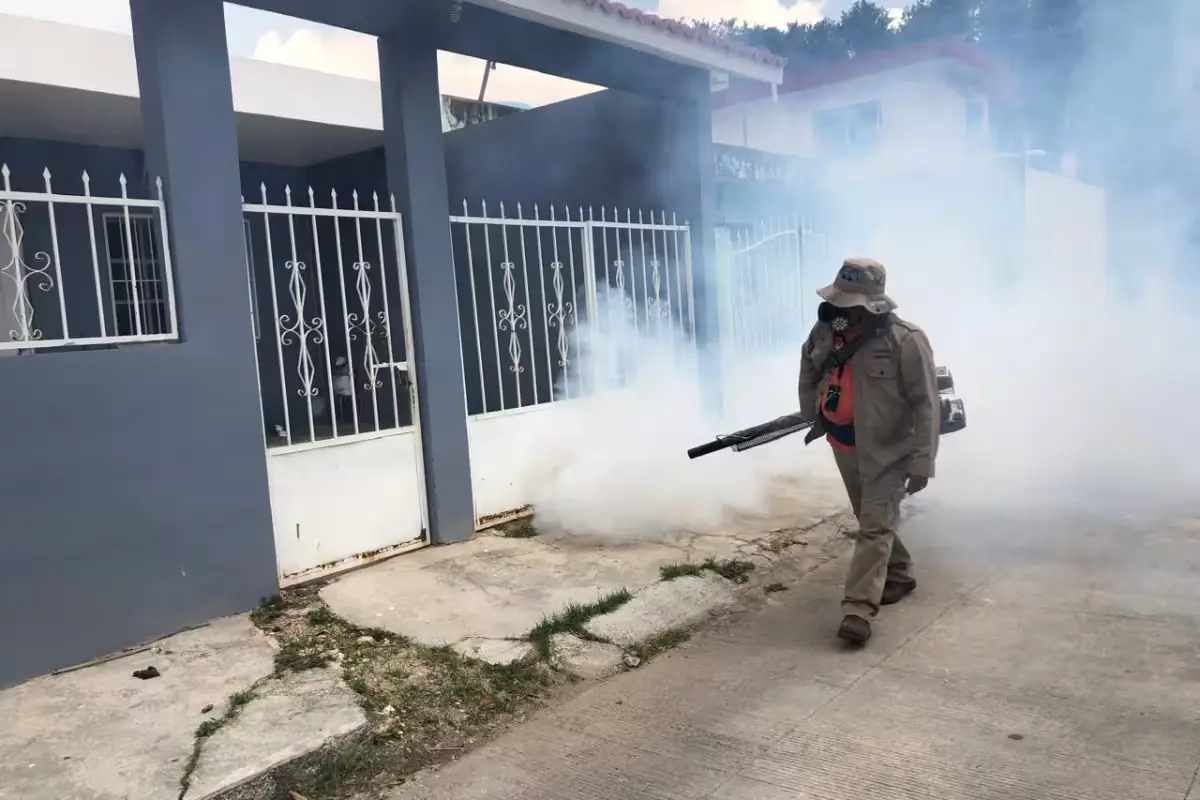
In response to the surge, the state Health Department announced it will step up fumigation efforts across all 11 municipalities to fight Aedes aegypti, the mosquito that transmits dengue, zika and chikungunya.
Warning signs persist in the south of the state. Othón P. Blanco remains at red alert, while Felipe Carrillo Puerto and Bacalar are at yellow, according to this week’s epidemiological report.
Residents Question Fumigation Efforts
In Cancún, residents in several neighborhoods also questioned how often spraying brigades visit their streets.
In Region 100, one resident said the brigades had come by rarely despite the ongoing rainy season. “They have barely been around here, and we’re already in the rainy season,” she said.
Amelia said the operations need to be more frequent. “They should come at least once a week. There are a lot of mosquitoes,” she said.
Roberto Euán questioned whether the work has any effect. “It doesn’t do any good, who knows what they’re spraying,” he said.
Ana María, who lives in Region 101, said the mosquitoes have persisted despite visits from the brigades. “They have come, but the mosquitoes are still there, as if nothing affected them,” she said.
With the rainy season still underway, environmental conditions favor the spread of Aedes aegypti, keeping attention focused on fumigation, the elimination of breeding sites and entomological monitoring.
More Community
- Playa del Carmen Housing Prices Hit 4 Million Pesos as Workers Struggle to Buy
- Cozumel Artists Accuse Veracruz Project of Copying Iconic Photo Booth
- Cave Divers Find Ancient Animal Bones in Yucatán Cave
- 146 Artisans Bring Mexico’s Folk Traditions to Xcaret Folk Art Fair
- Pre-Hispanic Bee House Unearthed in Tulum Sheds Light on Ancient Maya Homesteads
More Quintana Roo
- Maya Language Advocate Martiniano Pérez Angulo Dies at 67 in Quintana Roo
- Quintana Roo Expands State Scholarships by 21%, Reaching 15,682 Students
- Quintana Roo Prepares Protocol Against Child Exploitation in Tourism
- Quintana Roo Aims to Recover 500,000 Airline Seats, Targets 20 Million Tourists in 2026
- Quintana Roo Governor Opens 2026 Notarial Certification Course as Profession Marks 50 Years