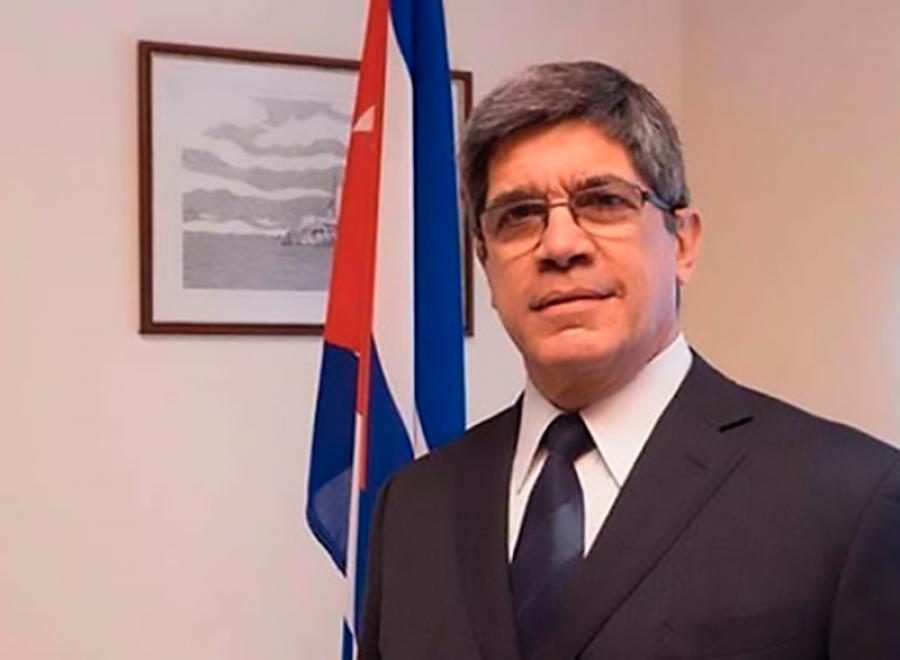
Havana, Cuba — Cuba’s deputy foreign minister denied Tuesday that Havana is jointly designing a negotiation table with the United States, dismissing reports of indirect contacts through intermediaries like Mexico or the Vatican.
Carlos Fernández de Cossío told the EFE news agency that while the two governments have exchanged messages since the capture of Venezuelan President Nicolás Maduro on January 3, it would be a mistake to say negotiations are being planned because that dialogue has not begun.
“We have exchanged messages and the U.S. government knows perfectly well Cuba’s position of being willing to hold a dialogue, and it has not rejected it,” said De Cossío, who also denied there could be indirect contacts through intermediaries such as Mexico or the Vatican.
His statements contrast with recent remarks by U.S. President Donald Trump, who has repeatedly claimed his administration is negotiating with the Cuban government, including at a high level.
“Cuba has the legal and moral high ground regarding the oil siege and is willing to sit down and talk with the United States. And the U.S. government knows it. We have told them directly, we have said it publicly,” De Cossío affirmed.
He warned that there must be mutual willingness to ensure and design a dialogue that is serious, constructive, responsible, and respectful of the sovereign equality between both states.
Negotiation Limits
De Cossío also outlined the limits of what could be addressed in any potential negotiation, ruling out political and economic reforms as well as the release of prisoners on the island, as has happened in Venezuela.
Regarding possible political or economic reforms, he said Cuba has “the same limitation” that Washington would have in discussing with Havana about “the U.S. Constitution” or about “raids” against migrants being carried out “in Minneapolis and other cities.”
Oil for Prisoners? Cuba’s Response
On the issue of prisoners, he was blunt: “We see no reason, we see no link between one issue (oil blockade) and the other (prisoners). We have no intention of talking about that; it is not part of the bilateral dialogue between two countries.”
In this context, De Cossío acknowledged his country has “limited options” and advanced that in the coming days, the population will be informed of a contingency plan, “a reorganization process” that will be “very difficult” for the people.
“We have limited options and we also have a reorganizational need in the country that implies it will cost us a lot of work, it will require much creativity. A reorganization process that we have foreseen and have been preparing. It is not something simple; it is something difficult for government management and very difficult for the population as a whole,” he said.
Discover more from Riviera Maya News & Events
Subscribe to get the latest posts sent to your email.