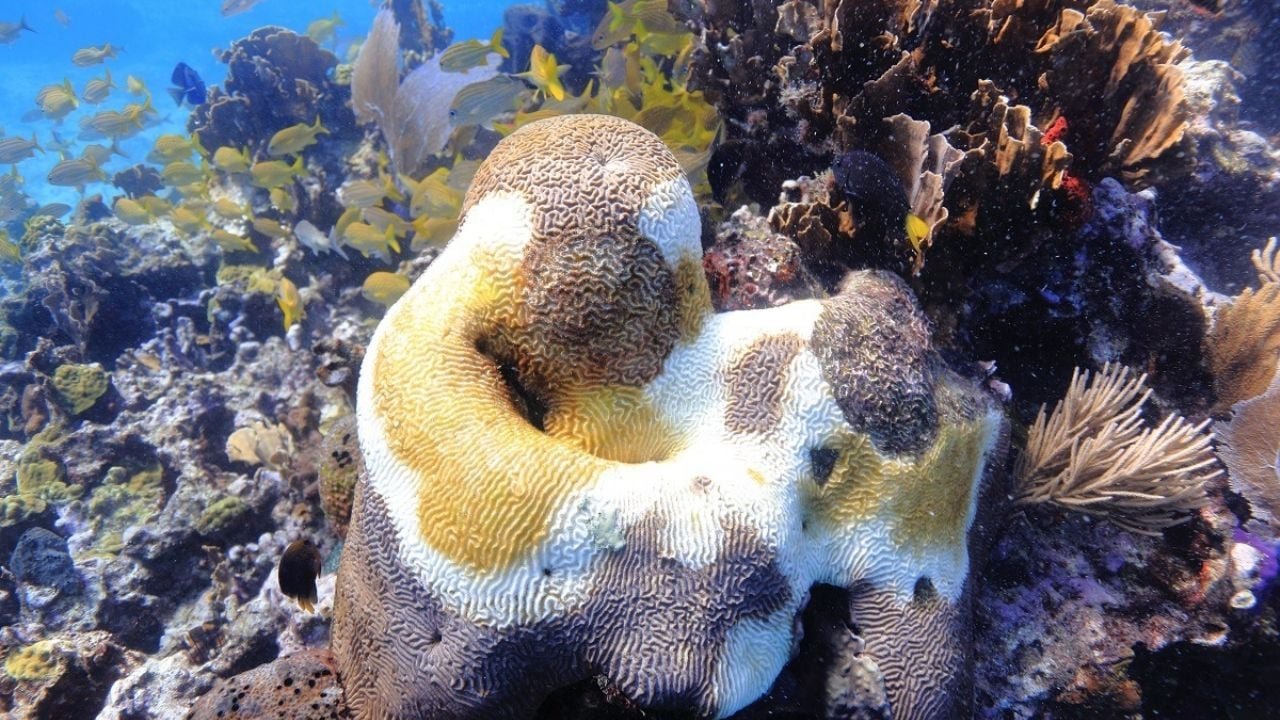
Cozumel, Mexico — Environmental authorities have temporarily closed three popular coral reefs in Cozumel during February and March as part of an ongoing conservation strategy to help stressed ecosystems recover. The measure, announced by Mexico’s National Commission of Natural Protected Areas (CONANP), affects El Cedral, Pared de El Cedral, and Punta Francesa, all located within the Cozumel Reefs National Park.
During the closure period, snorkeling and diving are prohibited at these sites. CONANP officials say the goal is to reduce human pressure on reefs showing signs of coral bleaching and White Syndrome, a disease that causes tissue loss and can lead to coral death if stressors persist. According to the agency, some areas have already shown early signs of regeneration, though recovery is gradual and difficult to measure in the short term.
“These temporary closures seek to give the reefs a break and favor natural recovery processes,” CONANP stated, emphasizing that bleaching remains a broader regional challenge linked to rising sea temperatures and climate change.
Not new — and not permanent
Seasonal or rotating reef closures are not new in Cozumel. The Cozumel Reefs National Park, established in 1996, has long used adaptive management, including temporary site closures, limits on diver numbers, and mandatory use of certified guides. These measures are widely supported by marine scientists as effective tools to reduce physical damage, stress, and disease transmission while allowing coral to regenerate.
The current restrictions are temporary, limited to February and March, and form part of a broader conservation framework that includes continuous monitoring and collaboration with academic institutions, according to CONANP.
Industry concerns and conservation debate
Some tourism operators have questioned the effectiveness of the closures, citing a lack of publicly available studies demonstrating measurable recovery. Others worry about the short-term economic impact, as the closed reefs are among the island’s most requested dive sites.
Conservation specialists counter that protecting coral health is essential to the island’s long-term viability as a world-class dive destination. The Cozumel Reefs National Park contains 34 reefs and is part of the Mesoamerican Reef System, the second-largest barrier reef in the world. Without intervention, disease, bleaching, and overuse could cause far greater and more permanent losses.
Where divers can go instead
Importantly, the majority of Cozumel’s reefs remain open. Dive operators are redirecting visitors to healthy sites such as Palancar Gardens, Colombia Shallows, Santa Rosa Wall, Paradise Reef, and Yucab, which continue to offer excellent visibility and biodiversity. Many of these reefs benefit indirectly from reduced pressure when other sites are temporarily closed.
For visitors, the closures may require flexibility, but they do not mean an end to diving or snorkeling in Cozumel — only a shift in locations.
A long-term view
CONANP has reiterated that the closures are part of a comprehensive, rotating conservation strategy, not a permanent shutdown. The underlying objective is to ensure that Cozumel’s reefs remain resilient in the face of climate change, disease, and growing tourism demand.
As marine scientists increasingly stress, short-term inconvenience is often the trade-off for long-term survival — not only of coral ecosystems, but of the tourism economy that depends on them.
Discover more from Riviera Maya News & Events
Subscribe to get the latest posts sent to your email.