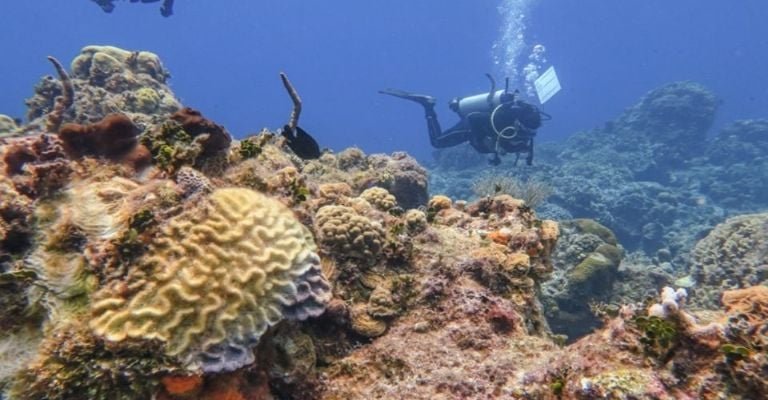
Cozumel, Quintana Roo — Divers heading to Cozumel this fall may discover that a favorite reef is temporarily off limits. It isn’t an emergency closure, and it doesn’t mean something has suddenly gone wrong underwater. It is part of a conservation strategy Cozumel has used since 2019, periodically giving heavily visited sections of its famous reef system a break from divers, snorkelers and tourist boats.
From October 1 through November 30, San Francisco, San Francisco Bajo, Santa Rosa and Pared de Santa Rosa are closed to tourism as part of that rotating program. At the same time, Palancar Cuevas, Palancar Ladrillos, Colombia Somero, Colombia Intermedio and Colombia Profundo have reopened after completing their August and September rest period. Cozumel’s reefs don’t all close at once; different sections take turns.
Why Did Cozumel Start Closing Reefs?
The program dates to one of the most difficult periods Cozumel’s reefs have faced in recent years. In 2018, a fast-moving coral disease commonly called White Syndrome was detected in the Mexican Caribbean. It attacks hard corals, causing rapid tissue loss and potentially killing an entire colony in susceptible species.
By 2019, CONANP reported that monitoring at some reefs inside Cozumel National Park showed losses of up to 90% among coral species susceptible to the disease. That October, authorities took the unusual step of temporarily closing Palancar, Colombia and El Cielo to recreational activities.
The closure was never presented as a cure for White Syndrome. Instead, the goal was to remove as much additional stress as possible while scientists monitored an ecosystem already struggling with disease and unusually warm water. When those sites reopened, CONANP developed a rotating reef-rest strategy rather than repeatedly closing the entire southern section of the marine park.
What Does a Reef “Rest” Actually Accomplish?
A two-month break does not magically restore damaged coral. What it does is temporarily remove some of the everyday pressure associated with intensive tourism, including divers and snorkelers in the water, boats operating above the reef and the possibility of accidental contact with coral and other marine life.
CONANP has said there is no single measurement that can tell scientists exactly how much a particular reef improves during one closure. Officials have, however, reported positive changes during rest periods, including increased sightings and diversity of fish and better development of coral organisms.
The unusually long tourism shutdown during the COVID-19 pandemic also gave park managers an unplanned opportunity to observe what happened when recreational pressure virtually disappeared. Those observations helped reinforce the idea that reducing human activity can be useful as one part of a much broader conservation strategy.
Some Closures Coincide With Coral Spawning
Timing can matter, too. When CONANP closed Palancar Cuevas, Palancar Ladrillos and sections of Colombia during August and September in 2020, the agency specifically pointed to coral spawning season.
Corals reproduce sexually by releasing eggs and sperm into the water, sometimes in synchronized events involving large numbers of colonies. Successful reproduction is critical to maintaining genetic diversity and creating future generations of coral, so reducing recreational activity during this sensitive period removes one potential source of disturbance.
That August-September grouping has continued to appear in Cozumel’s rotating closure schedule, including this year’s recently completed rest period.
Does This Mean Diving in Cozumel Is Closed?
No. The Cozumel National Park remains open, and only designated reef sites are temporarily taken out of rotation. When the original emergency closure was introduced in 2019, CONANP emphasized that the affected sites represented only a portion of Cozumel’s recreational reef system and that numerous other dive and snorkel sites remained available.
Dive operators simply adjust their itineraries to reefs that are open while the closed sites are left alone until their scheduled rest period ends. For October and November, that means no recreational visits to San Francisco, San Francisco Bajo, Santa Rosa or Pared de Santa Rosa, while the Palancar and Colombia sites that rested during August and September are available again.
Visitors with a particular reef on their must-dive list should check the current closure schedule before booking, particularly if that site is an important part of their plans.
The Bigger Problem Can’t Be Solved With Closures
Giving a reef two months without tourists can reduce direct human pressure, but it cannot protect coral from everything happening around it. CONANP’s broader White Syndrome action plan identifies multiple threats to Mexican Caribbean reefs, including poor water quality, inadequate wastewater treatment, warming seas, invasive species and environmental effects associated with large sargassum arrivals.
Coral bleaching driven by high water temperatures presents another challenge that a local tourism closure cannot prevent. The rotating rests are therefore best understood as one management tool rather than a solution to reef decline, alongside monitoring, water-quality improvements, responsible tourism, restoration work and efforts to improve reef resilience.
Why Protecting Cozumel’s Reefs Matters
The Parque Nacional Arrecifes de Cozumel protects part of the Mesoamerican Reef System, which extends through the western Caribbean. For Cozumel, however, protecting the reef isn’t simply an environmental issue; it is also important to the island’s economy.
Dive shops, boat captains, instructors, restaurants, hotels and other businesses depend on people continuing to travel to Cozumel specifically because of what is underwater. That creates a balancing act: tourism depends on access to the reef, while heavy use can add pressure to the ecosystem the park is trying to protect.
Rotating closures are designed to make that compromise possible. Rather than shutting large areas indefinitely, individual reefs periodically get a break while tourism shifts elsewhere. Most dive operators have adapted to the system, although CONANP continues surveillance with other authorities and unauthorized entries into closed areas remain a concern.
For divers, the practical takeaway is straightforward: a closed reef isn’t gone for good; it’s taking its turn to rest. San Francisco and Santa Rosa are scheduled to reopen after November 30, while other sections of Cozumel’s reef system will continue through their own periods of use and rest as the conservation program moves through its rotation.
More Environment
- Deer at Calle 88 Raises Alarm Over CFE Cozumel Cable Plan
- Yucatán Leads Mexico’s Octopus Production With More Than 28,000 Tons
- Xcalak Residents Warn of Dead Fish and Contaminated Water as Sargassum Piles Up
- Mexico Seizes Three Boats at Arrecife Alacranes Over Illegal Activities
- Pink Flamingos Find Refuge in Cancún’s Nichupté Lagoon, Officials Say
More Cozumel
- Airline Seat Cuts Threaten US Connections to Mexico’s Caribbean Coast
- Eight Bound Over to Criminal Proceedings in Cozumel Drug Cases
- Environmentalists Submit Citizen Initiative to Protect Playa del Carmen’s Chen Zubul Site From Submarine Power Line
- Quintana Roo Pursues Direct Europe-Cozumel Flight, Boosts Tulum Air Connectivity
- Cozumel to Host 18th Island Bird Festival Oct. 7-11