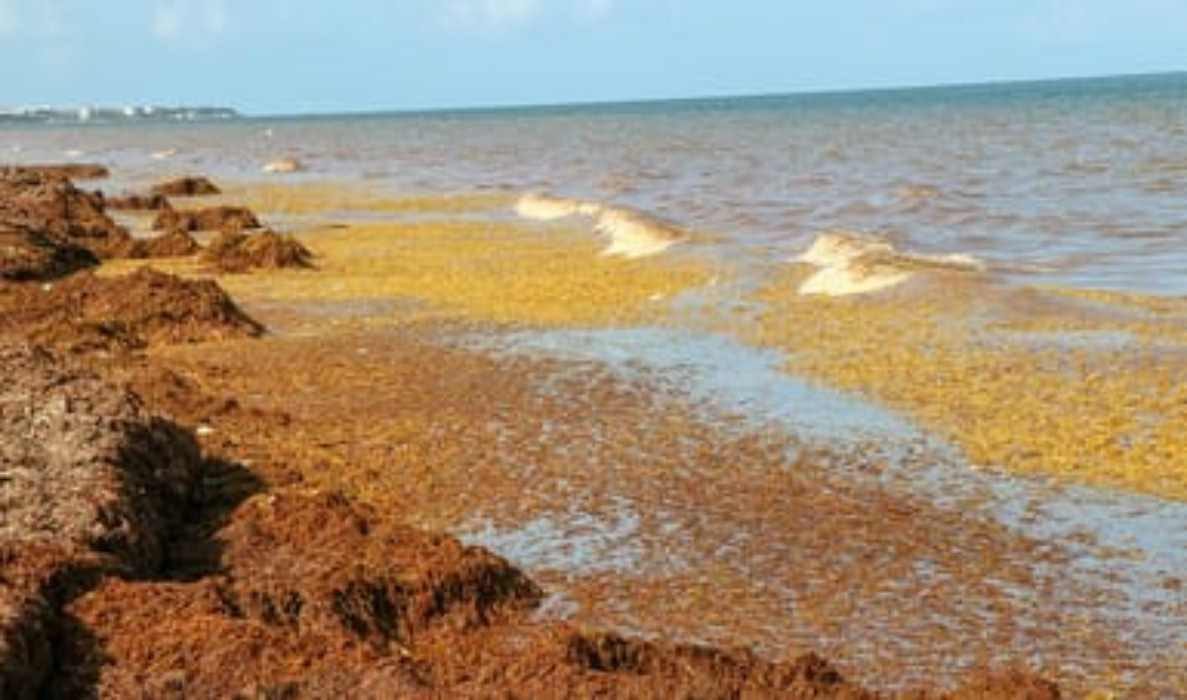
Cancún, Mexico — Cancún authorities have activated prevention and response protocols for potential atypical sargassum influxes during February, particularly during cold front season, despite no significant seaweed problems currently affecting the resort city’s coastlines.
Antonio Chambé, director of Municipal Public Services, announced that the city government maintains coordinated efforts with federal, state, and municipal agencies, including the Mexican Navy, under the leadership of Quintana Roo’s governor who heads the comprehensive sargassum strategy.
The municipality currently deploys approximately 250 workers across beaches, including personnel from the Federal Maritime-Terrestrial Zone and Public Services departments. These teams conduct permanent cleaning operations involving raking, collection, and sand sifting to remove not only sargassum but also solid waste like plastics and containers.
“These actions aim to preserve beach environmental quality and maintain international Blue Flag certifications,” Chambé explained.
Last week, a minor sargassum influx at Playa del Niño and Playa Langosta resulted in the collection of approximately six tons of seaweed, which workers removed promptly without major disruptions. “It was a manageable volume, and we have sufficient personnel to handle it,” Chambé noted.
Historical records show that last year’s sargassum influxes began between February 6 and 15, while this year the phenomenon has arrived approximately 15 days earlier, associated with global weather conditions. During cold fronts from November through March, residual sargassum that previously crossed into the Gulf of Mexico often returns to Caribbean coastlines.
The municipality maintains permanent alert status during each cold front, particularly with major events like Carnival approaching, to ensure clean and safe beaches for both residents and tourists.
Discover more from Riviera Maya News & Events
Subscribe to get the latest posts sent to your email.