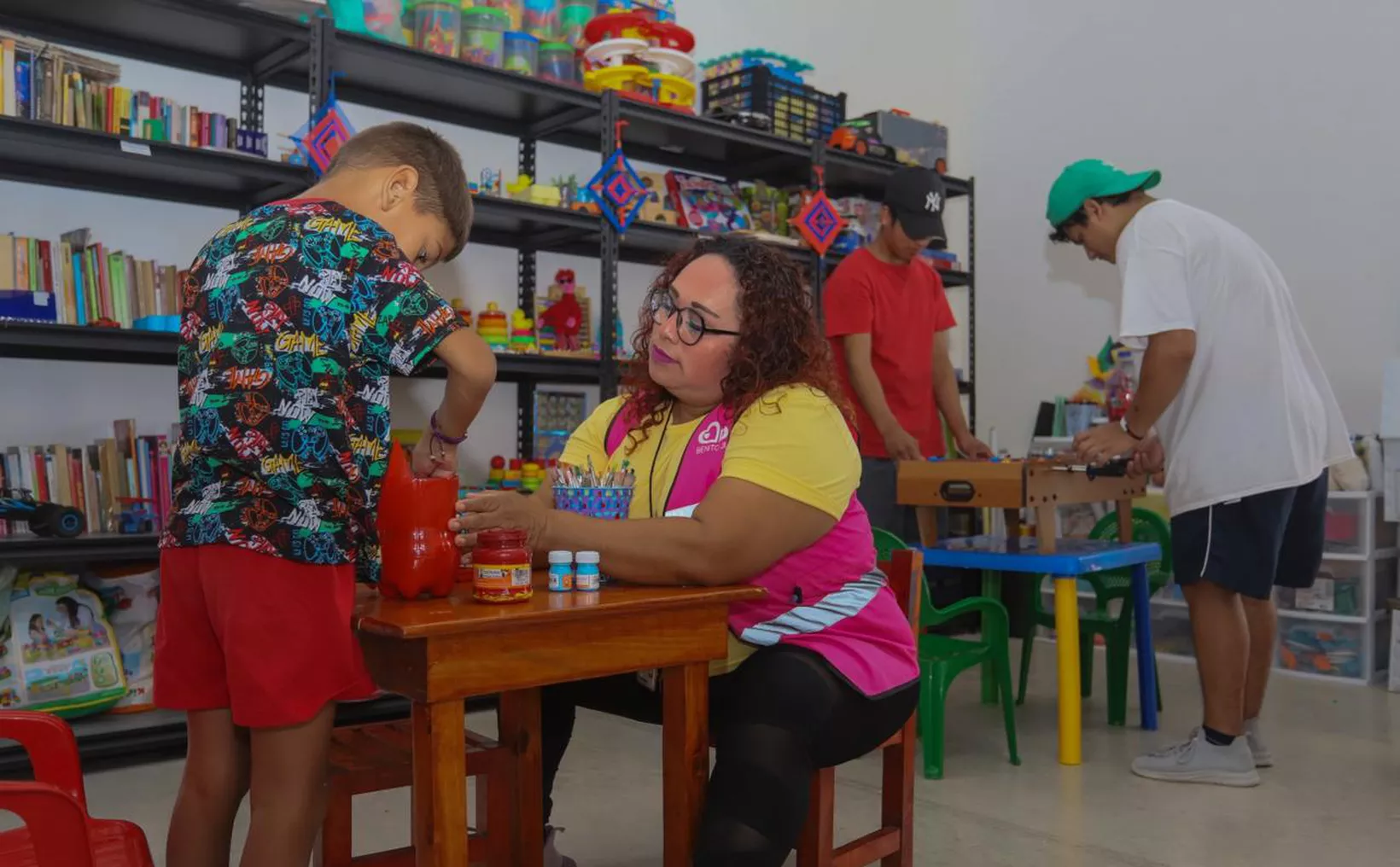
Cancún, Mexico — The dynamics of child migration have shown a notable change in 2025, with significantly fewer migrant minors arriving compared to previous years. While other years saw more than 100 children, this year only 51 have been assisted, with currently 20 in care. As a result, the Center for Social Assistance for Migrant Girls, Boys and Adolescents (CASNNA) could be used as a shelter for other vulnerable children in the state.
According to Marisol Sendo Rodríguez, director of DIF in Cancún, the decrease has not diminished the commitment of the centers, which now operate under a flexible model to assist both international migrants and children at risk due to internal migration.
“In 2025, regarding migrants, the numbers dropped significantly; in fact, our CASNNA functions for us in case we were to have overpopulation at the Temporary Assistance Center. They are already authorizing us that in our migrant house we can also shelter children, girls and youth in priority situations, so at some point we will make a move,” said the interviewee.
She recalled that internal migration is also addressed, primarily from states like Chiapas, Oaxaca and Tabasco.
“These minors usually enter the system because they find themselves in risk situations during their transit or stay.”
Given the lower number of foreign migrants, CASNNA received authorization to function as a mirror shelter of the Temporary Assistance House (CAT). This allows assisting girls, boys and adolescents in “priority situations,” avoiding any risk of overpopulation and optimizing available resources.
Although the outlook for next year is uncertain, authorities highlight that this cycle closure has allowed more personalized attention and a total focus on the warmth of the temporary home for those who need it most.
During its first semester of operation, from June to December 2023 alone, the center received 60 migrant girls, boys and adolescents.
Discover more from Riviera Maya News & Events
Subscribe to get the latest posts sent to your email.