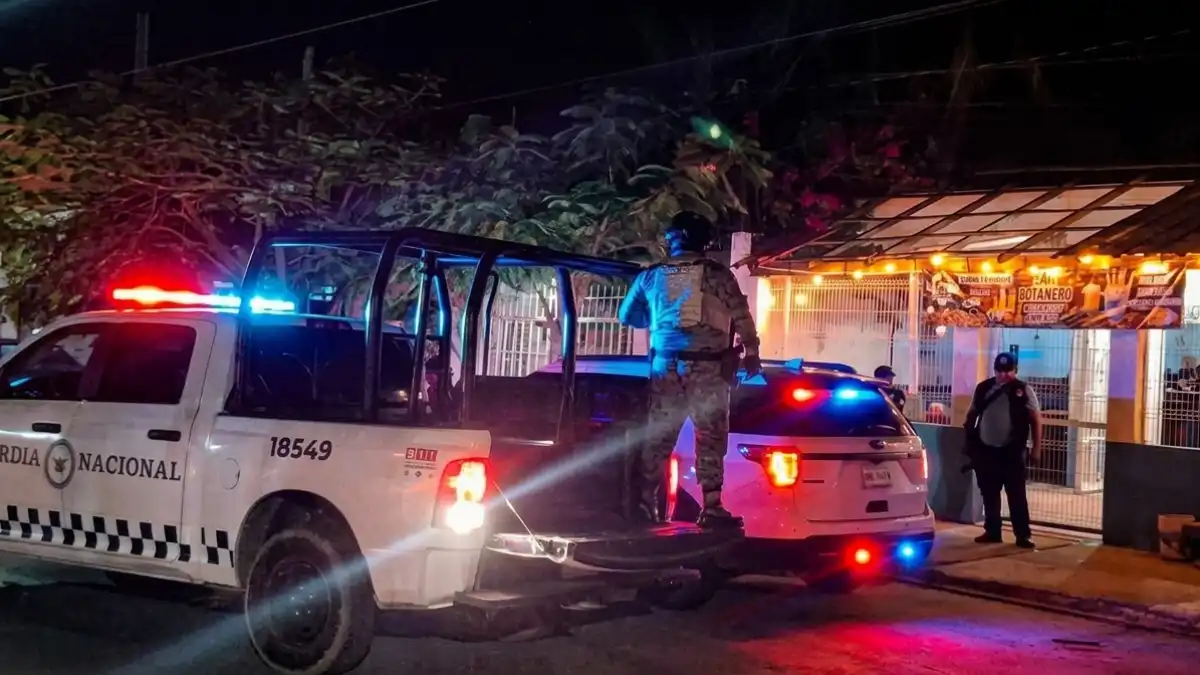
Cancún, Quintana Roo — State prosecutors have raided at least 12 bars in Cancún so far in 2026 over suspected drug dealing and human trafficking, but the seizures have not stopped several of the businesses from reopening weeks later.
Investigators say several of the establishments allegedly used waitresses to offer sexual services, and prosecutors have opened criminal cases for human trafficking in the form of forcing others into prostitution. Even so, multiple bars under investigation are operating again after raids and court-ordered interventions.
Raided in September, Reopened in October
On Sept. 19, prosecutors raided “La Pasadita,” a restaurant and cocktail bar operating on Calle Chaca, steps from Avenida Tulum and the ADO bus terminal. Inside, agents found six women — five Mexican and one Guatemalan — identified as possible trafficking victims.
According to preliminary investigations, the women were paid to “fichar,” or sit and drink with customers, and also offered sexual services. They received between 50 and 150 pesos for each drink bought for them, while sexual services were priced between 500 and 1,500 pesos. The women allegedly had to hand half of those earnings to the person in charge of the bar. The property was seized and the women were taken to State Prosecutor’s Office facilities to give statements.
Merchants nearby said the bar was back in business during the last week of October, roughly a month after the operation.
Seals Removed, Seals Ignored
Two bars raided simultaneously in the early hours of Aug. 7 show how differently the closures have played out. “El Status” removed its closure seals and resumed operations, while “Beach Please” remains sealed by the prosecutor’s office, though neighbors and local business owners report seeing workers and cleaning crews inside.
A prosecutor’s office notice dated Aug. 7, 2026, posted outside the property — file N-87/2026, folio G-0748 — marks the building as seized and cites a search warrant. The presence of workers or cleaning activity does not by itself prove an illegal reopening, but it raises questions about the legal status of the property and who is authorized to enter it.
“The seals are still there, but we have seen movement inside and cleaning work through the corridors,” one merchant said.
“They opened recently. It’s normal around here — it’s not the only one that has been closed and then opened again, although to be honest it doesn’t hurt us,” said another local business owner.
Others acknowledged that prostitution takes place in some establishments along the corridor but said it does not put nearby workers at direct risk. “It’s not unsafe. We know there is prostitution, but nobody bothers us,” several vendors said.
One merchant blamed payoffs. “They pay the authorities, that’s why they reopen, and it has affected us as business owners, especially at night, because a lot of people come and sometimes they rob to keep consuming,” he said.
Repeat Closures, Repeat Openings
Along the same corridor sits “Las Palomas,” which residents say has been targeted in previous trafficking and prostitution investigations, particularly during 2025.
One of the best-known cases is “El Dicho” in Región 234, which has been raided at least 10 times in the past three years amid neighbors’ complaints of alleged illegal activity. The bar has reopened at different points despite the operations, raising questions about the effectiveness of the measures and how far the investigations go.
Another is “Las Muñecas de Chucky,” formerly “La Palapa de Chucky,” in Región 230, where authorities have sheltered several women and which has been the scene of violent incidents and complaints over alleged extortion payments.
The 2026 Operations
- Jan. 20: A raid on a bar on Avenida Bonampak led authorities to shelter five women — four Mexican and one Guatemalan — and detain two people. That same month, federal and state forces detained the manager of a bar and sheltered six women.
- March 3: Prosecutors raided a bar on the road known as Rancho Viejo, in Supermanzana 244, finding six women believed to be trafficking victims and a teenage boy who was allegedly suffering labor exploitation.
- March 26: State authorities announced the rescue of three women allegedly forced into prostitution at a clandestine bar in Supermanzana 234. One person was arrested on drug and trafficking charges involving sexual exploitation.
- May: Two simultaneous raids in Supermanzanas 32 and 523 led to the discovery of eight women — seven Mexican and one American — who were allegedly forced to provide sexual services to pay off debts. That month, authorities in the continental zone of Isla Mujeres sheltered 11 Mexican women at a bar that allegedly operated under the pretense of hiring them as waitresses.
- Oct. 6: Prosecutors reported two more raids in Benito Juárez, sheltering two Mexican women at properties in Supermanzana 23 and Villas del Caribe in Supermanzana 520. Agents seized marijuana-like material, a pipe and condoms at the first, and dried plant material, white powder residue and condoms at the second. Both properties were placed under prosecutor custody.
Cantaritos Raid Nets Two Employees
Last week, prosecutor’s office agents raided the Cantaritos bar at the Plaza de Toros in Cancún, at the corner of Avenida Bonampak and Sayil, where they found multiple drug doses allegedly linked to retail sales. Two employees — Geyser Aldair “N” and José Dolores “N” — were arrested as suspected perpetrators of crimes against health for possessing doses of what appeared to be cocaine, marijuana and crystal meth.
Quintana Roo Accounts for Nearly Half of National Cases
National figures reflect the scale of the problem. Between January and September 2026, prosecutors opened 450 trafficking investigations across Mexico, 218 of them in Quintana Roo — 48.4 percent of the national total, according to the Executive Secretariat of the National Public Security System (SESNSP).
The State Prosecutor’s Office said that between July 2023 and September 2026 it sheltered 1,207 possible trafficking victims in Quintana Roo, 151 of them minors, as a result of more than 150 raids and operations at businesses and homes.
Employees Arrested, Owners Not
A former employee of this type of establishment questioned whether the operations reach the people in control. “I don’t think that’s the right way to fight trafficking or prostitution, because if nobody is arrested, even if they rescue the women, they’re back in 15 days, and when they do arrest someone it’s usually employees, not the owners, who then reopen or find another place, even with the same people,” he said.
The normalization of the activity was also evident in the account of Joel, a regular customer at one of the bars that has been targeted, who said he goes by choice and knows prostitution exists there but does not always know the conditions the women work under.
“I’m a regular customer because I like it and it’s close to work. For me it’s normal. I can’t say it was very obvious that they were there against their will, but I didn’t ask either,” he admitted.
Benito Juárez’s municipal regulations on public entertainment, in Article 141, allow authorities to revoke licenses on their own initiative when serious crimes — including human trafficking, pimping and the sexual exploitation of minors — take place inside an establishment. The prosecutor’s office had not issued a statement on the reopenings as of publication.
More Crime
- Two Transport Workers Arrested After Ride-Hailing Driver Beaten at Cancún Airport
- Former Cancún Mayor Arrested in Yucatán on Fraudulent Administration Charges
- Foreign Resident Reports Robbery at His Jade Bay Home in Tulum
- Quintana Roo Logs 87 Real Estate Alerts, Four Irregular Transactions Halted
- Uber Driver Beaten at Cancún Airport; National Guard Arrests Four Suspects
More Cancun
- Free Lucha Libre Card Coming to Cancún’s Avenida Yaxchilán on Nov. 27
- Business Lending in Quintana Roo Rises 23.8% to 136.6 Million Pesos
- IMSS Quintana Roo Promotes Men’s Health Checkups in November
- Cancún Police Knock on Doors, Reaching 3,537 Families in 61 Neighborhoods
- Cancún’s Arboriza Program Reaches 4,000 Trees Planted, With 11,000 Targeted by 2027