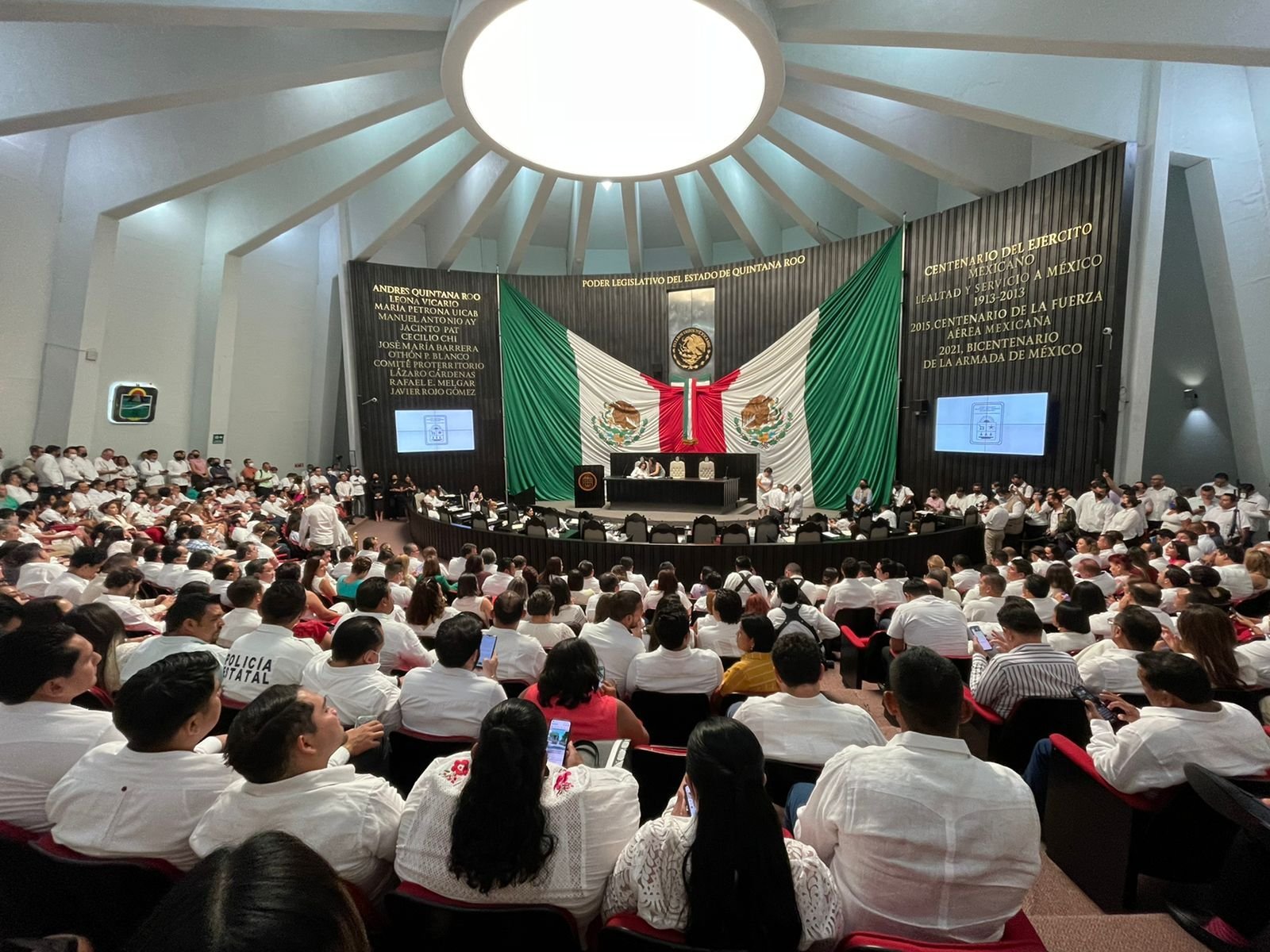
Mexico City — The organization ARTICLE 19 Mexico and Central America has warned that a proposed reform to Quintana Roo’s Civil Code, which would regulate the right to one’s own image, could generate limitations on freedom of expression. The group has called on the state’s XVIII Legislature to review its implementation in accordance with constitutional and international standards.
“Any regulation that seeks to control the dissemination of images must be carefully analyzed in light of national and international freedom of expression standards,” the organization stated, referring to the initiative presented before the local Congress.
The proposal was advanced by deputies María José Osorio Rosas (PVEM), Hugo Alday Nieto (PT), and Ricardo Velasco Rodríguez, a local deputy and co-founder of Morena, all members of the XVIII Legislature.
The project aims to incorporate provisions on image rights into the state’s Civil Code. Article 551 Ter establishes that every person has the right to decide on the use of their voice, face, body, name, or any graphic, audiovisual, or sound representation that allows their identification.
Furthermore, Article 551 Quater states that the dissemination or commercialization of a person’s image without express consent will constitute an unlawful act.
The initiative includes exceptions for journalistic work. Article 551 Septies indicates that the right to one’s own image will not prevent the capture or publication of images when it concerns individuals who hold public office or have public projection, provided the images are obtained during public events or in places open to the public, as well as in cases of caricature, parody, or graphic information of events of public interest.
ARTICLE 19 acknowledged that regulating the misuse of images on social media and digital environments addresses a real problem but warned that the reform’s wording could lead to discretionary interpretations.
Among the organization’s observations is the absence of key definitions in the initiative, such as public act, public figure, or information of public interest, which could open the door to undue restrictions on public debate.
The organization also noted that limiting the use of images solely to public spaces could be problematic, as events of public interest do not always occur in open areas.
ARTICLE 19 further urged consideration of the context of judicial harassment against journalists in Mexico. According to its documentation, in seven months last year, 51 cases of litigation against journalists and media outlets were recorded, including two in Quintana Roo—a phenomenon known as SLAPPs (strategic lawsuits against public participation).
In light of this, the organization called on the State Congress to strengthen the initiative to ensure its application is compatible with freedom of expression and the right to information, including more precise definitions of public interest and explicit recognition of the protection of journalistic, artistic, and cultural work.
Discover more from Riviera Maya News & Events
Subscribe to get the latest posts sent to your email.