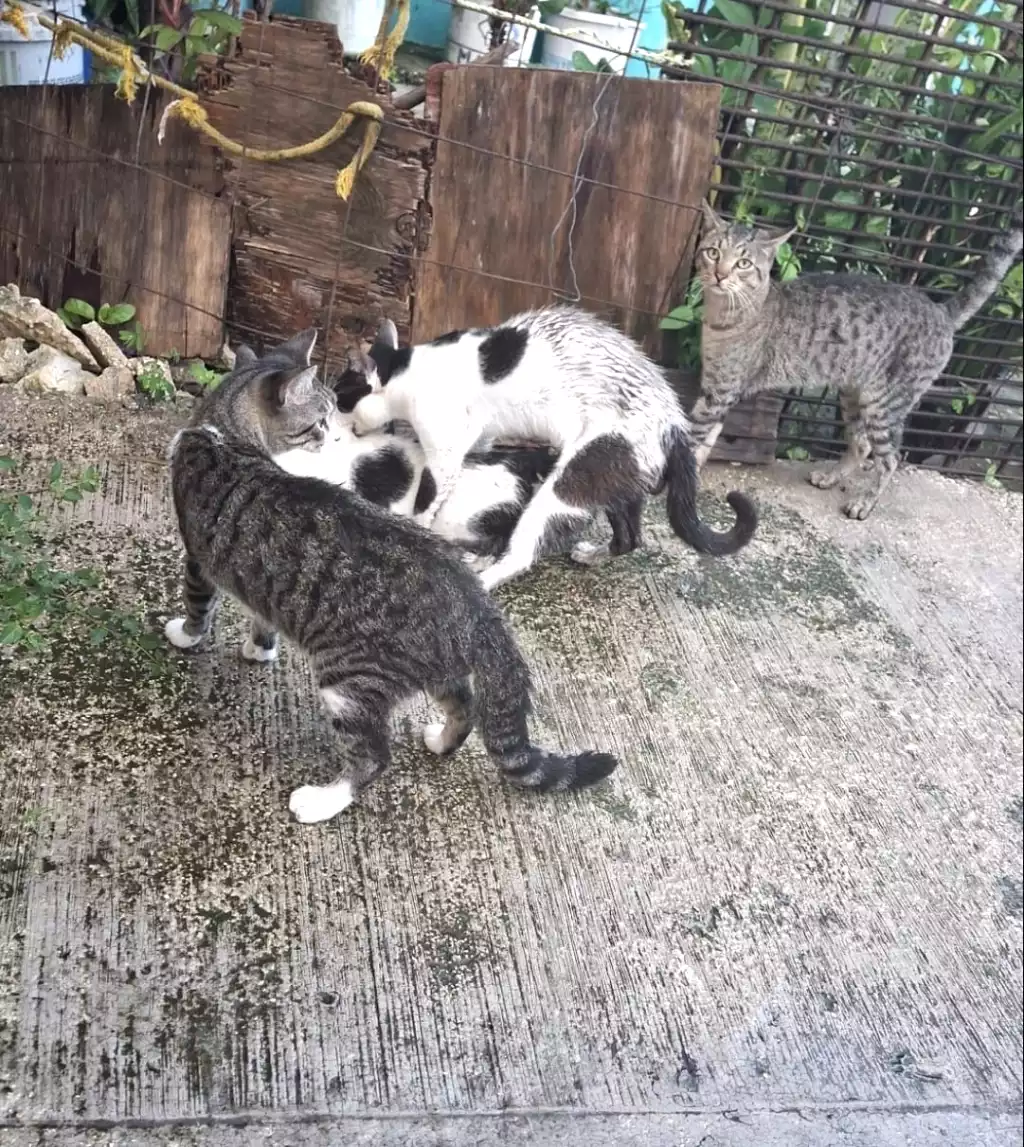
Isla Mujeres, Quintana Roo — At least one thousand feral cats inhabit popular areas of Isla Mujeres, representing approximately 80% of the feline population in that condition; the remainder have owners, according to Noemí and María, volunteers who collaborate with associations dedicated to capturing and sterilizing animals.
They stated that this situation persists due to the lack of an institutional control program.
Veterinarian Delfino Guevara has addressed this problem on various occasions, urging municipal authorities to implement a formal project for the capture and sterilization of felines in neighborhoods, with the goal of regulating their population growth, as occurred with dogs after more than 25 years of community effort, since official intervention was limited.
They commented that traps are currently placed periodically in neighborhoods such as El Cañotal and Miraflores, where a greater presence of these animals wandering among homes has been detected. During last autumn, a massive sterilization campaign was carried out with the support of foreign volunteers.
Two years ago, the proportion of feral cats reached 90 percent. Due to the joint work of volunteers and veterinarians like Guevara, it is expected to reduce it to 70% by the end of 2026. Noemí emphasized that if the municipal departments of Ecology, Health, and Education applied the Animal Welfare Law, the control process would advance more quickly.
In contrast, the canine population is mostly regulated. It is estimated that around 90% of dogs have owners, out of an approximate total of 2,000 specimens, according to personnel from the veterinarian, who is preparing a specific plan regarding animal health.
María lamented that the abandonment of pets continues to occur frequently, at a rate of one case per week, due to the absence of sanctions for irresponsible owners who allow their animals to go out to wander and generate contamination in public spaces.
She explained that felines often enter properties in search of food. In the Miraflores neighborhood, neighbor Joel recounted that he sometimes feeds them, although his wife opposes it due to the conflicts they generate on roofs and patios when disputing territory.
“At night the felines fight on the roofs, defecate on the properties, and cause bad odors. This bothers the neighbors and some talk about poisoning them,” he said.
Discover more from Riviera Maya News & Events
Subscribe to get the latest posts sent to your email.