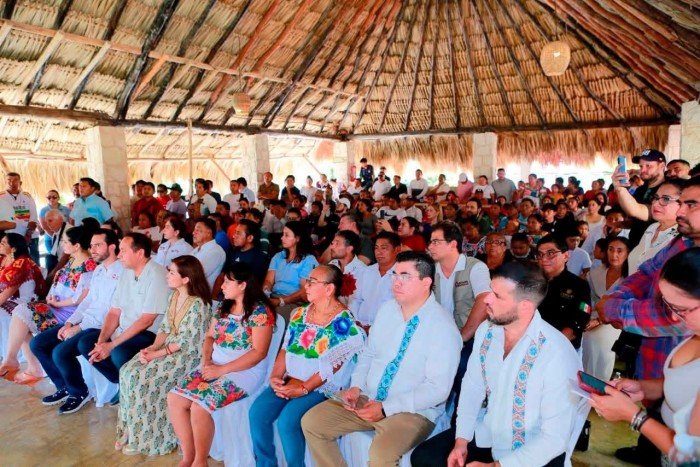
Kantunilkín, Quintana Roo — Forty Maya communities in northern Quintana Roo are seeking official recognition for a community-managed tourism territory intended to connect visitors with the region’s forests, farms, wildlife and living cultural traditions.
The proposed territory, called Kilich Kab: Mundo Sagrado, would extend across more than 400,000 hectares in the municipalities of Lázaro Cárdenas and Playa del Carmen. If approved, it could eventually become Quintana Roo’s 13th recognized tourism brand.
The designation has not yet been granted. Municipal presidents Estefanía Mercado of Playa del Carmen and Nivardo Mena Villanueva of Lázaro Cárdenas signed and submitted the formal request to state Tourism Secretary Bernardo Cueto Riestra during a gathering in Pac-Chén. The application begins a review and planning process involving the communities and municipal, state and federal authorities. Quintana Roo’s Tourism Secretariat confirmed that the request, rather than a final designation, was submitted.
Communities specifically identified in the Playa del Carmen municipality include Uxuxubí, Campamento Hidalgo and Punta Laguna. José María Quintal Olivar presented the tourism development document on behalf of the participating communities, while Liliana García, director of the civil organization Kanché A.C., represented the group providing technical guidance.
“This declaration will allow us, over the years, to make decisions together about what we want for the future,” Cueto said. He described the process as returning a greater share of tourism decision-making to the people who live in and care for the territory. Local officials say community representatives would participate in planning the region’s tourism development.
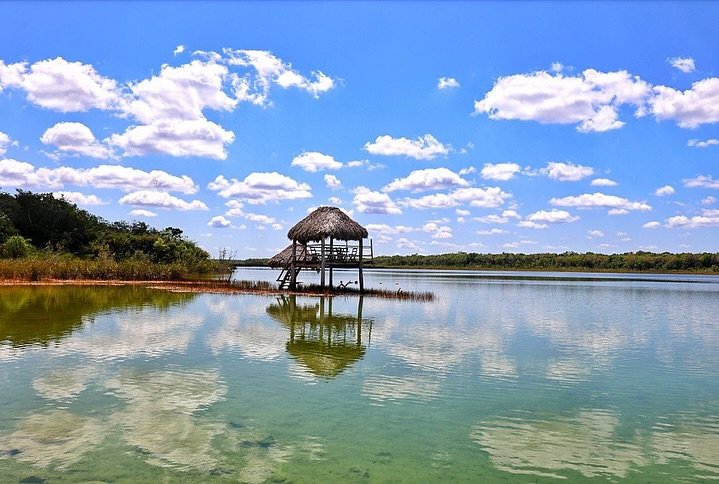
More than another excursion from the coast
For travelers, Kilich Kab is being presented as an alternative to the heavily developed resort corridor. Instead of a conventional attraction built for large tour groups, its experiences would be provided by local families, cooperatives, farmers, beekeepers, artisans and community guides.
Possible activities include jungle walks, birdwatching, visits to cenotes and lagoons, traditional cooking, native-corn farming and demonstrations of meliponiculture, the keeping of stingless melipona bees. Earlier descriptions of the developing route have also mentioned interpretive visits around Solferino, Punta Laguna and Uxuxubí, as well as honey-producing communities including San Ángel, Nuevo Durango and Campamento Hidalgo.
The distinction matters. Community tourism is intended to keep more visitor spending in the places being visited, rather than allowing most of the revenue to leave through outside operators. It can also provide an economic reason to maintain forest cover, traditional agriculture and local knowledge.
Kanché says the underlying Kiilich Kab Network of Regenerative Community Enterprises already brings together more than 20 communities and locally operated ventures. The larger application covers 40 communities, suggesting that the proposed legal territory extends beyond the network’s current core membership. The organization has been assisting with participatory planning, territorial governance and regenerative-tourism development. Its work is supported by the French Development Agency and accompanied by UNAM, the Technological University of Cancún, Sedetur and local government.
One related initiative is the Network of Guardians of Native Seeds of Northern Quintana Roo. Its members work to conserve locally adapted corn and other seeds used in the milpa, the traditional intercropping system that commonly combines corn, beans, squash and other plants. For a culturally curious visitor, that creates an opportunity to understand Maya food as the product of a living agricultural system, not simply as something served in a restaurant. Kanché describes the seed network as an effort to preserve agricultural knowledge, identity and native varieties.
A corridor important to wildlife and water
The proposed territory lies between some of the northern peninsula’s most important forest and wetland landscapes. These include the Yum Balam Flora and Fauna Protection Area, which covers approximately 154,000 hectares around northern Lázaro Cárdenas, and the 5,367-hectare Otoch Ma’ax Yetel Kooh protected area surrounding Punta Laguna.
The region provides habitat and movement routes for jaguars, spider monkeys and numerous resident and migratory birds. Its forests and permeable limestone are also important to groundwater replenishment. Because the Yucatán Peninsula has few surface rivers, rain filtering through the karst landscape supplies its underground aquifer, cenotes and cave systems. Conservation decisions made inland can therefore affect water quality far beyond an individual community.
What recognition would change
The “Rural Community Zone with Tourism Potential” designation was added to Quintana Roo’s tourism legislation in 2024. Under the law, the state tourism secretary can declare such a zone, while state and municipal authorities may help regulate tourism, encourage employment and investment, support territorial planning and conserve natural resources for the benefit of local residents. The relevant provisions appear in Articles 39 Undecies and 39 Duodecies of the state Tourism Law.
Recognition could give Kilich Kab a framework for coordinated promotion, training, infrastructure and public investment. It could also help communities establish limits and decide where tourism is appropriate, rather than waiting for outside businesses to define the territory’s future.
However, Kilich Kab is not yet a finished, unified visitor route. Authorities have not published a final declaration, complete list of participating communities, central reservation platform or timetable for approval. Individual community enterprises and experiences may therefore have different levels of readiness and accessibility.
For sustainably minded travelers, that is part of the project’s significance. Kilich Kab is not simply proposing another collection of attractions. Its success will depend on whether communities retain control, cultural activities are presented on their terms, environmental limits are respected and visitor spending reaches the families protecting the land.
More Tourism
- Riviera Maya Hotel Occupancy Plunges to 36% in October 2026
- Quintana Roo Hoteliers Say DNR Hike Favors Punta Cana Over Cancún
- Tulum Airport Operating Normally Despite Flight Cuts, Grupo Mundo Maya Says
- Tulum Ranks Second as Mexico Claims Six Spots on Best Beaches List
- Holbox Businesses and Residents Urge Review of Street Closures
More Playa del Carmen
- Sheinbaum Acknowledges Little Progress in Talks With Vulcan Over Calica
- Fitch Downgrades, Then Upgrades Playa del Carmen Credit Rating Over Missed Payment
- Playa del Carmen Traffic Police Run No Operations Targeting Bike Lane Violations
- Playa del Carmen Merchants Pin Hopes on Buen Fin, Winter Season to Salvage Weak Year
- Scooter Users Demand Say in Playa del Carmen Micromobility Rules