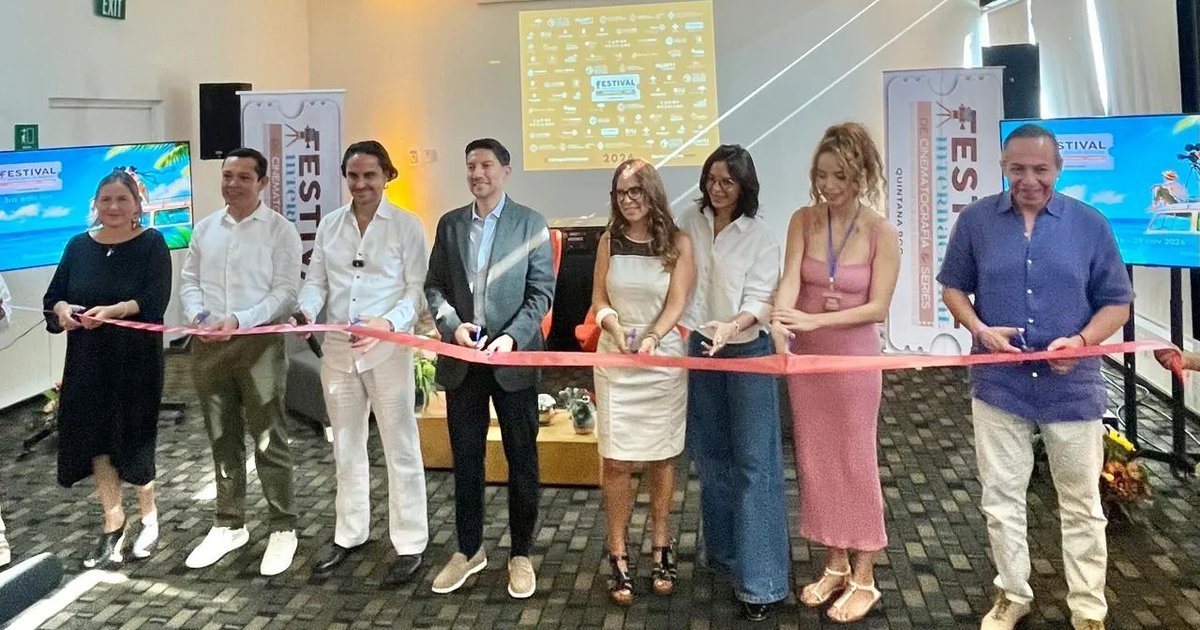
Playa del Carmen, Quintana Roo — Playa del Carmen took a step toward building a regional audiovisual industry on Thursday with the inaugural ribbon-cutting of the Southeastern Mexico Audiovisual Meeting, “Rodar en el Sureste,” held as part of the 2026 Quintana Roo International Film and Series Festival.
The Fiesta Inn Playa del Carmen hosted the first edition of the meeting, which brought together film industry representatives, authorities and professionals to promote a shared vision: southeastern Mexico as a location for major productions and a place where stories are created, financed and produced.
Paulino Hemmer, director of the Quintana Roo International Film and Series Festival and executive producer at Ceiba Films, said film is both art and entertainment and an industry that creates jobs and attracts investment.
“Our vision is to build a solid audiovisual industry that opens opportunities for local talent and turns the potential of our region into a legacy for the next generations,” he said.
A Forum to Connect the Southeast with the Film Industry
The festival presented the industry forum “Rodar en el Sureste,” featuring:
- Pablo Casas, deputy secretary of tourism promotion and operations at Sedetur
- Mael Mercader, film commissioner for Quintana Roo
- Mauricio Durán, president of Canacine Nacional
- Paulino Hemmer, festival director and executive producer at Ceiba Films
The forum addresses the southeast’s competitive advantages as a film destination, including its locations, filming facilities, sustainability and the economic potential of audiovisual production.
Three Pillars to Strengthen Film in the Southeast
The festival is pursuing its vision through three main pillars:
- Decentralize film: bring training and production opportunities beyond central Mexico.
- Strengthen the regional industry: professionalize talent, connect creators with producers and generate collaboration and investment opportunities.
- Build new audiences: bring film closer to students, residents and visitors through screenings at universities and cultural venues.
As part of that strategy, the festival expanded its screening venues with showings scheduled from Nov. 18 to 22 in collaboration with the Autonomous University of Quintana Roo (UQROO), Anáhuac University, La Salle University, Universidad del Caribe, UNID University and the Frida Kahlo Museum.
Professional Training for Quintana Roo Talent
The meeting also offers three specialized workshops: screenwriting with Malú Solís; development and financing with Alejandra Robledo; and on-set production with Daniela Espinosa Ochoa.
The Southeastern Mexico Audiovisual Meeting “Rodar en el Sureste” is an initiative of the Quintana Roo International Film and Series Festival aimed at decentralizing film, strengthening the regional audiovisual industry and building new audiences. It is organized by the festival, Ceiba Films, Natura Cultura Social, Playa del Carmen, Canacine Nacional and the Quintana Roo Film Commission.
More Culture
- Cancun’s Underwater Art Museum Reports Roughly 40% Drop as Tourism Slumps
- Tulum Dive Community Urged to Unite to Reclaim World Cave-Diving Capital Title
- Puerto Morelos Hosts 10th National Mesoamerican Ballgame Championship
- Playa del Carmen Theater Draws Thousands for ‘Conversando con el Diablo’
- Playa del Carmen Seeks Federal Recognition for Uxuxubi Indigenous Community
More Playa del Carmen
- Playa del Carmen Sees More Tourists but Weaker Spending on Fifth Avenue
- Quintana Roo Launches Targeted Mpox Vaccination Campaign With Jynneos
- Grupo Xcaret Weighs University, Hospital and Cruise Port in Quintana Roo
- Playa del Carmen Marks 116th Anniversary of Mexican Revolution With Parade
- Playa del Carmen Mayor Honors Mónica Tello as 2026 Businesswoman of the Year