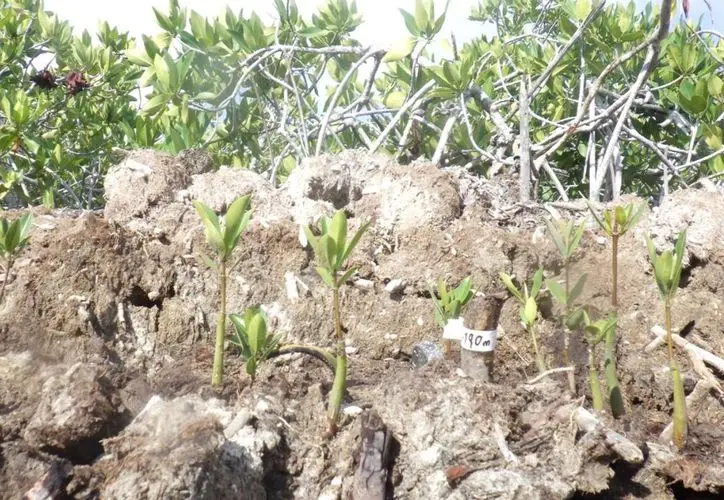
Cancún, Quintana Roo – As part of mitigation and environmental compensation measures for the construction of the Nichupté Vehicular Bridge, the restoration of 118 hectares of seagrass has been completed in various areas of the lagoon system. This project, which currently exceeds 92% completion, has driven a pioneering effort in the recovery of aquatic ecosystems in the Mexican Caribbean.
The National Commission of Natural Protected Areas (Conanp) reported that this program marks a historic milestone and establishes a new standard for sustainable infrastructure, with a total project that contemplates the restoration of 300 hectares of mangrove.
To ensure species survival, specialists implemented a rigorous protocol divided into four phases: soil diagnosis and water quality assessment, technical rescue of specimens, strategic planting, and continuous monitoring to guarantee rooting and growth. Techniques adapted to the needs of each zone were applied in the northern, central, and southern sectors of the lagoon system. In the north, 2,500 cores of Thalassia testudinum and 993 of Halodule wrightii were rescued and planted. In the central and southern zones, 6,510 rhizomes of Thalassia and 30,320 units of Halodule were planted.
This program not only protects marine biodiversity and strengthens the lagoon’s resilience against climate change, but also generates valuable local technical and scientific knowledge. The success in planting demonstrates the feasibility of advancing urban development in harmony with the preservation of the Caribbean’s natural heritage, setting a methodological precedent for future infrastructure developments in vulnerable coastal ecosystems.
Discover more from Riviera Maya News & Events
Subscribe to get the latest posts sent to your email.