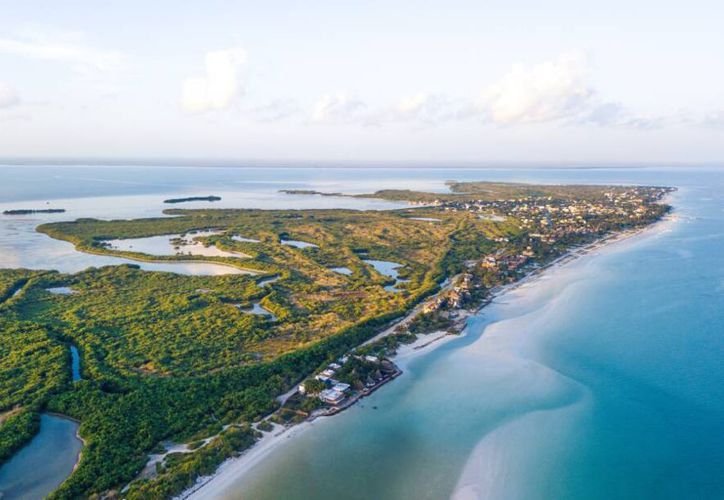
Holbox Island, Quintana Roo — The Yum Balam Biosphere Reserve, named in honor of the “Lord Jaguar” in Maya, is facing severe threats from rampant tourism development and inadequate sanitation infrastructure on Holbox Island, where the population, including tourists and migrants, can reach up to 6,000 people.
According to studies by the Mexican Center for Environmental Law (Cemda), the ecosystem services provided by the reserve are vital for planetary health. Its mangroves and seagrass beds prevent the release of 38.5 million tons of carbon dioxide (CO2), equivalent to the annual greenhouse gas emissions of 9.4 million Mexicans.
Experts warn that losing these ecosystems would not only be a local tragedy but a direct blow that would accelerate environmental disaster by releasing this stored carbon.
The Yum Balam Flora and Fauna Protection Area, in northern Quintana Roo, is an ecological reserve spanning 152,000 hectares dedicated to safeguarding mangrove, dune, and jungle ecosystems.
“The biological value of the 152,000 hectares that make up the reserve is incalculable. This sanctuary harbors reefs, coastal dunes, and jungles that serve as refuge for more than 90% of the endemic birds of the Yucatan Peninsula. It is also a critical area for endangered and specially protected species, such as hawksbill and loggerhead turtles, dolphins, the majestic whale shark, and, of course, the jaguar, the reserve’s ultimate symbol,” a Cemda report describes.
However, this privileged environment now faces intense human pressure, especially from uncontrolled real estate development, pushing the fragility of this tourist destination to a point of no return.
The island, which sees occupancy rates of up to 100% on weekends, has witnessed its sanitation drainage and drinking water infrastructure reach its operational limit. Nivardo Mena, president of Lázaro Cárdenas, told Novedades Quintana Roo that rescuing the sanitation infrastructure would cost at least 500 million pesos.
High levels of water contamination have also been found in the Yalahau aquifer, located within the Yum Balam Flora and Fauna Protection Area, due to lack of infrastructure, uncontrolled tourism growth on Holbox Island, and poor wastewater management.
Alejandro López Tamayo, director of Centinelas del Agua A.C., stated that the main threat comes from black water, the absence of a sewer system, and inefficient treatment plants, causing discharges to directly pollute the lagoon. “Let’s remember that everything is ultimately connected from the watershed to the reef,” he said.
Now, environmentalists on the island have denounced the construction of a five-story building, adding to the list of developments that over-densify the island and whose environmental impact could cause greater damage to the ecosystem.
Key Data
- In October 2025, environmental authorities identified more than 25 illegal developments, specifically within Protected Natural Areas, including the Yum Balam zone.
- Last year, a fire affected 670 hectares in the area and took 10 days to extinguish.
Discover more from Riviera Maya News & Events
Subscribe to get the latest posts sent to your email.