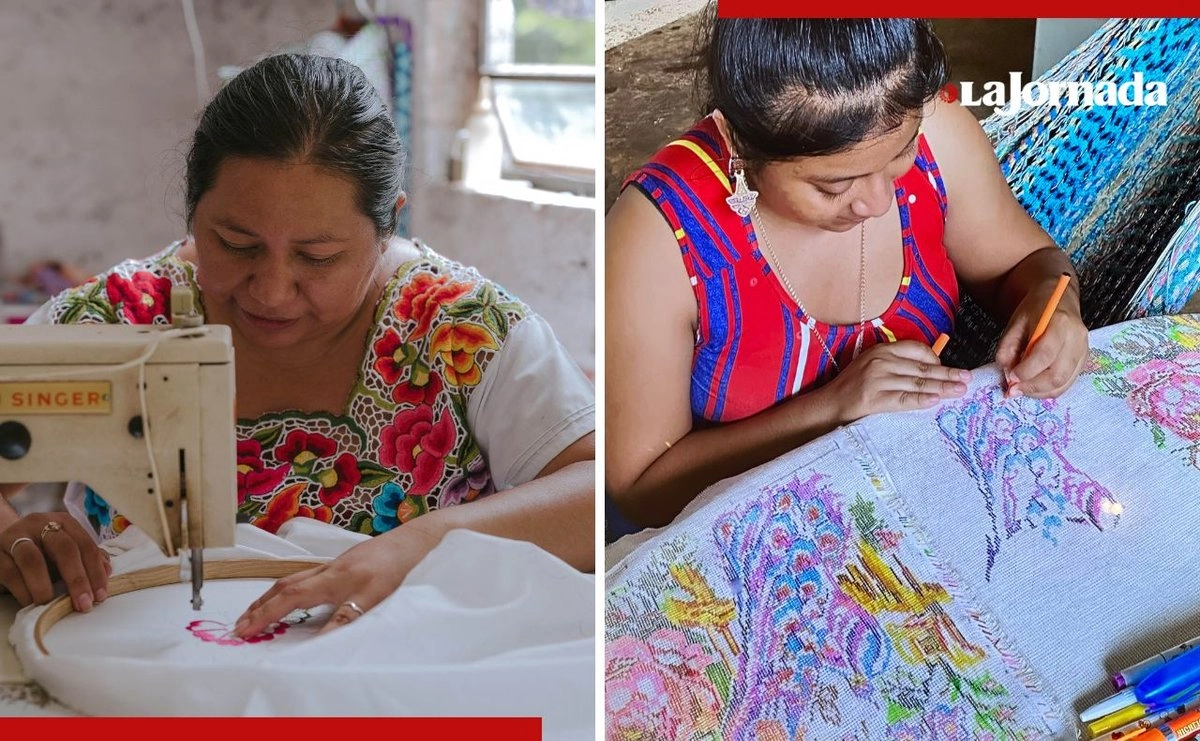
Merida, Yucatan – Maya embroidery is an ancestral art form passed down through generations in the Yucatán Peninsula. Each stitch weaves together family memory, stories of the land, and a worldview that has sustained one of Mexico’s most authentic cultural expressions.
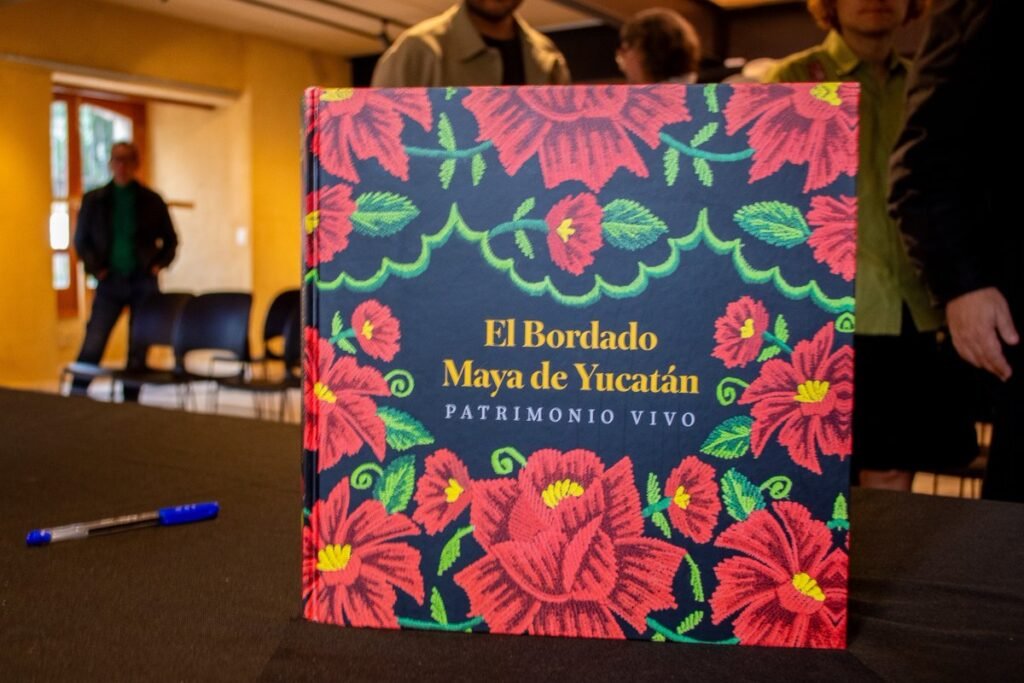
The importance of this tradition is documented in El Bordado Maya de Yucatán: Patrimonio Vivo, a comprehensive historical, anthropological, and technical study developed through a participatory community process. The book recognizes embroiderers not only as artisans, but as authors, teachers, and guardians of the textile knowledge that shapes their cultural identity.
The publication brings together voices that connect everyday life with the sacred, and ancestral knowledge with contemporary practice. Among those featured are Zelmy Domínguez from Tekit; Mayra Patricia Chí Pérez from San José Oriente, Hoctún; Imelda Cocom from Tekax; and María Dalila Casanova Ferráez from Muna.
“For me, heritage is an inheritance. But above all, it is knowledge that our ancestors, grandmothers, mothers and fathers leave us, and it is part of our identity. It is a legacy of memory for me,” shares Zelmy Domínguez.
Imelda Cocom highlights the impact of professionalization: through collaboration, embroiderers can learn from one another and strengthen their communities economically. “We are several embroiderers who, now it depends on what we do, we can help support our household. So, well yes, the truth is I am very happy, with much excitement.”
María Dalila Casanova Ferráez reflects on the recognition of knowledge that was once undervalued: “Well, the truth is I feel very happy because I always said: ‘I don’t know anything, I’m nobody, nothing,’ and for them to say: ‘no, well these stitches that you know are worth a lot,’ and for them to be gathering them… it gives me joy… it fills me with happiness to be part of it.”
Published by the Secretariat of Culture and the Arts (Sedeculta) in collaboration with UNESCO and the Banorte Foundation, the book centers on the Safeguarding Plan for Maya Embroidery. This plan is based on community diagnoses and regional exchanges, aiming to preserve embroidery as intangible cultural heritage in Yucatán.
A Roadmap for Preservation
The book outlines more than 100 concrete actions organized around documentation, preservation, transmission, fair trade, gender equity, education, and visibility. Key milestones include the certification of more than 200 embroiderers as master trainers and the creation of the State Council of Embroiderers—significant steps toward professionalization, cultural governance, and recognition of artisan knowledge.
In addition to documenting embroidery’s cultural meaning, the volume examines ancestral techniques, the evolution of stitches, technological transitions, and the ongoing tension between artisanal production and commercialization. It emphasizes the importance of fair trade practices that dignify the work of Maya women.
Patricia Martín Briceño, head of Sedeculta, describes the book as a first-rate document that “brings together the voice, technique, history, and sensitivity of more than 300 embroiderers who participated in the Safeguarding Plan.” She adds that the long-term goal is for Maya embroidery to be declared intangible cultural heritage of humanity, noting that “the safeguarding of cultural heritage is only possible when it is led by those who create it.”
Textile specialist Silvia Terán, who presented the project at Original: Encuentro de Arte Textil Mexicano, underscored the importance of professional pathways for young embroiderers and recalled the certification of 200 artisans as a turning point for recognition and future opportunity.
UNESCO’s representative in Mexico, Andrés Morales Arciniegas, writes that the book is the result of tireless community work. “We have collaborated with nearly half a thousand embroiderers… with the purpose of strengthening their socioeconomic capacities and guaranteeing the rights of women artisans through the safeguarding of one of the most significant cultural manifestations of their heritage.”
El Bordado Maya de Yucatán: Patrimonio Vivo will be officially presented in Yucatán on January 22, with the presence of Governor Joaquín Díaz Mena.
Discover more from Riviera Maya News & Events
Subscribe to get the latest posts sent to your email.