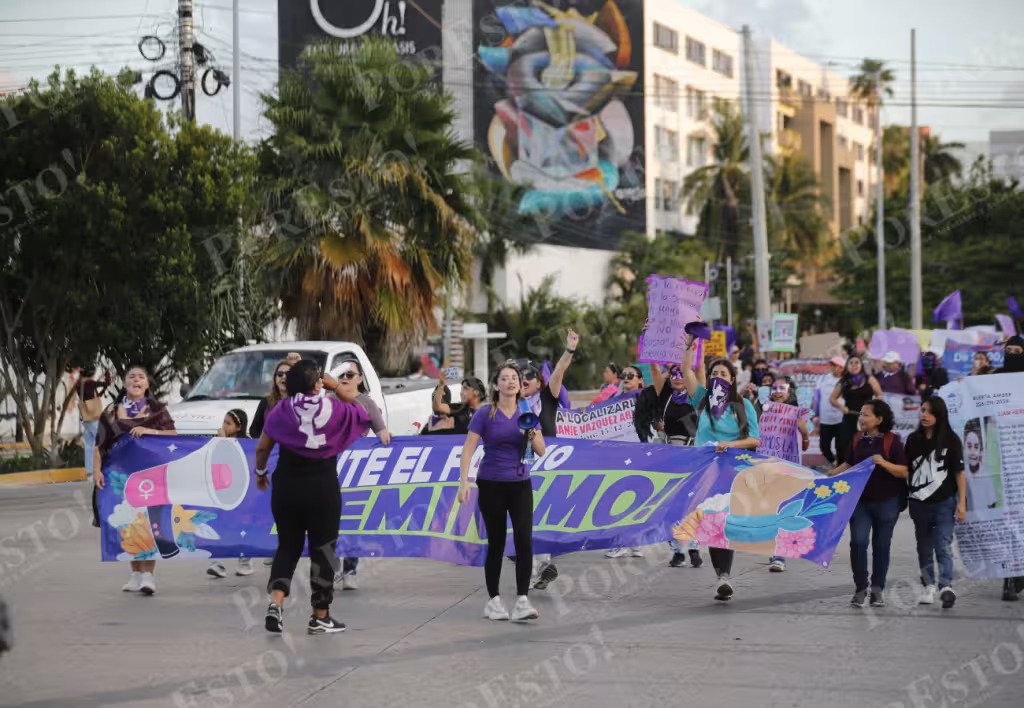
Playa del Carmen, Quintana Roo — Women’s rights groups in Quintana Roo have unveiled a “Wall of Institutional Violence” to protest a family court ruling they say forces a child to maintain contact with a father accused of domestic and vicarious violence.
The action follows a decision by Judge Víctor Alfonso Escalante Hernández of the Civil and Family Oral Court of First Instance in Playa del Carmen. The judge ruled there was no risk to the child and ordered supervised visits at a Family Coexistence Center (Cecofam) to continue, despite active protective measures and documented incidents at the facility.
Organizations including “Xtabay” and the “Organization for a Society Free of Violence” called the ruling revictimizing. They allege the father falsified the U.S.-born child’s birth certificate with the alleged complicity of the State Prosecutor’s Office and the judiciary.
“The judicial criteria prioritizes coexistence ‘for the supposed superior good’ without weighing the psycho-emotional risk,” said case advisor and lawyer Ariadne Song. She referenced a March 5, 2025, altercation in front of the child involving threats, a struggle over a stroller, and subsequent intervention by Cecofam and the Specialized Group for Attention to Family and Gender Violence (Geavig). That episode led to a case file for family and vicarious violence and protective measures under Article 137 of the National Code of Criminal Procedures.
The mother, Alma Nashelli Gutiérrez Pérez, said her nearly two-year legal battle includes the use of an irregular identity document, detentions, and a temporary separation from her daughter that was later reversed. Follow-up hearings are ongoing.
Subsequent accounts from the mother describe verbal violence during visits, pressure on staff, the child’s resistance to separating from her, the use of material incentives to induce visits, and prolonged crying afterward. In another incident, the mother reported religious objects were imposed on the child without her consent, sparking further conflict at the center.
Child psychologist Mariana López Cárdenas warned that “when a girl shows fear, rejection, or persistent crying, forcing coexistence can worsen emotional damage and normalize violence.” She argued the child’s best interest must be evaluated case by case with independent expert assessments and active listening to the child.
Activists reported that January 2026 ended with at least a dozen case files for alleged vicarious violence in the state’s family and criminal courts. Only three minors were returned to their family homes through supervised agreements; most remain under provisional measures prolonging separation.
“This case again highlights the deficit of gender and childhood perspectives in judicial rulings and the gap between protective measures and their execution,” Song reiterated. “Without review of criteria and accountability, institutional violence will continue to be reproduced from the courts.”
Discover more from Riviera Maya News & Events
Subscribe to get the latest posts sent to your email.