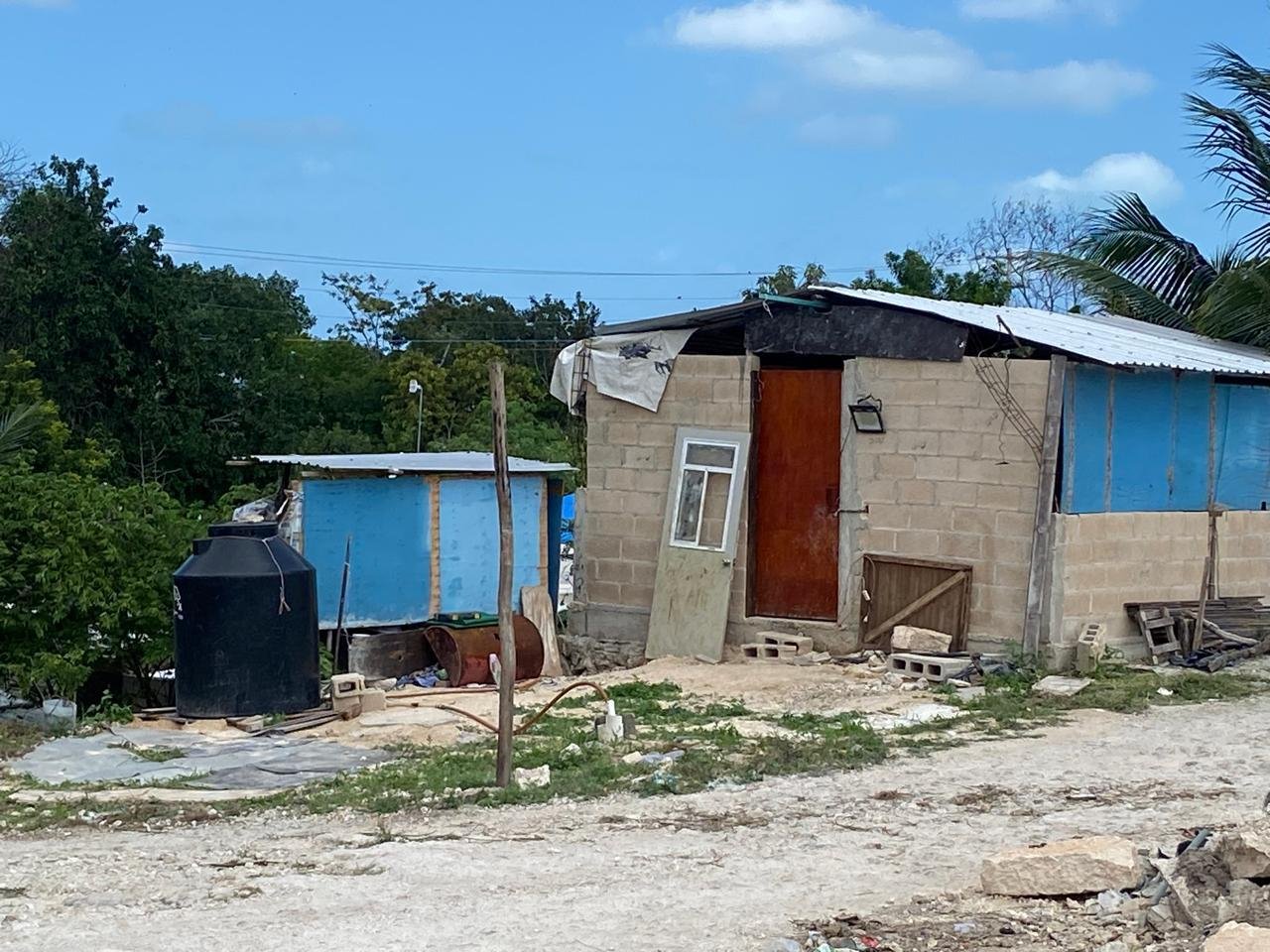
Quintana Roo, Mexico — Quintana Roo registered a decline in water availability in households, dropping from 93.7% to 91.8% in 2025, according to United Nations figures in the monitoring of the 2030 Agenda. In absolute terms, this decrease meant that approximately 400,000 inhabitants of the state lack piped water service.
Simultaneously, the Potable Water and Sewerage Commission (CAPA) acknowledged that 95,600 people do not have access to water, representing 4.8% of the population. The agency specified that an immediate investment of approximately 600 million pesos was required to address this problem.
For their part, municipal authorities in Benito Juárez indicated that in Cancún there are at least 213 irregular settlements, where about 350,000 citizens live without access to basic infrastructure services such as potable water, drainage, and electrification.
Residents of these neighborhoods indicated that to obtain water they resort to wells, although that resource is only used for washing or bathing. For food preparation and human consumption, they stated that they buy at least six jugs of water per week for a family of four members.
One of those affected, a resident of the Copa Buena neighborhood for seven years, located on the periphery of the old landfill of parcel 1113, in the continental zone of Isla Mujeres, explained that her family depends on this dynamic to cover their basic needs.
During an interview conducted at her home, she commented that she had a water well, which she considered an advantage compared to other neighbors. She detailed that the liquid comes out apparently clean, although with a chlorine smell, a substance they used regularly to maintain hygienic conditions. However, she clarified that for drinking and cooking she prefers to purchase purified water from distributors who come to the neighborhood.
The home is part of a set of more than 500 houses settled in two neighborhoods located in the vicinity of what was a landfill in the continental zone of Isla Mujeres. She acknowledged that bad odors and fly proliferation sometimes persist in the area.
Like other inhabitants of the region, she indicated that wastewater discharges are made directly toward cenote areas, although she stated she does not fear that this practice contaminates her well water.
Researchers specialized in the topic established that the first irregular settlements emerged on the outskirts of the populated center, north of the city. This was documented in the study “Analysis of irregular settlement zones from the capabilities perspective in Cancún, Benito Juárez,” prepared by academics Pilivet Aguiar Alayola, Christine Elizabeth McCoy Cador, and Lucila Zárraga Cano.
The analysis specified that, in addition to expansion toward the north, people with limited purchasing power settled in areas such as Ejido Bonfil, southwest of the city, where lands were illegally commercialized at accessible prices.
The researchers emphasized that Cancún reached almost one million inhabitants and consolidated itself as a successful case from a tourism perspective, receiving thousands of visitors each month who mainly know the hotel zone, equipped with world-class services. However, they warned that this economic success did not necessarily translate into better living conditions for residents of residential areas, especially in irregular settlements.
The study also addressed the phenomenon of irregular housing developments on ejidal lands, which were disincorporated from the National Agrarian Registry and sold without proper integration into the municipality. These areas lack public infrastructure and legal certainty regarding land tenure.
Discover more from Riviera Maya News & Events
Subscribe to get the latest posts sent to your email.