United States — The United States is intensifying pressure on Mexico to allow U.S. military forces to conduct joint operations aimed at dismantling fentanyl laboratories in the country, according to U.S. officials.
The push comes as Donald Trump insists to the Mexican government that the United States should play a more significant role in the fight against drug cartels that produce fentanyl and smuggle it into U.S. territory.
The proposal was first raised early last year and then largely abandoned, officials said. But the request was renewed after U.S. forces captured Venezuelan President Nicolás Maduro on January 3, and has involved the highest levels of government, including the White House, according to several officials.
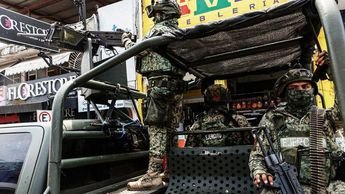
U.S. authorities want U.S. forces—whether Special Operations troops or CIA officers—to accompany Mexican soldiers in raids against suspected fentanyl laboratories, according to U.S. officials who spoke on condition of anonymity to discuss delicate diplomatic and military planning matters. These joint operations would represent a significant expansion of the U.S. role in Mexico, a measure to which the Mexican government has so far firmly opposed.
Mexican President Claudia Sheinbaum has repeatedly said the two countries would collaborate in the fight against cartels, but that her government rejected the U.S. proposal to send U.S. soldiers across the border.
Trump “generally insists on the participation of U.S. forces,” Sheinbaum said in a press conference shortly after speaking with Trump by phone on Monday morning. “We always say it’s not necessary,” she said, adding that he “was receptive, listened and gave his opinion, and we agreed that we will continue working” together.
The White House declined to comment. But last week, Trump told Fox News that more needed to be done in Mexico to counter drug cartels. “We have eliminated 97% of the drugs entering via waterways, and now we are going to start attacking by land in relation to the cartels,” he said.
Secret CIA Drone Flights in Search of Laboratories
Instead of joint operations, Mexican officials this month offered some counterproposals, including greater information sharing and a more significant U.S. role in command centers, according to a person familiar with the matter. According to U.S. officials, there are already U.S. advisors in Mexican military command posts, sharing intelligence information to help Mexican forces in their anti-drug operations.
Mexican authorities are under pressure to reach an agreement, as some U.S. officials would like the military or CIA to carry out drone strikes against suspected drug laboratories, a violation of Mexican sovereignty that would significantly weaken the government.
Nevertheless, fentanyl laboratories are particularly difficult to find and destroy, U.S. officials assert, and Washington continues to develop tools to track the drug as it is produced. The laboratories emit fewer chemical traces than methamphetamine labs—which can be detected with drones—and often operate in urban areas with rudimentary equipment found in a family kitchen, according to officials and former officials. Methamphetamine and cocaine laboratories, however, require much larger spaces, making them easier to detect.
During the Joe Biden administration, the CIA began conducting secret drone flights over Mexico to identify possible locations of fentanyl laboratories, an operation that has expanded since Trump took office.
The drones are used both to find laboratories and to track chemical precursors arriving at Mexican seaports and then transported to their destinations, according to a U.S. official informed about the operation.
That intelligence information is currently delivered to Mexican military units, many of which have been trained by U.S. Special Operations forces. Subsequently, Mexican soldiers plan and execute raids to shut down the laboratories.
Trump Now Has Regime Change in Cuba in His Sights
According to the new Washington proposal, U.S. forces would participate in raids led by Mexican forces, directing the mission and making key decisions, according to people familiar with the conversations, including U.S. officials. But U.S. forces would be in support, providing intelligence and advice to Mexican soldiers on the front lines.
When asked about planning for Mexico, the Department of Defense said in a statement that it “is prepared to execute the orders of the commander in chief at any time and anywhere.”
A CIA spokesperson declined to comment.
The success of this month’s incursion into Venezuela appears to have emboldened the Trump administration. Shortly after that operation, Trump said the next step was regime change in Cuba and revived demands for Washington to take control of Greenland.
Although Washington has focused on Maduro and Venezuela as the primary source of drugs smuggled into the United States, the South American country actually plays a minor role in that illicit trade. Most drugs smuggled into the United States arrive across the 3,200-kilometer border it shares with Mexico.
Fentanyl is also responsible for the majority of overdose deaths in the United States and is by far the most dangerous street drug.
Last year, the White House designated fentanyl as a “weapon of mass destruction” and several Mexican cartels as foreign terrorist organizations.
The Trump administration began pushing for U.S. forces inside Mexico shortly after coming to power last year, but Mexican authorities have systematically rejected those proposals, demanding that Washington respect its sovereignty.
“We have highly trained army units, special forces,” said Mexico’s Secretary of Security and Citizen Protection, Omar García Harfuch, in an interview last month. “Why would they be needed?” he added, referring to U.S. forces. “What we need is information.”
Having U.S. troops operate inside Mexico is an especially delicate issue, considering the shared history: the United States has invaded Mexico about a dozen times and undertaken several land appropriations that included Texas and California.
That deep distrust has gradually diminished over the last three decades, during which Mexico has collaborated more closely with U.S. forces and shared more intelligence information, especially with agents of the Drug Enforcement Administration (DEA). García Harfuch said there are fewer than several hundred U.S. security agents in Mexico and that all are unarmed and have the approval of Mexican authorities.
The Dilemma Facing Claudia Sheinbaum
DEA agents in Mexico primarily collaborate with Mexican forces and are prohibited from participating in anti-drug ground operations. But former U.S. officials who have worked with Mexican forces say that if Trump pushes too hard, that cooperation could break down.
Sheinbaum is in a precarious situation. If she accepts Washington’s demands to conduct joint operations with U.S. forces, she could face a revolt within her own political party, a left-wing organization that harbors deep distrust toward the United States.
But if the Trump administration decided to launch a unilateral military attack on Mexican territory without the president’s knowledge, she could quickly lose support within her ruling party and among Mexican voters.
The proposal for joint operations also presents a conflict with recent Mexican laws that restrict the presence of foreign soldiers on Mexican soil, including a constitutional amendment passed last year.
Shortly after the attack in Venezuela, the Mexican Senate delayed a vote scheduled for January 5 to allow the entry into Mexico of U.S. Navy special forces to conduct joint training exercises starting later this month. The country’s Constitution requires the Senate to approve the entry of foreign soldiers.
Sheinbaum, who had originally requested the entry of the U.S. soldiers, denied last week that the delay was related to the attack on Venezuela, saying it was because the Senate had not yet entered into session, but a Mexican senator said the postponement was indeed due to the U.S. action.
Sheinbaum has asked García Harfuch to act more forcefully against cartels since she came to power in late 2024. Since then, Mexico has deployed hundreds of forces in the state of Sinaloa to counter the Sinaloa Cartel, the world’s largest distributor of fentanyl, which has led to high-level arrests and a split and weakening of the drug trafficking organization.
The government claims it is arresting cartel members and destroying drug laboratories at a rate of almost four times that of the previous government.
“We are not saying the problem is solved,” said García Harfuch. But, he added, “what we are doing is hitting a criminal structure from below, in the middle, above. Everything.”
Discover more from Riviera Maya News & Events
Subscribe to get the latest posts sent to your email.