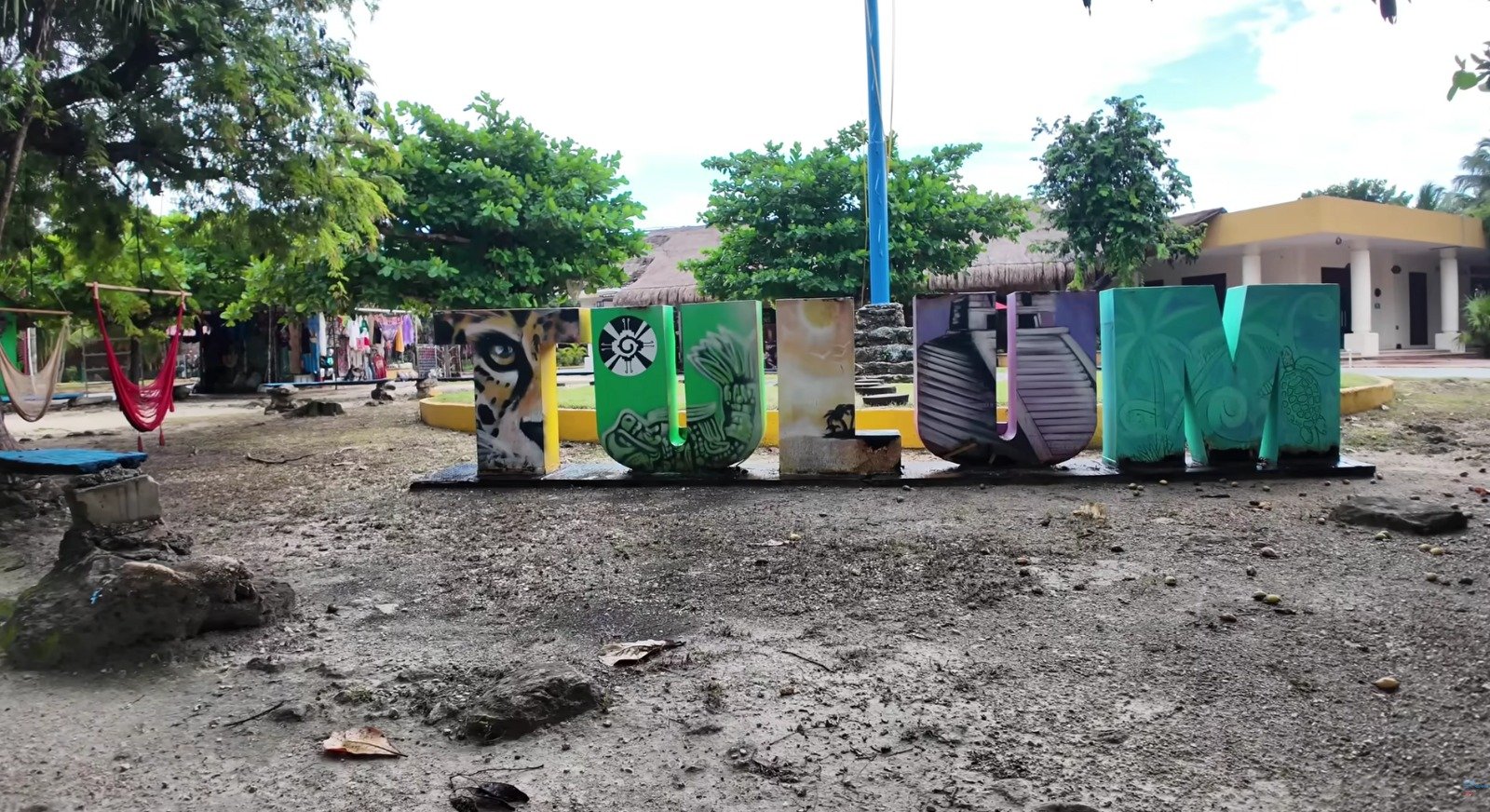
Tulum, Mexico — In a recent video from the channel Ciudad Viva titled “Have you ever seen a paradise repudiated by the same people who made it trendy?”, creator Omar Contreras walks through the streets and beaches of Tulum and confirms firsthand something many are reluctant to accept: the “eco-chic” destination sold to the world as an exclusive paradise now appears desolate, with empty fences, restaurants without customers, and hotels closing early.
Contreras speaks with tourists who arrived on the Tren Maya only to discover an empty town; they complain that there are no taxis or public transportation, and that beaches and parks require additional payments to access, even though Mexican law establishes they are public.
Among those interviewed, a couple of visitors from Las Vegas lament that prices have skyrocketed and that, even for foreigners, the experience no longer compensates for what is paid.
The situation contrasts with the version some local taxi drivers and business owners try to sell, minimizing the crisis to avoid “negative publicity,” but the images of closed establishments and deserted streets do not admit makeup.
The contrast shown in the video is not an isolated case; official data confirm that Tulum is going through one of the worst tourist seasons in its history.
In October 2025, hotels reached an occupancy of just 50%, a drop of more than 10 points compared to the previous year.
The crisis has been attributed to an explosive combination: proliferation of sargassum, economic uncertainty, increasingly high prices, and problems derived from government emblematic projects such as the new Tulum airport and the Jaguar Park, which have complicated access and made visits more expensive.
Even national tourists complain about exorbitant rates: at the new airport, a taxi can charge 1,500 pesos (about 80 USD) to reach the center, and excursions to the ruins reach 3,000 pesos (around 160 USD).
Overpricing, Sargassum, and a Real Estate Bubble: The Roots of an Announced Collapse
Contreras’s narration adds to journalistic reports describing a greater collapse; according to the travel agency Journey Mexico, occupancy in Tulum’s coastal area plummeted to 30% in the summer of 2025, and in the town center it fell to 15%.
The response from airlines did not take long; United, JetBlue, and Air Canada reduced or canceled flights to the city.
The crisis is not coincidental; sector executives recognize that Tulum’s success awakened arrogant behavior among business owners, prices rose without restraint, and loyalty toward agencies and operators evaporated.
The expansion was frenetic; in just 4 kilometers of coastline, five-story hotels and nightclubs were built that overflowed the capacity of the only access road.
Today, getting from one end to the other can take more than half an hour.
Environmental deterioration added to commercial abuse; beaches have suffered massive invasions of sargassum; the destination, unlike Cancún, does not have infrastructure to contain it, so sometimes there are strips of algae two or three meters wide before reaching the water.
Public policies did not help either; the brand-new airport inaugurated in 2023 turned out to be distant and expensive (taxis charge between 60 and 100 USD), and the Jaguar Park requires paying first for access to the park and then another transportation to the archaeological zone.
Social media and the press also document abuses and extortions; users report that police have detained tourists at checkpoints and demanded bribes of hundreds of dollars to avoid going to jail.
Fear of insecurity, combined with excessive prices and poor planning, has driven away national and international travelers.
The real estate bubble fueled the problem; Román Meyer Falcón, former Secretary of Agrarian Development, acknowledges that in 2025 hotel occupancy fell to 49.2% compared to 66.7% the previous year and that the problem is not the absence of tourists but a model of uncontrolled growth.
Tulum was born as the antithesis of Cancún, a low-density destination with a natural aesthetic, but that narrative served to justify thousands of developments that built luxury condominiums and hotels while streets still lack drainage and public lighting.
In the video, Contreras shows entire plazas with empty premises and “for rent” signs; many workers have emigrated to Cancún or Playa del Carmen because there is no employment in Tulum.
A Mirror for the Riviera Maya: Criticisms, Reflections, and Lessons
Tulum’s debacle contrasts with the history of Cancún, which half a century ago emerged as a project of the Mexican State and consolidated step by step: first infrastructure, then hotels, later air connections, and always with the business sector as a counterweight to governments.
Cancún has suffered violence and bad governments, but its mixed model and the strength of its business community have allowed it to remain one of the most important tourist poles in the world.
In Tulum, on the other hand, the bet on exclusivity—pink champagne, electronic parties in the jungle, spiritual retreats for influencers—turned into abuses and exclusion policies, public beaches with fine print, prohibitive rates, and privileges for foreigners with high purchasing power; the consequence is that national tourists feel expelled and foreigners seek more authentic and affordable alternatives.
In his video, Contreras does not resort to sensationalism, but neither does he hide the evident: lack of planning, greed, and socio-environmental inequality have bled Tulum dry. The interview with a local vendor summarizes the frustration: while business owners ask not to speak ill of the destination, there are no tourists to interview.
Other young people admit that local businesses raised prices to the sky because “everyone wanted to ride the trend” and now they pay the consequences.
These testimonies support what the reports reveal: summers with occupancies of just 40% and areas with only 15% of rooms occupied.
The Tulum case is a case study on gentrification and tourist overexploitation. It should serve as a warning for other emerging destinations in the Riviera Maya: before growing, consolidate basic services and plan.
The government has already responded with the “Tulum Renace” program, which seeks to guarantee free access to beaches and simplify rates in the Jaguar Park, but no strategy will be effective if it is not accompanied by transparency, limits to urban expansion, and respect for the local community.
Discover more from Riviera Maya News & Events
Subscribe to get the latest posts sent to your email.