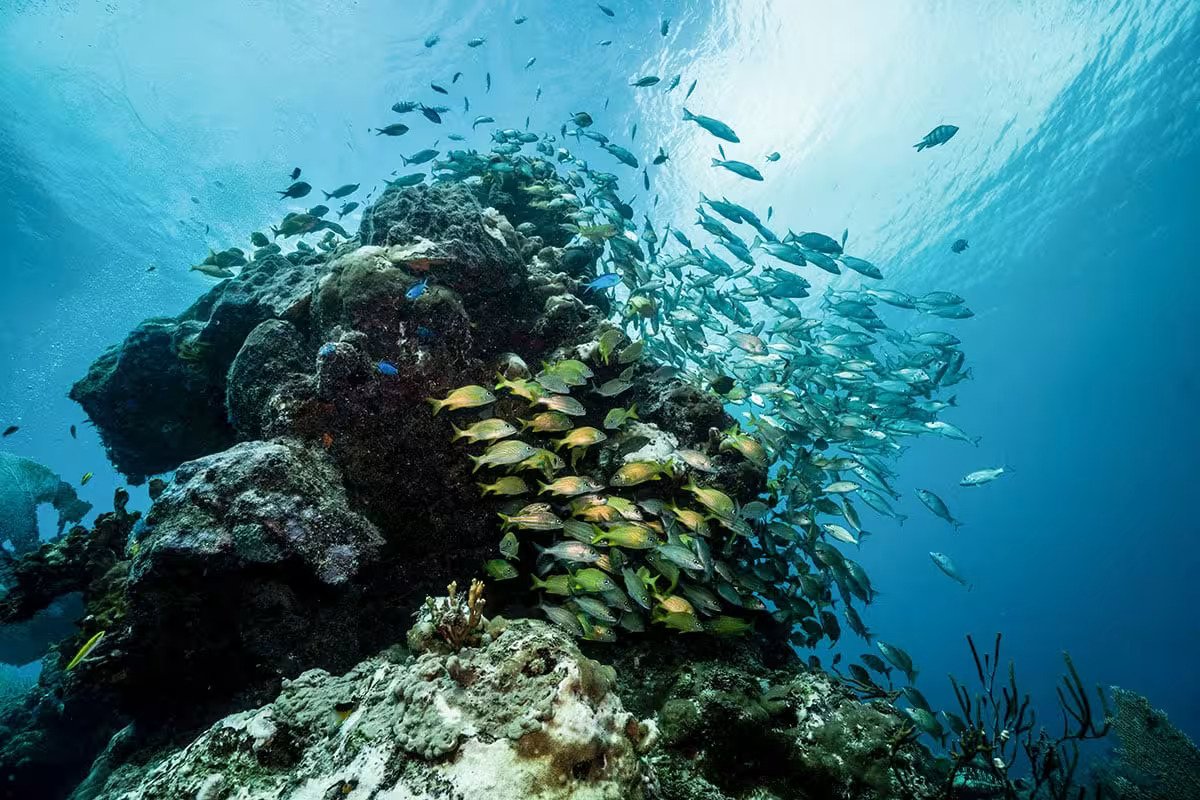
Puerto Morelos, Quintana Roo — Marine biologists and protected area officials warn that untreated sewage discharges are spreading bacterial diseases across approximately 30 kilometers of coral reef between Puerto Morelos and Punta Nizuc, causing accelerated deterioration of the ecosystem.
Staff from the National Commission of Natural Protected Areas and marine biology specialists documented the rapid decline in water quality within the Costa Occidental de Isla Mujeres, Punta Cancún and Punta Nizuc National Park, linking the outbreak to insufficient wastewater treatment.
Studies indicate that nutrients and microorganisms from contaminated discharges create favorable conditions for infections that destroy living coral tissue.
The most prominent disease detected is white pox disease, associated with the bacteria Serratia marcescens—a microorganism that inhabits the human digestive system. Its presence in the marine environment confirms contamination from sewage sources.
This pathology primarily affects elkhorn coral (Acropora palmata), a key species in reef formation. The disease produces irregular white lesions that expose the calcareous skeleton and reduce the coral’s growth and recovery capacity.
The outbreak occurs in a context where White Syndrome was previously recorded, considered one of the most destructive events for reefs since its appearance in Mexico in 2018.
Factors including rising sea temperatures, tourism pressure, and water degradation have progressively weakened coral colonies in the Mexican Caribbean, facilitating the spread of new infectious outbreaks.
In other Caribbean regions like the Florida Keys, the same bacteria caused the loss of up to 88 percent of elkhorn coral populations—a scenario keeping the scientific community on alert for potential impacts along Quintana Roo’s coast.
The affected corridor forms part of the Mesoamerican Reef System, the planet’s second-largest coral barrier, with approximately 300 kilometers within Mexican territory.
Beyond hosting high biodiversity, these natural structures function as wave barriers and support much of the Mexican Caribbean’s tourism activity. Their deterioration represents not only environmental loss but also economic risks and reduced coastal protection for shoreline communities.
Discover more from Riviera Maya News & Events
Subscribe to get the latest posts sent to your email.