Quintana Roo, Mexico — A secret 15 million peso contract between the Gran Consejo Maya (GCM) and the Xcaret Group has sparked demands for transparency and raised fundamental questions about who legitimately represents Maya communities in Mexico’s Yucatan Peninsula.
The contract, signed in 2023, allowed Xcaret to continue using Maya cultural heritage in its theme parks and attractions. In exchange, the GCM received 15 million pesos (approximately $750,000 USD). However, Maya Cruzo’ob communities say they never saw the money and were not consulted about the agreement.
“No Unified Maya Governor”
The Comisión para el Diálogo con los Pueblos Indígenas de México (CDPIM) has told Mexico’s Supreme Court that there is no single “governor of the Maya People” who can centrally represent the over one thousand Maya communities across the peninsula.
“Each ceremonial center, each community, has its own authorities—generals, cabo officers, priests—chosen according to their own normative systems,” the commission stated in a legal brief. “Pretending that a unified, homogeneous Maya People exists, without recognizing the autonomy of each community, would lead to a paralysis that paradoxically makes the protection intended by the Constitution illusory.”
Leaders Accused of Exploiting Heritage
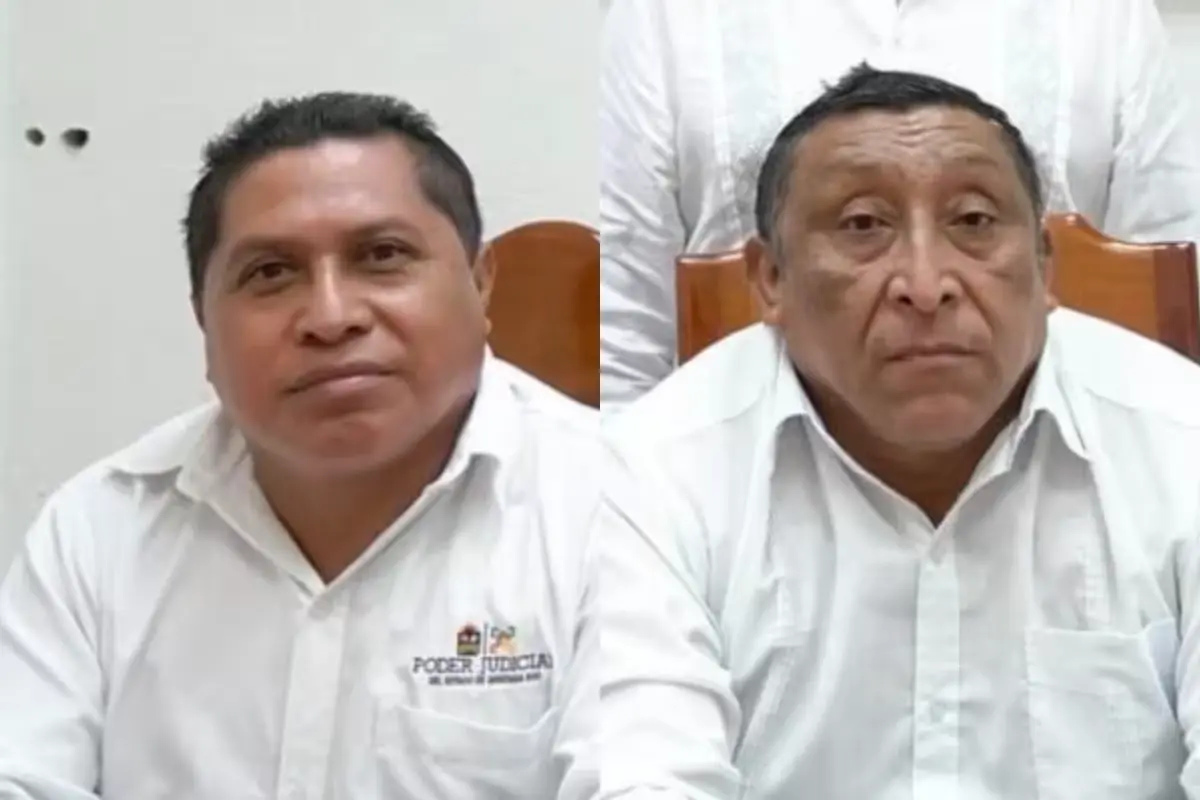
The GCM is led by Simón Caamal Coh and Gabino Cruz Yeh, who critics say have positioned themselves as representatives without legitimate community backing. Indigenous rights lawyers consulted for this story say the GCM, as a collegiate body, undermines the autonomy that Maya communities fiercely defend.
Last weekend, General Alejandro Cauich May, representing Maya Cruzo’ob communities, demanded an audit of the GCM during a meeting at the Tixcacal Guardia Ceremonial Center. He was joined by leaders from Petcacab, Tixcacal, Señor, Chumpón, Xhazil Sur, and Tihosuco, who all called for transparency about the 15 million pesos that never reached their communities.
“The economic benefit that the Gran Consejo Maya negotiated with Xcaret has not been reflected in the communities, ceremonial centers, or Maya churches,” community representatives stated.
Secret “Transition Contract”
The agreement between Xcaret and the GCM—called a “Transition Contract”—was signed under confidentiality. According to Mexico’s Federal Law for the Protection of the Cultural Heritage of Indigenous and Afro-Mexican Peoples and Communities, any agreement involving cultural heritage requires the free, prior, and informed consent of the community. Since this didn’t happen, critics argue the contract lacks legitimacy and may be illegal.
Xcaret’s legal team presented the contract to Supreme Court justices in March, arguing it demonstrated the company had Maya approval to continue its business model. However, the document has never been shown to the National Institute of Copyright (Indautor) or to the Maya Cruzo’ob communities themselves.
In their submission, Xcaret’s lawyers claimed the GCM has “state institutional recognition” and that the Quintana Roo state government issued credentials identifying Caamal Coh and Cruz Yeh as the council’s president and secretary. Copies of these credentials were reportedly given to Supreme Court justices.
Historical Context and Continuing Controversy
The GCM traces its formal origins to 1975, when it was called the “Consejo Supremo Maya.” Critics note this body was also created without consulting Maya communities. The current iteration emerged more prominently after what some describe as a “hostile takeover” of the council’s leadership in 2019.
The CDPIM’s legal brief explicitly states the GCM “has no origin or foundation in the traditional normative systems, social, cultural or political institutions of the Maya Cruzo’ob People.”
As Xcaret faces multiple legal challenges for profiting from Maya cultural heritage without proper consultation, the GCM now faces similar accusations from the very communities it claims to represent.
Discover more from Riviera Maya News & Events
Subscribe to get the latest posts sent to your email.