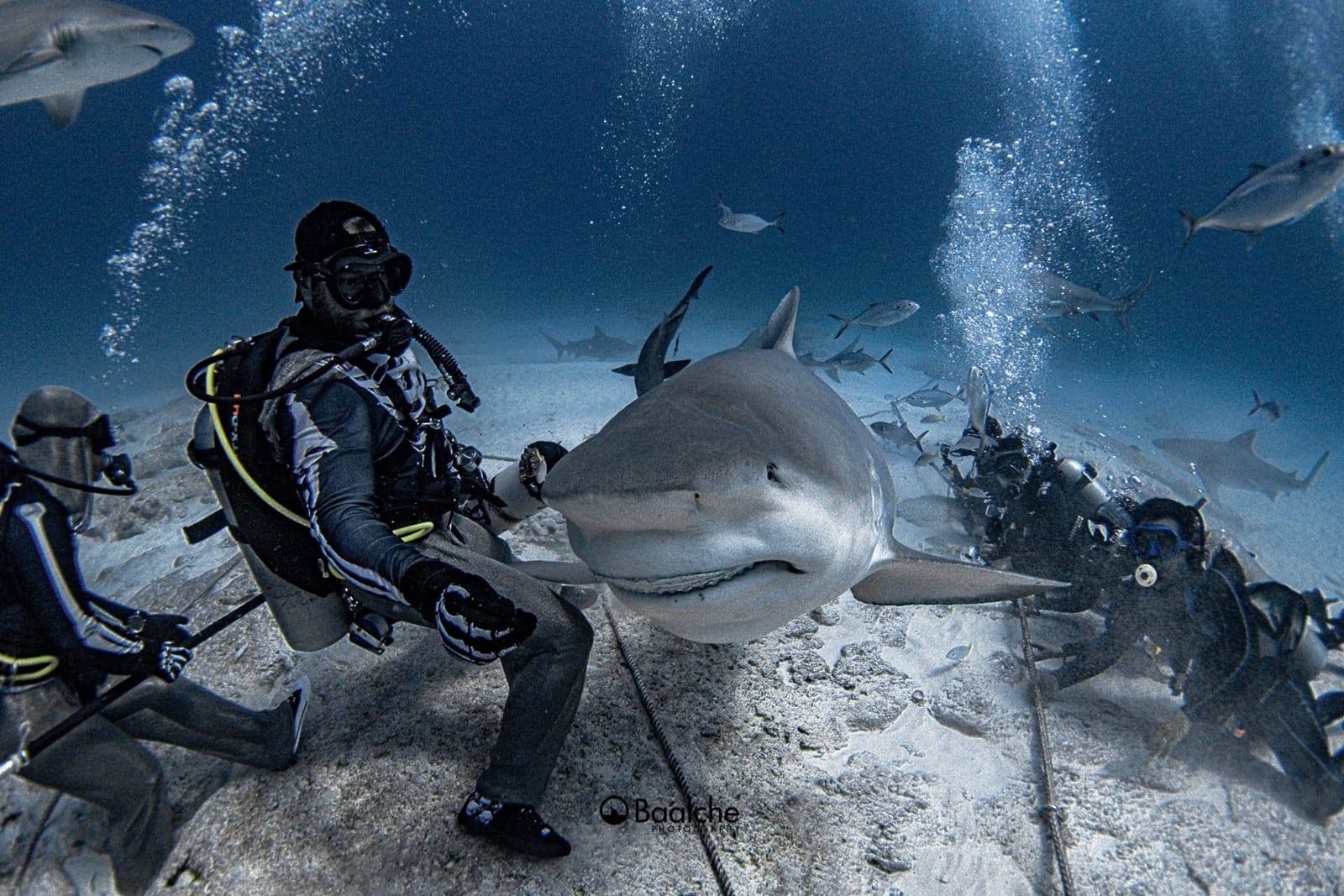
Isla Mujeres, Mexico — Following the historic milestone of saving more than 20,000 sharks in just three years, 2026 marks the beginning of an ambitious second phase of the Shark Initiative Isla Mujeres, which seeks to conserve the ocean giant through ecotourism and science.
This project, led by the Saving Our Sharks Foundation in a strategic alliance with former shark fishermen, has not only managed to halt the decline of shark populations but is now preparing to deepen the human, scientific, and economic development of the region, consolidating a conservation model that serves as a global reference.
According to Pepe Funes Izaguirre, president of the foundation, the combined efforts have allowed 7,000 adult specimens and more than 13,000 juveniles to remain in their natural habitats, ensuring the balance of marine ecosystems. However, the current objective goes beyond counting specimens.
The initiative seeks to expand its network of “Shark Heroes,” committed citizens and businesses that support the cause through organizing events and awareness campaigns.
It is worth noting that this movement has had significant international weight, as SOSF has participated in international forums, achieving the inclusion of species such as the whale shark, the oceanic whitetip shark, and manta rays in the Convention on International Trade in Endangered Species of Wild Fauna and Flora (CITES), thereby prohibiting their international trade and granting them global legal protection.
Plan to Consolidate Monitoring and Scientific Research
For this new phase in 2026, in addition to continuing to conserve the species and consolidating the marine refuge, there is also a commitment to training former fishermen in sustainable professions, transforming their deep knowledge of the sea into tools for monitoring and scientific research.
“We must defend the marine wealth we have, but with awareness and social justice so as not to affect communities that for years have lived off the gifts that the sea provides,” concluded Funes Izaguirre.
Likewise, a strong push for scientific tourism and the design of low-impact ecotourism activities is contemplated, with a sanctuary in Isla Mujeres that functions as a living laboratory where the protection of the alpha predator translates into well-being and development for the local community.
Discover more from Riviera Maya News & Events
Subscribe to get the latest posts sent to your email.