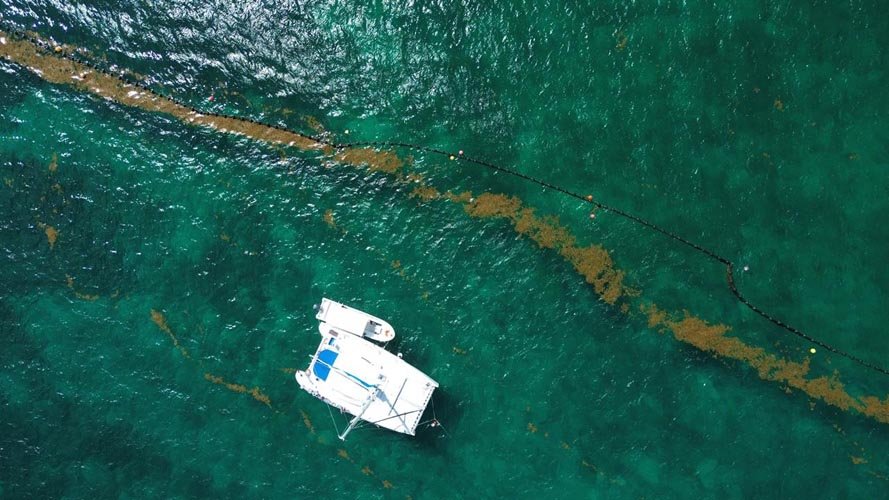
Cancún, Quintana Roo — Sargazo seaweed is expected to arrive in waves along Mexico’s Caribbean coast this year, with projections suggesting it could surpass 120,000 tons, according to environmental monitoring officials.
Esteban Amaro, coordinator of the Environmental and Sargazo Monitoring Center, reported that the 2026 season has shown variable seaweed arrival patterns. Currently, about 50% of beaches remain clean, 40% have moderate seaweed presence, and approximately 10 locations along the Quintana Roo coastline are experiencing excessive accumulation.
The phenomenon began appearing in January and will become more visible with spring’s arrival, particularly in the southern part of the state where the macroalgae typically enters before ocean currents distribute it northward.
Projections Point to Increased Volume
Last year, authorities collected more than 92,000 tons of sargazo along the coastline. This year’s projections indicate a 10% to 25% increase, potentially reaching around 120,000 tons.
“The arrival won’t be continuous but will come in waves that may appear with intervals of one or two weeks,” Amaro explained in an interview with Radio Fórmula. This pattern has allowed clean beaches to be maintained through coordinated efforts involving the Mexican Navy, state agencies, and cleanup brigades.
Peak Impact Expected May Through June
Satellite analysis shows significant sargazo accumulation still present in the Antilles arc, a mass that could take two to three months to reach Mexican Caribbean shores.
Officials anticipate the most intense period will occur between May and June, with significant reduction in July and low levels by August. This timing would help maintain favorable conditions during the summer vacation season.
Cold Fronts and Monitoring Reduce Impact
Amaro noted that cold fronts during 2026 have been crucial in preventing large seaweed quantities from reaching shorelines, as northern winds help disperse the algae offshore.
Constant monitoring allows officials to identify affected beaches and plan cleanup actions in advance, working in coordination with the Quintana Roo Secretariat of Ecology and Environment and the state government led by Governor Mara Lezama.
Areas with Greatest Seaweed Presence
The coordinator identified Tulum, the eastern coast of Cozumel, and northern Puerto Morelos as experiencing the highest seaweed accumulation. Meanwhile, Cancún, Playa del Carmen, Holbox, and Isla Mujeres maintain low levels or clean beaches.
The arriving sargazo consists primarily of natans and fluitans species, floating macroalgae that travel more than 9,000 kilometers from the African coast to the Mexican Caribbean.
Amaro emphasized that the sargazo traffic light system is constantly updated on official state government platforms, providing residents and the tourism sector with current beach conditions for planning purposes.
Discover more from Riviera Maya News & Events
Subscribe to get the latest posts sent to your email.